As a host city for this summer’s World Cup, Seattle has been on full display. The city’s soccer culture has taken center stage, with the local hosting committee making efforts to show that Seattle’s soccer culture is really a microcosm of the communities that make the whole region so vibrant. This includes designating Friday's game as a Pride Match, striving to embrace and showcase the region’s queer community.
“Seattle's probably one of the most gay-friendly places on the planet,” said Doug, a Seattle Sounders fan whose relationship to the club dates back to the ‘70s and who spoke to Sounder at Heart for this piece. “There are a lot of other places in this country that could benefit from that exposure.”
That exposure, the possibility of broadcasting scenes of crowds gathered for the joint purposes of enjoying some soccer and celebrating queer joy from a city in the midst of Pride Weekend, makes the case for holding such an event. Having a game in Seattle that happened to fall on Pride Weekend provided a perfect opportunity to make a celebration of the city’s queer community and its place as part of the soccer culture an official part of how Seattle would be shared with the world. It’s an enticing, exciting idea.
While women’s sports have long been an inclusive and welcoming space for the queer community as a direct result of the unignorable presence of queer athletes, men’s sports have not been nearly so welcoming. It may not be uncommon for a professional men’s sports team or organization to hold a Pride event and to varying degrees welcome — and occasionally even embrace – queer fans, but the fact remains that even the most astute or attentive fan could probably count the number of out men’s soccer players at the game’s highest levels on one hand.
With the announced Pride Match happening to be a final group stage game in Seattle played between Egypt and Iran, two nations where queer people face serious threats if they are publicly out, the potential contrast could make the message even clearer.
It’s not that an event like a Pride Match – whatever that looks like – at a World Cup is suddenly going to blow open the cultural barrier that keeps gay men from living openly in professional sports. But there’s a more gradual change that could come from seeing the blending of two worlds that can at times feel so separate. That could be out queer people seeing that there is a place for them in soccer communities in Seattle and beyond, or an encouragement to someone who is already a part of their local soccer community to live more openly with the understanding that they will be accepted and embraced.
Maybe somewhere down the road, a growing acceptance in fan communities means that the next time a professional player in men’s soccer comes out as queer it happens in Seattle, or they come to play for the Seattle Sounders with the knowledge that they’ll be supported.
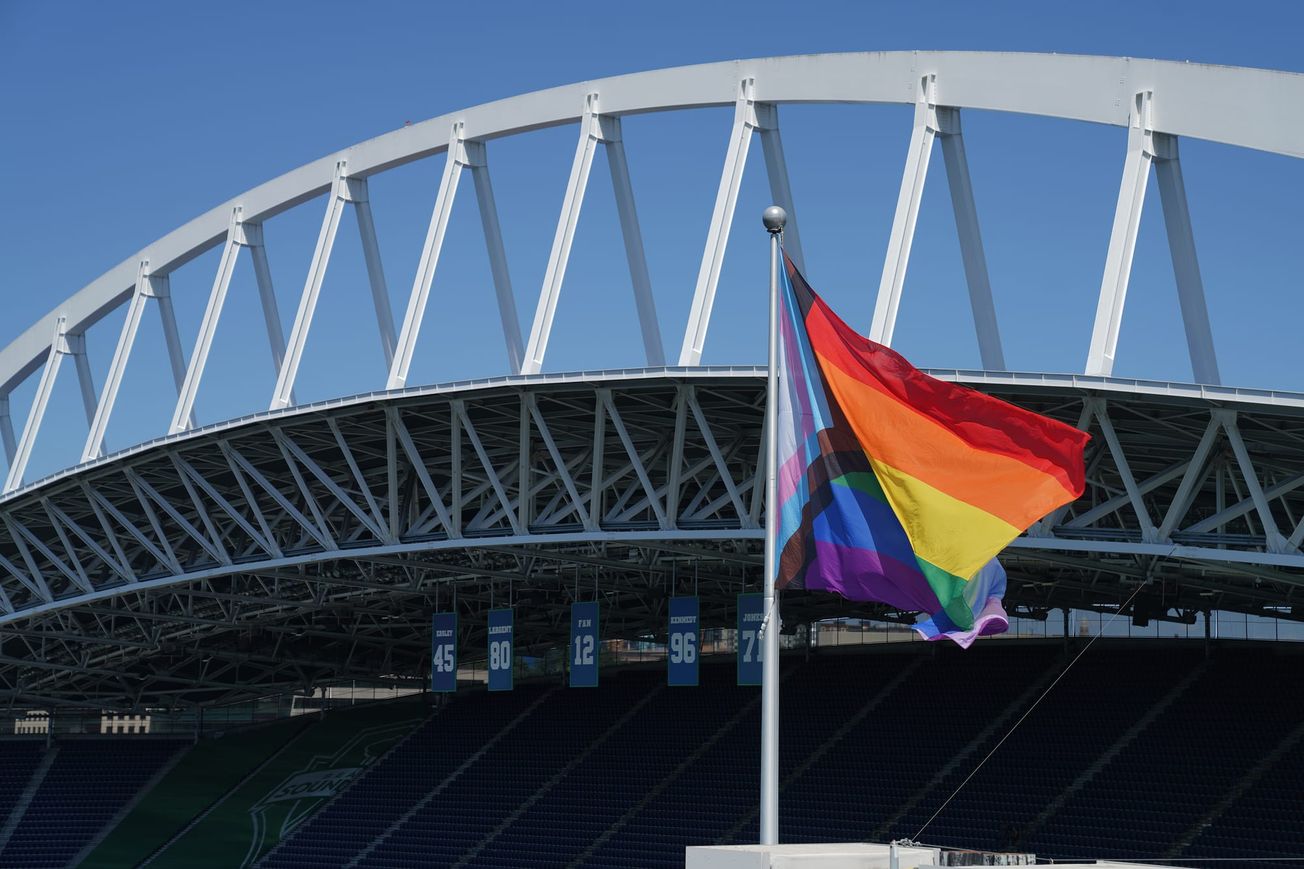
That’s all hypothetical at this moment. The Seattle Local Organizing Committee is only responsible for events around the city and outside of the stadium. Given the teams playing in the actual game and FIFA’s track record regarding displays in support of the rights of LGBTQIA2S+ people, it seems highly unlikely that there will be any real displays of Gay Pride inside of the stadium when Egypt and Iran take the pitch. That leaves any Pride-related activities or activations likely confined to Fan Celebrations and Fan Zones, although FIFA representatives have stated that rainbow flags will be allowed inside the stadium.
There is the potential for powerful images to come from having events outside of the stadium filled with rainbows, pride flags, and expressions of queer joy, contrasted with a starkly different atmosphere inside of the stadium. There is also the potential that such events are simply lost in the shuffle, overshadowed by pre-existing events for Seattle’s Pride Weekend.
Seattle Pride, the organization responsible for Seattle’s Pride Parade – which will take place two days after the Pride Match, on Sunday – and other Pride events, shared a statement on their own website in December making it clear that they were not affiliated with the Local Organizing Committee’s Pride Match. Seattle Pride did not respond to a request for comment. While Seattle Pride is not involved, SeattleFWC26 SVP of Legacy, Hedda McLendon made clear that the LOC “partnered with organizations such as [Greater Seattle Business Association], Gender Justice League, Outright International, Pride-focused small businesses, and numerous LGBTQ+ community leaders to ensure the programming reflects the diversity and creativity of Washington’s LGBTQ+ communities."
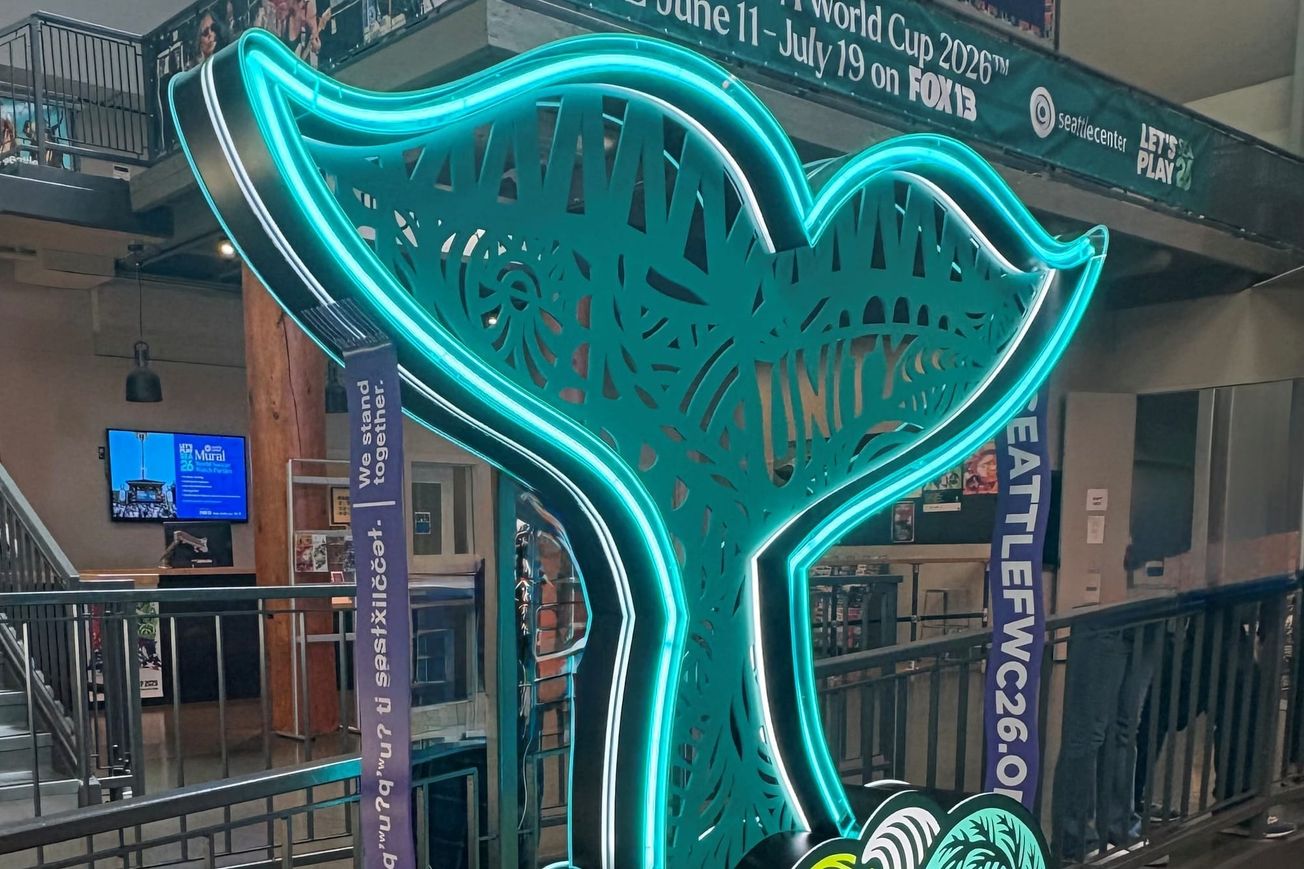
A week before the event, all anyone could do was guess about what the Pride Match Day would entail. The Seattle FIFA World Cup 2026 website had a page dedicated to Pride Match Day, featuring information about events and activities around it. There’s a link to the Unity Loop, “a physical and digital experience designed to connect residents and visitors with the best of Seattle through culture, food, art, parks, small businesses, waterfront experiences, and community spaces,” according to the site, that runs from Capitol Hill to the stadium that will highlight LGBTQ+-owned businesses and installations. There is a section devoted to watch parties, three of them in Ballard, Burien and Olympia, all of which appear to be separate from anything directly organized by the LOC. There’s also an awareness campaign called “#HowWePride” that shares the stories of how members of the community embrace “pride” in their lives.
More information was released during the week of the match, including plans for Pride Match Day Watch Parties at Seattle Soccer House at Pacific Place and similar events around town, although little information was provided about how those watch parties would differ from watch parties held for other games. There are community mural activities and public art installations, bringing local queer artists to the forefront with the world’s eyes on the city. There are fundraising efforts to support LGBTQ+ organizations, as well as an effort to make sure the match is accessible to members of the community. Not only are there watch parties, events and activations, but the LOC has worked to help get fans in the stadium.
“We have also distributed tickets through community partners and organizations such as Lambert House, Camp Ten Tree, and GSBA Scholars,” said McLendon.
Still, what Pride Match Day and the atmosphere around it actually looks like and the impact it has after Friday, remains to be seen. While the LOC has made efforts to center the community and showcase this wonderful part of Seattle’s culture to the world, it’s hard to ignore how much of the planning around the event is focused on selling merchandise and driving business to LGBTQ+-owned businesses in the area. There’s nothing inherently wrong with supporting those businesses, their owners and the communities that they serve — in fact, it’s commendable to do what they can to make sure that these businesses benefit from the huge influx of visitors to the city; that’s part of the promise of hosting a World Cup — but with so much focus on that aspect of Pride Match Day, it’s understandable to worry that supporting and embracing the community more broadly has been set to the side somewhat.
“I don’t even know what you could get from it other than the same sort of things you get out of any Pride event,” said Katrina, a Sounders fan and member of the queer community. “Like any pride event to some extent, it's just a, ‘Hey, we exist. Here's our culture.’ You have to at least acknowledge that it exists,” but rather than making a substantial impact “it feels like we're just putting on rainbows. It doesn't feel like this is actually our event. It feels like this is an event that we're welcome to be visible at as opposed to this being ours. And I would love it if this sort of thing would actually help change that.”
When the day of the Pride Match finally comes around, the parties start and the ball is finally kicked, maybe the thing that matters most is that this message of acceptance and inclusion is sent at all is more important than how exactly it’s sent. As Kirk, a bi, gender queer Sounders fan put it, “Could it be done poorly? Yes, but also is it better than not acknowledging what this city is and what is a very key component of how people identify Seattle? I guess … I'd prefer to at least have the vocal statement of ‘this is what Seattle is.’”
Not only is it an expression of the city and state, even if an incomplete one, but it’s an invitation to those outside of the city or the region who may not quite feel at home wherever they currently reside.
“The idea that Seattle not only really cares about soccer,” Kirk continued, “but really cares about bringing the entire concept of ‘this is a game for everyone,’ together in one state feels right … yeah, this is absolutely who the city is. And I want that to be the lesson that people get if and when they come here.”
That’s a sentiment shared by just about everyone who contributed to this piece. As Dana, a Reign and Sounders supporter and member of Emerald City Supporters leadership, expressed, “I think it’s incredibly important. For me, personally, one of my first experiences with soccer in Seattle and with the Sounders was taking my parents to a Pride Match.”
The entire atmosphere had an impact on them.
“Seeing not just the supporters, but the whole stadium, enthusiastic about Pride was really affirming to me, who was still a baby queer, still figuring myself out. I think Seattle has a global reputation, or at least a national reputation for being very supportive of the LGBTQ+ community, and to have that on the world stage is really important.”
The idea of being part of this shared community, and the power that has to allow people to shape and blossom into the fullest version of themselves was echoed by Kirk.
“The community made me feel accepted … that I was part of a community … that I actively had a role that I should play. The more I’ve been with ECS, the more I’ve been verbally and visually out to other people,” they described. “I’m in that weird spot of being bi and gender queer … and the more I’ve been around these communities … has led me to be more diligent about, at work saying, ‘hey, by the way, I use they/them,’ you know? … “Because I know I have a community, then at the end of the day I … have that anchor to go, ‘yeah, it’s important.’ All of a sudden it makes sense.” The knowledge that they’ll be accepted for who they are, as they are, has empowered them to be themselves more fully in other parts of life.
Even in a best-case scenario for the Pride Match, there’s still potential for an uncomfortable contrast not tied to the teams playing in the actual game. Regardless of which teams had been drawn together for that June 26th match, prices have been eye-popping to get into the stadium, with the cheapest tickets costing hundreds of dollars before factoring in inflated costs from resellers. Frequently Pride events around soccer and other sports lean heavily on the idea that sports are “for everyone,” a worthwhile and noble sentiment, particularly around an event where inclusion is a key principle. If that framing does get used for this Pride Match, it will feel particularly at odds with the reality that attending the game is decidedly only for those who can afford it. “Extracurricular activities in America are viewed as a luxury,” said Sara, another local soccer fan and a member of the Seattle Women’s Chorus. “If you want to do anything that is outside of working and being at home, you have to be privileged. You have to be lucky about it, and I feel like, especially with a sport like soccer that is played throughout many ages and many income brackets … when we start to gatekeep access to it behind income brackets,” the reality is that not only are an unknowable number of people being deprived of the joy of watching the game in person, but participation is greatly reduced. The best players are unlikely to be the wealthiest players, and by limiting who can participate at high levels based on who can afford it we eliminate both the ingredients that make a childhood dream as well as the tools to make that dream into a reality. While the soccer community makes the argument that the game we all love is for everyone, FIFA responds that that’s only true within certain limits.
However the Pride Match materializes this Friday, it has the potential to send a message to the rest of the country and possibly around the world: there’s a place for you in our soccer community, whoever you are.