After reflecting on the 2025 MLS season for nearly the entire postseason, we have come to accept that the Seattle Sounders were by no means a bad team. The Sounders finished fifth in the Western Conference and scored 58 goals during the regular season, which are solid results by any standard.
With that said, I wanted to look at Seattle's performance through a different lens. Instead of continuing to rehash surface-level results and counting stats, I peel another layer back and use the numbers to look at HOW the Sounders earned, or lost, points based on the way they played the game.
In MLS, or any league for that matter, most teams operate with an overarching philosophy or style of play. That style acts as a compass that guides player acquisitions, training priorities, and operational decisions at the club. Historically, fans, analysts, and data hobbyists have relied on simply counting events like passes, shots, and defensive actions to describe these identities. While there is value in that approach, a significant amount of insight is left on the table.
There is the opportunity to go deeper. When contextual factors like speed-of-play, location on the field, and patterns-of-possession are layered on top of traditional event data, we can get a better picture of how teams actually play soccer. While most effective clubs already think about the game in this way, this type of analysis has been inaccessible to fans and analysts.
That seems to be changing thanks to the work of John Muller and his team at Futi, a soccer analytics startup focused on measuring style of play among a host of other exciting advanced stats.
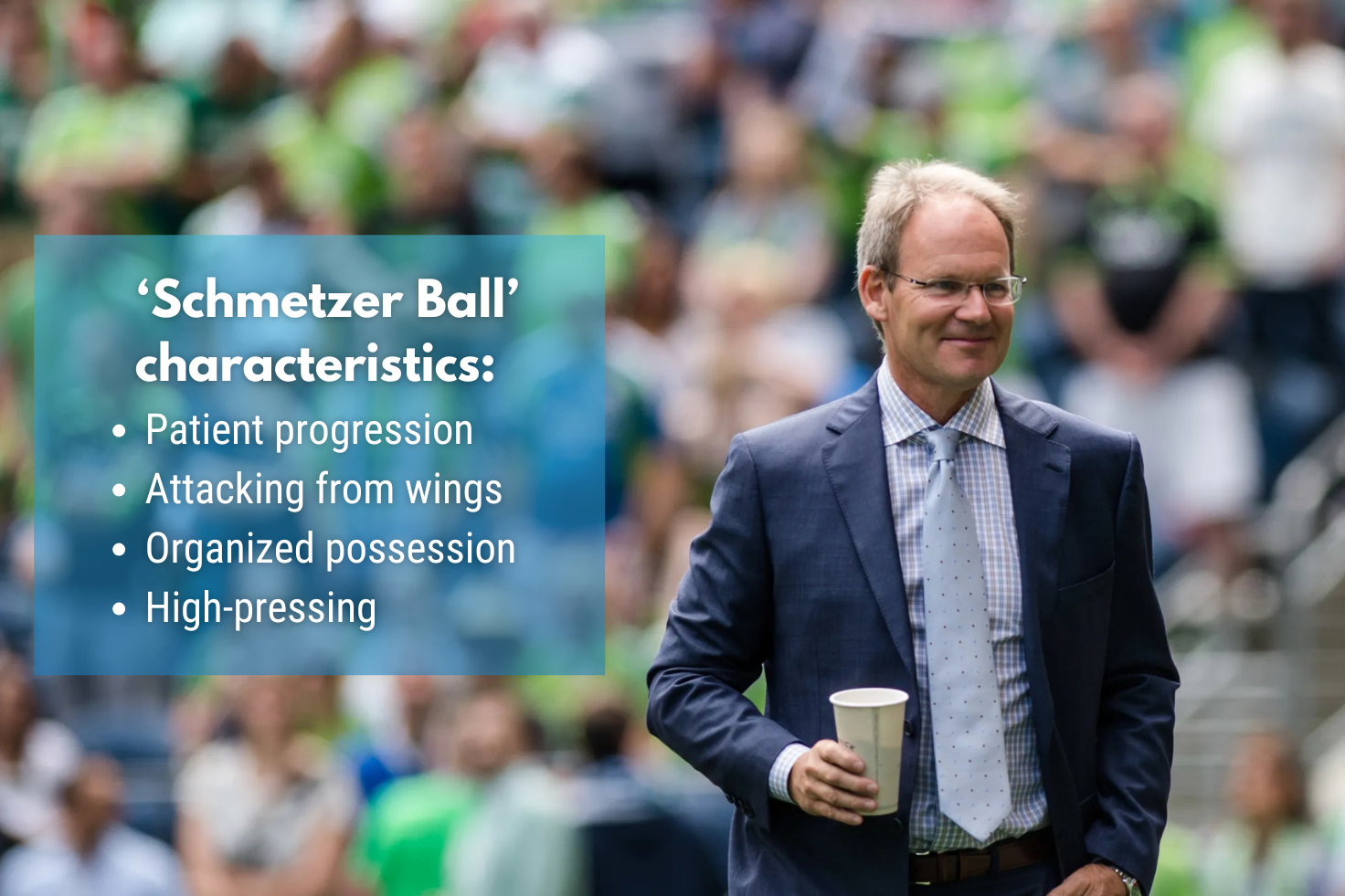
Futi defines four overarching team styles that I have used to initiate this project on how the Sounders play soccer or "Schmetzer Ball" if you will.
- Control and Regroup
- Press and Possess
- Bunker and Counter
- Launch and Squish
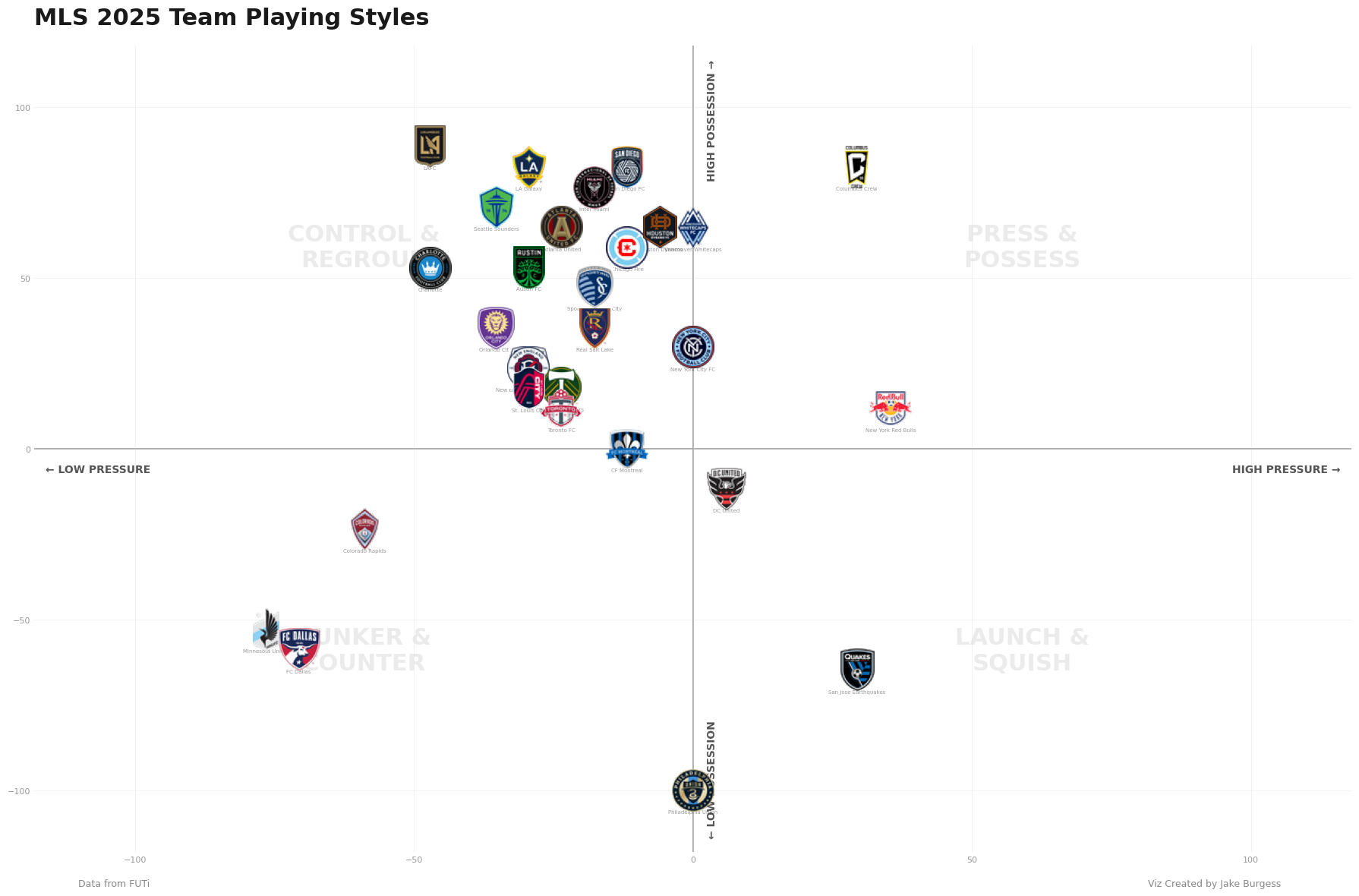
The majority of MLS teams, including Seattle, fall under the "control and regroup" umbrella. This style can be defined as "Sides that are patient in possession but less aggressive off the ball, preferring to fall back into a compact defensive shape after losing possession."
During the 2025 MLS season, the Sounders ranked sixth in the league in ball possession and among the seven lowest teams in terms of defensive pressure. While this gives us a useful snapshot of how Seattle plays, another layer of Futi's data, called "team tendencies", allows us to dive much deeper.
Futi's "team tendencies" include
- Speed of buildup
- Centrality of buildup
- Speed of ball progression
- Centrality of attack
- Counter pressing behavior
- High press behavior
- Chaos, which refers to contested time spent between phases when there is no clear tendency displayed
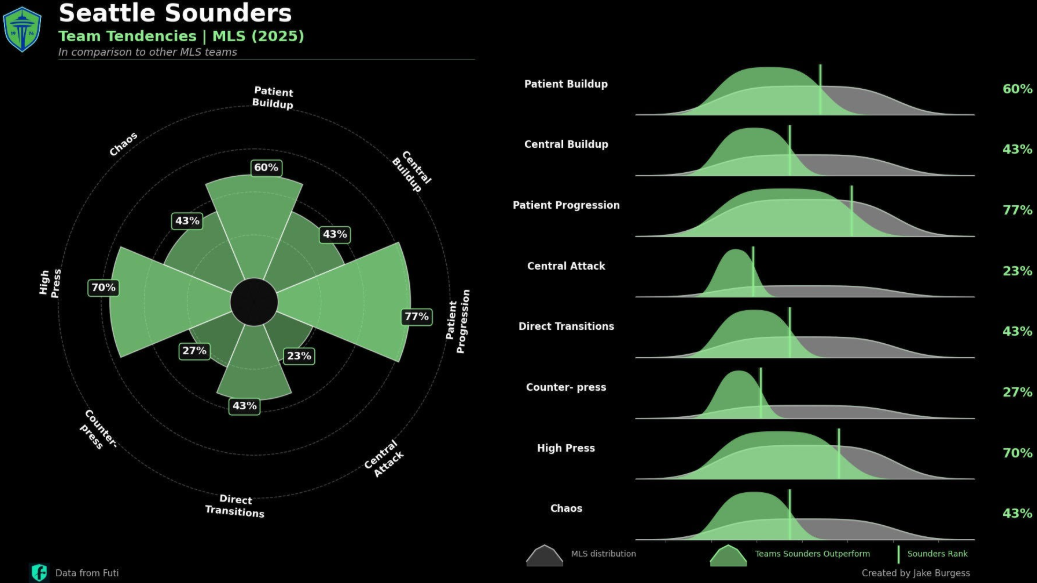
When analyzing Seattle's tendencies, three stand out most clearly: speed of progression, width of attack, and pressing behavior.
Patient Progression, 77th percentile
Compared to the rest of MLS, the Sounders were notably patient in how they progressed the ball up the field. To explore this further, I took a closer look at the relationship between "normal" and "progressive passes" in the middle and final thirds of the pitch and compared those patterns to the rest of the league.
The results mirror what the Futi numbers suggest. Seattle completes as many middle- and final-third passes as nearly any team in MLS. In the middle third, those passes tend to be centrally located, which is not surprising given the influence of Obed Vargas and Cristian Roldan. In the final third, possession becomes much more dispersed across both sides of the pitch as the Sounders utilize their wingers in attack.