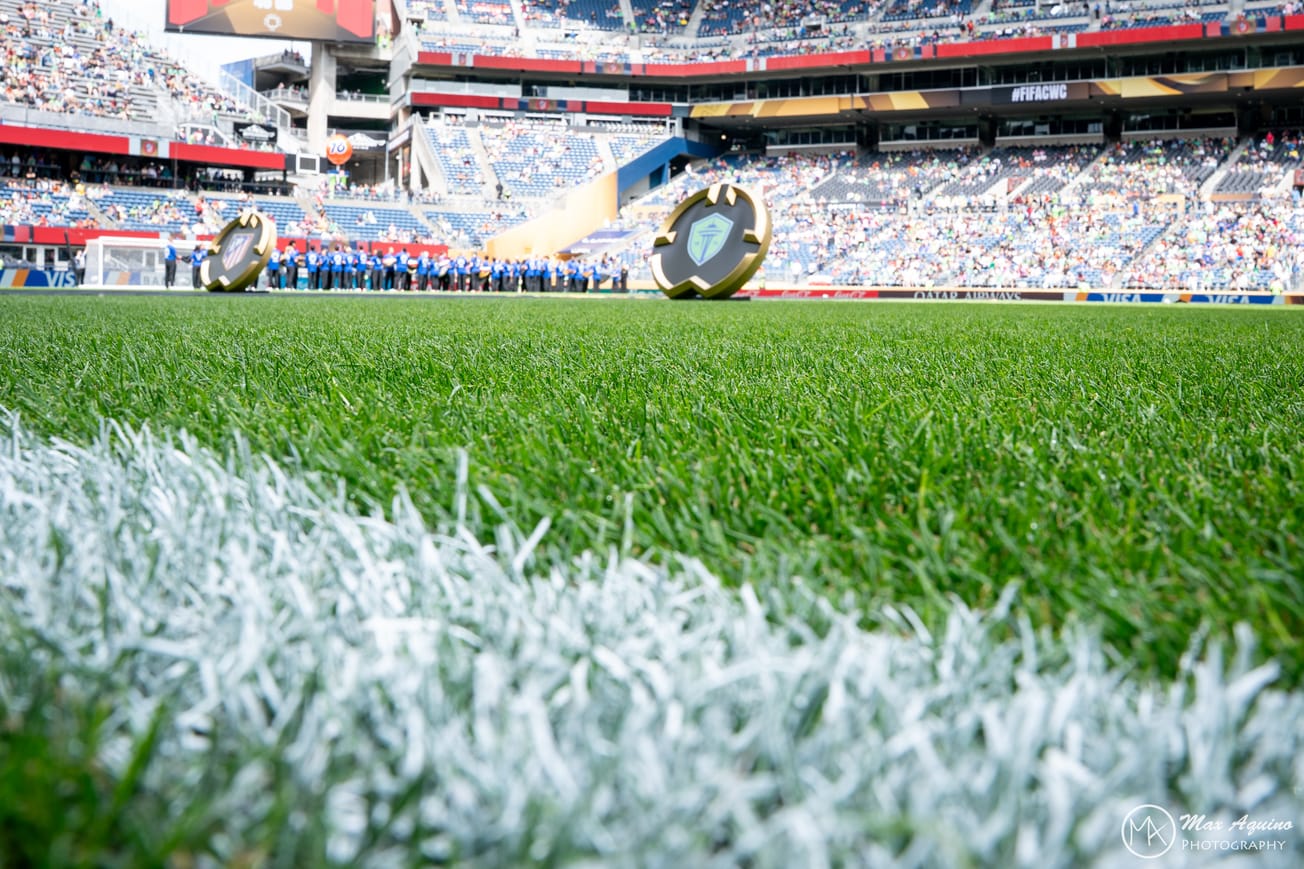
Ever since Seattle was chosen as one of the World Cup host cities, one of the big questions surrounding it has been the surface. While organizers have always insisted they would be installing a natural grass field, it has not been entirely clear how it would be installed or when it would be removed.
Thanks to some quality reporting from the Seattle Times, we now have those answers.
Rather than ripping out the turf entirely — as was originally insinuated — FIFA will instead bury it under 12-14 inches of sand and other base materials before laying a grass surface on top. Essentially, they are doing a more extensive and thorough version of what they did last summer for the Club World Cup. Most Sounders players seemed very happy with how that surface performed, even if there were some complaints from European teams.
Here’s how Trey Rogers, one of FIFA’s turf experts, explained it to the Times: “What we know is that as long as we have six inches of sand over the top of the artificial turf, the player will not feel anything but a natural turf reaction.”
Interestingly, Seattle is just one of two stadiums that will get this treatment, with the other presumed to be Atlanta. Among the other six stadiums with artificial turf, New England is getting a full grass replacement, while the other five are getting the same six-inch base that was used at the Club World Cup. None of those stadiums permanently house MLS or NWSL teams, so they only need to be capable of hosting the 6-9 World Cup matches.
The belief is that this system helps the surface’s longevity and durability, as the story also confirmed that there will be at least 17 matches played on it between mid-April and late July when it’s pulled out. There had been some questions as to whether or not the grass would be removed as soon as the last World Cup match was played here on July 6, but this seems to confirm that games for the Reign (July 12 against the Thorns) and Sounders (July 16 vs. the Timbers) will also be played on grass.
The sod itself is being delivered from a grass farm in Moses Lake, Wash. and is believed to be a hybrid with some artificial turf woven in that will help make it hold up in the wet conditions.