About a year ago, there was a sort of general consensus reached among the members of the Seattle Sounders front office: They needed to change their approach when it came to moving players.
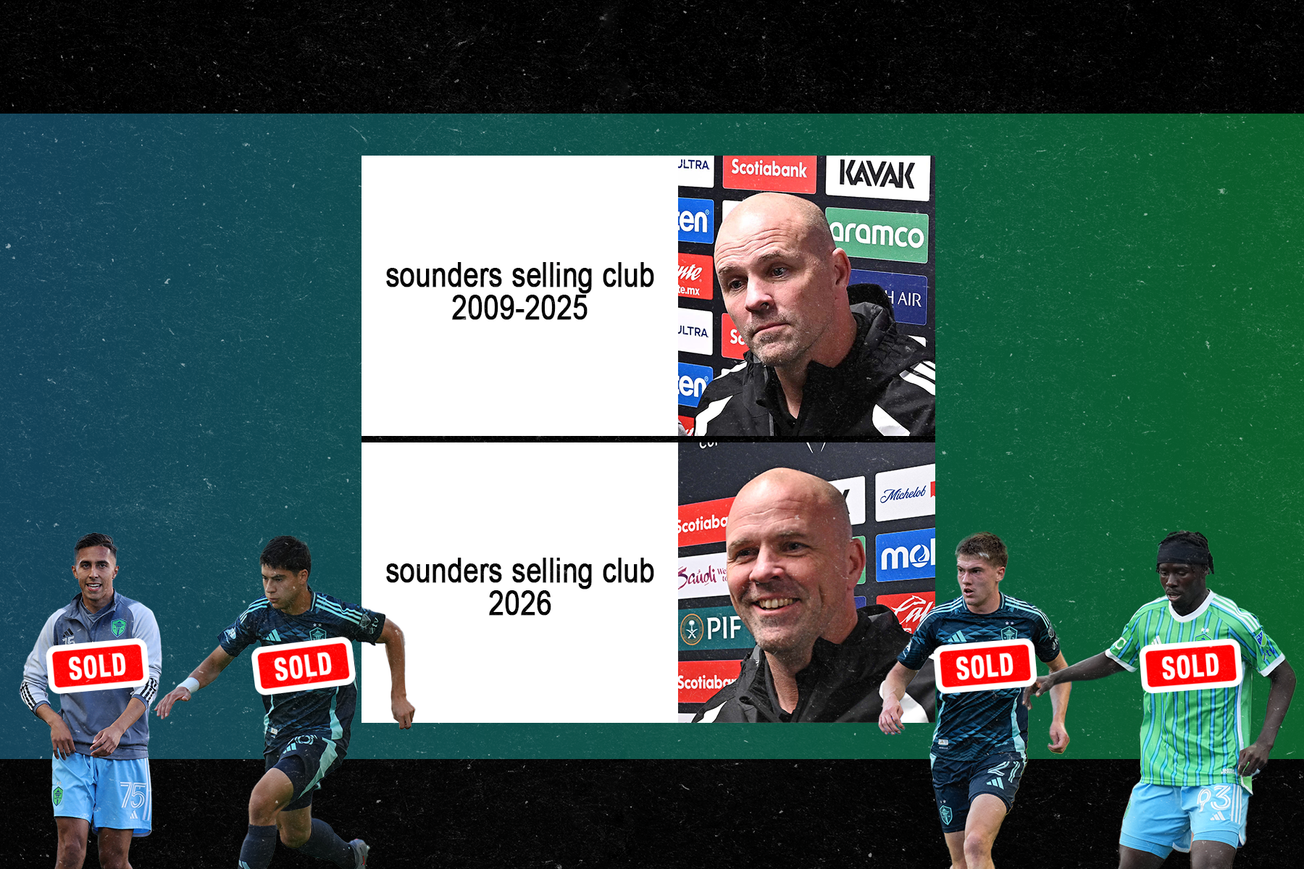
Facing a reality that they were no longer one of the highest-spending teams, the Sounders determined that they’d need to become more comfortable with the idea that they were a “selling club.” Perhaps counter-intuitively, they saw this as the only way they could also maintain their championship aspirations.
The degree to which they’ve embraced this ethos has been a bit head-spinning.
Last week’s trade of Georgi Minoungou to the Colorado Rapids in exchange for $2 million in General Allocation Money — with escalators and a sell-on fee that could push it even higher — marked the fourth transaction this year in which the Sounders netted at least $750,000 in cash or GAM. In the last 14 months, they’ve made moves that could bring in close to $8 million in cash and GAM.
Here’s the hows and whys of this transformation:
A history of allocation money
Basically ever since they entered MLS in 2009, the Sounders’ roster-building ethos was that they only moved players when a clear case could be made that it provided some immediate benefit. If a player was getting regular time and not making much of a fuss, the Sounders would generally hold them. The net result was a roster that remained relatively stable.
In the nine years between March 2016 to February 2025, the Sounders made just three outgoing player moves that brought in at least $200,000 in either cash or allocation money and never brought in more than $750,000.
During that time, the Sounders still supplemented their salary cap in other ways. They were — and remain — one of the most aggressive teams at getting green cards for their players, which allows them to flip international roster spots for allocation money. Just since 2022, the Sounders have traded 19 international spots, second only to Nashville SC (23) during that time.
At the same time, the Sounders’ ability to stock their roster through Homegrown signings has allowed them to trade draft picks and they’ve further supplemented their GAM haul by collecting fees in exchange for Discovery rights.
Perhaps, more importantly, they were also always willing to max out their Targeted Allocation Money budget.
Understanding the TAM budget also helps inform why the Sounders felt they had to change their strategy. TAM was a budgetary device created by owners that allowed them to spend discretionary money on players who weren’t quite expensive enough to be Designated Players but were not able to fit under the normal roster constraints. Notably, TAM, unlike GAM, could not be traded.
Each of those devices effectively served to raise the salary-cap space that each team had at its disposal and the Sounders were effectively able to keep pace, even without supplementing their GAM budget by making out-of-league transfers. That strategy allowed them to be arguably the league’s best team from 2010-2019 and has allowed them to remain competitive ever since.