SEATTLE – The Seattle Sounders have been no stranger to disappointing nights in front of net in 2026, and Saturday’s 0–0 draw with Red Bull New York, which pushed Seattle to 11-straight MLS matches without a win, was certainly not an exception. But regardless, it’s easily the closest Seattle has come to picking up three points since the World Cup break.
With the final stretch of the regular season not too far in the future, and fans desperate for a winning performance from a club which has turned home victories into a habit for their entire history, the feeling is that Seattle may finally be at the level to break out of a vicious cycle.
The Sounders have struggled mightily to finish their chances this season. In fact, they’ve struggled more than any other team in MLS. This is most prevalent when looking at every advanced metric nerd's first love, expected goals.
For those unfamiliar, expected goals (xG) is a metric that uses shot location, type, and defensive coverage to determine the likelihood of producing a goal as measured by a fraction of a full goal. A shot with a 30% chance of finding the twine produces 0.30 xG, while a shot with a 2% chance of beating the keeper will only produce 0.02 xG. Teams accumulate xG throughout a game and throughout a season, and while the metric has its flaws and blind spots, it is a good rough estimate of how dangerous a team is through 90 minutes.
Seattle has scored 24 goals in 2026, 29th in MLS, only above Sporting Kansas City. Seattle has also produced 31.1 expected goals, 23rd in MLS. The issue lies in the discrepancy between those two numbers. The Sounders have underperformed their 2026 xG by 7.1 actual goals. The only team to underperform their xG at a worse level is the Sounders’ most recent opponent, Red Bull, who have only scored 32 goals despite producing 40.6 xG (-8.6 goal differential).
NYRB's high xG output can be chalked up at least in part to the ultra-aggressive high press put in place by Michael Bradley, which has racked up shots that are smaller xG ticks, without creating a particularly high number of high-percentage goal-scoring opportunities. It is also worth noting that NYRB has eight more goals than Seattle, and goals win games.
A simpler way to measure a team's expected output is the “big chance” metric, which tracks every time a shot by a team produced about 0.30 XG on its own.
Seattle has tallied a total of 57 “big chances” in 2026 according to FotMob, converting 17 and failing to convert 40. Every team in MLS to miss at least 40 big chances in MLS in 2026 (15 teams) has also scored at least 10 more goals than the Sounders. The only team with fewer goals than Seattle, Sporting KC, has also created 14 fewer big chances and nine fewer total expected goals. Put simply, the Rave Green have been creating big chances like a top-half offense, and scoring them with less efficiency than anyone.
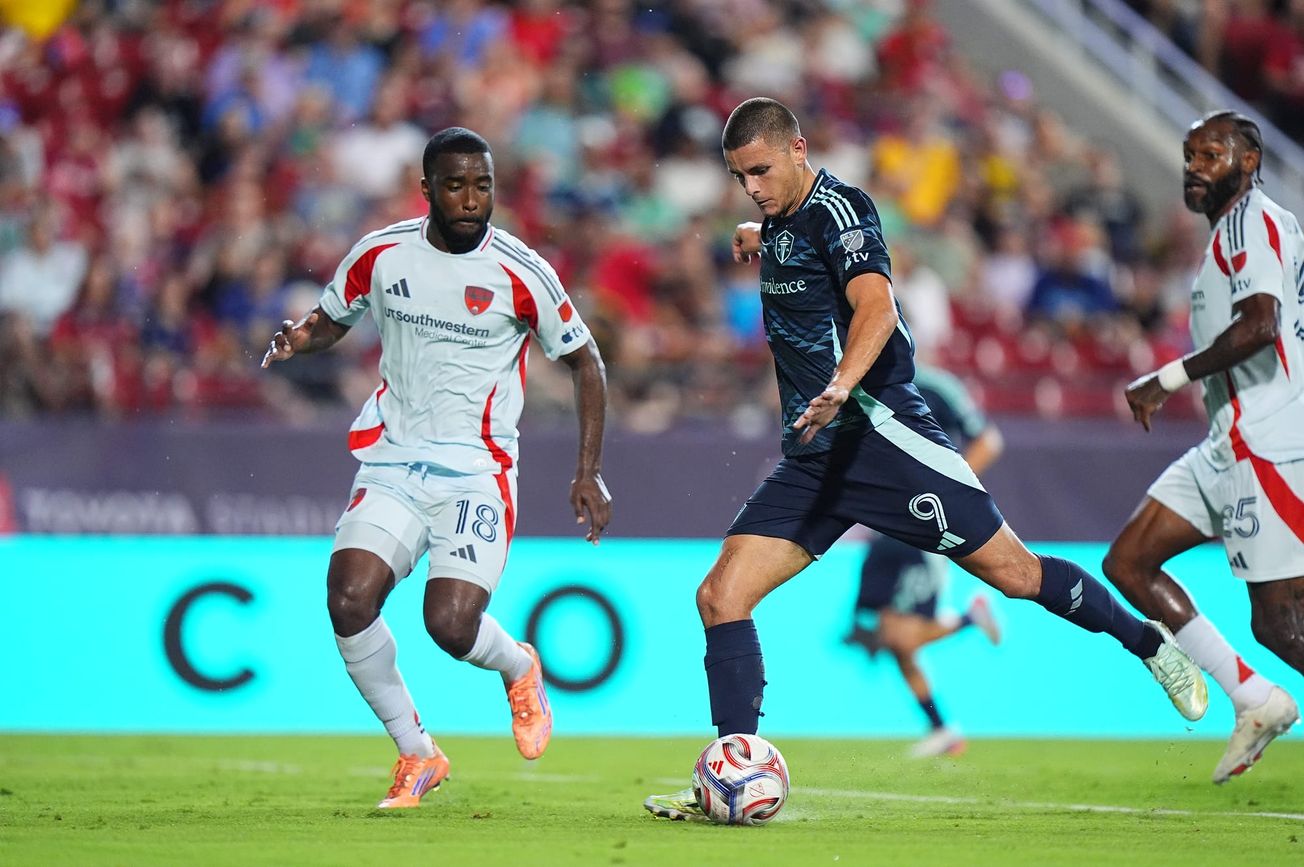
Saturday’s match had all the makings of a high-scoring affair: a New York team with a penchant for an aggressive press, a Seattle squad with pace to abuse open space, and an in-form striker in Dejan Joveljić.
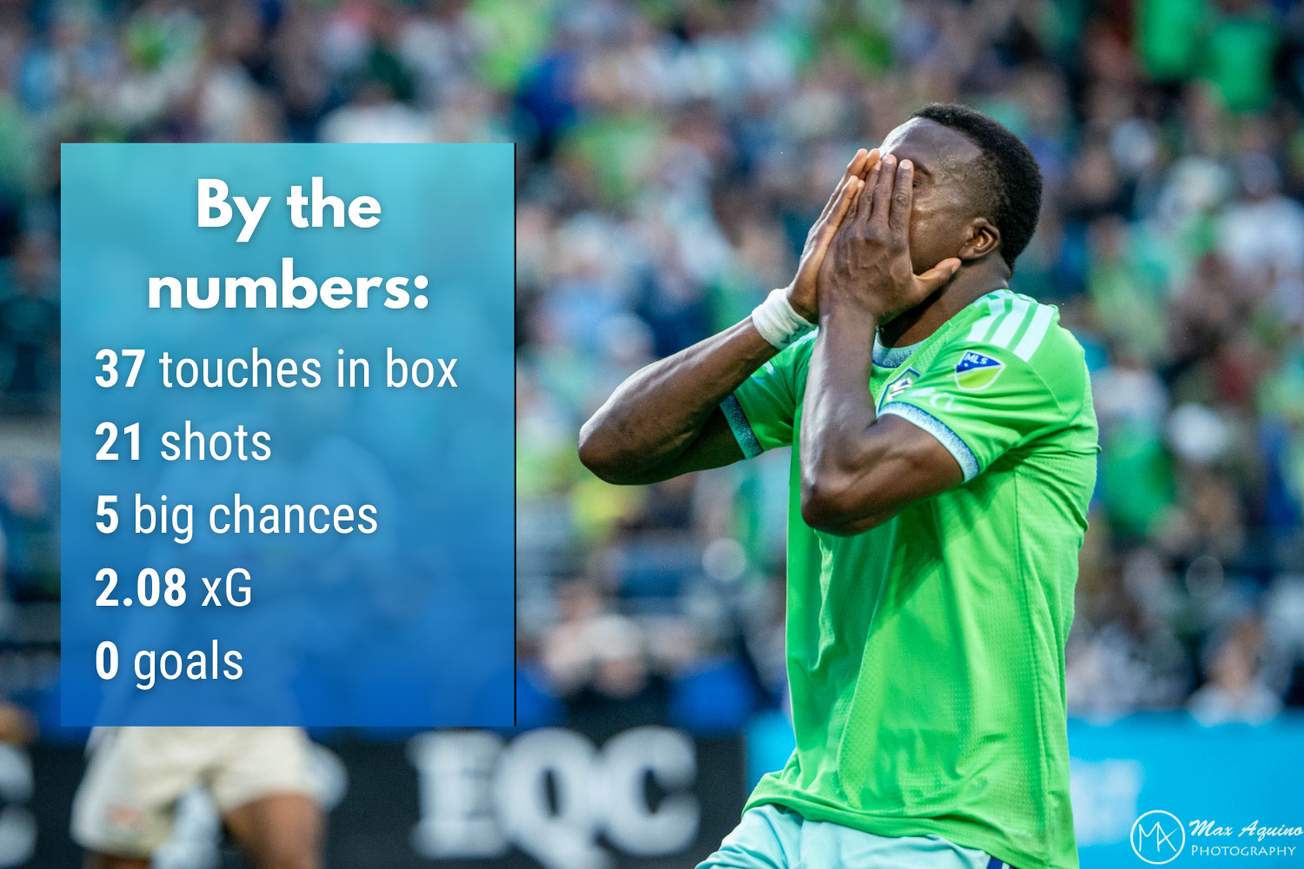
But after 90 frustrating minutes, Seattle had racked up more than 2.0 xG without finding a winner in a 0–0 draw. FotMob has them at 2.08 XG while the Apple TV broadcast marked them at 2.31.
Seattle’s -2.08 xG differential vs NYRB is their worst XG underperfromace of 2026 by a full 0.50 xG. The last time Seattle had a differential of more than 2.0 xG was the first leg of the 2025 playoffs in Minnesota, when Seattle accumulated 2.40 xG without scoring against a park-the-bus playstyle from the Loons.
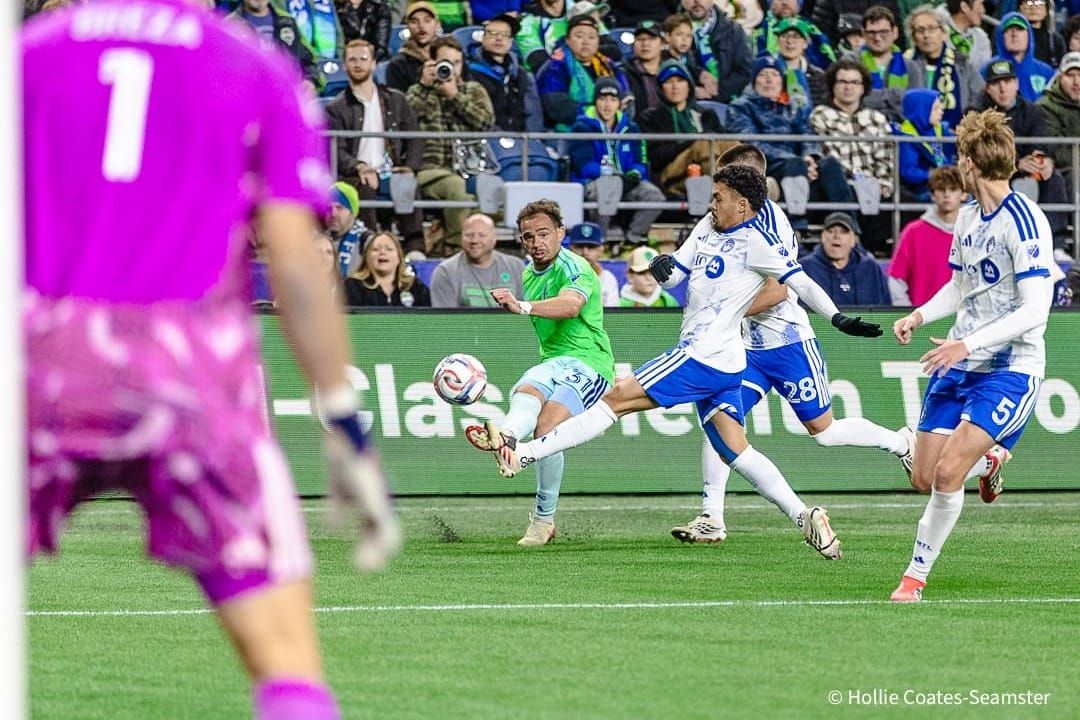
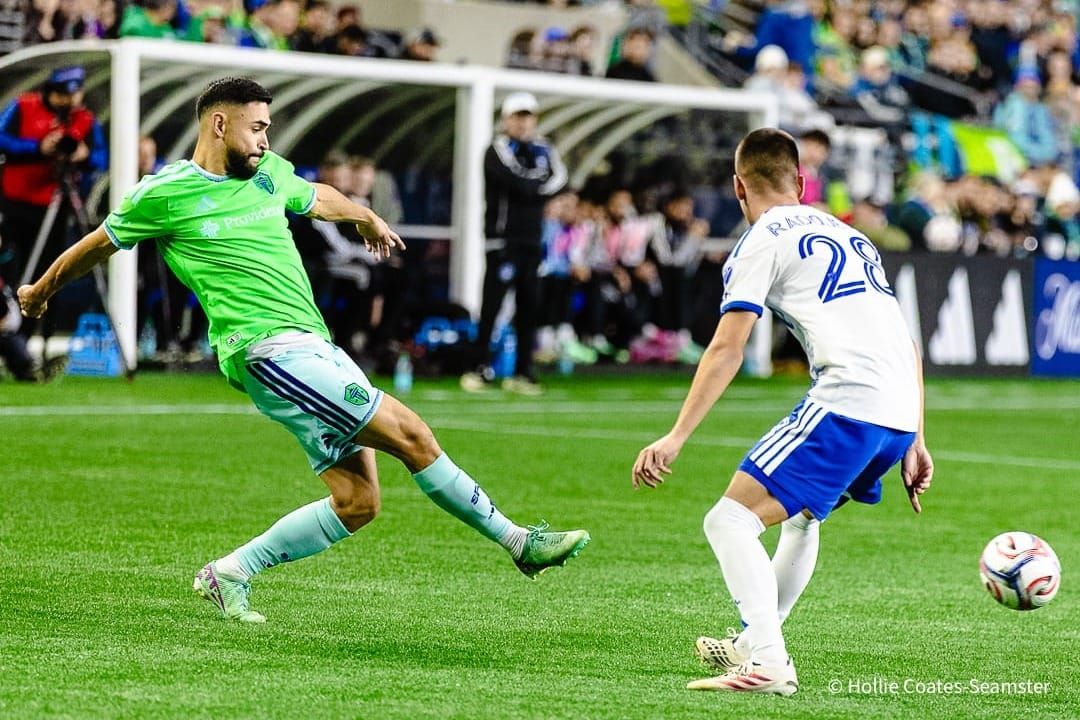
NYRB was not parking the bus on Saturday, in fact they were leaving acres of space in behind for Seattle to attack. The Sounders racked up 21 shots, 37 touches in the box, struck the woodwork twice and forced six mostly brilliant saves out of Ethan Horvath.
But beyond all of this statistical doom and gloom, it’s not hard to look at the performance as a positive sign. This is the first time during the Sounders’ 11-match winless skid that they have produced more than 2.0 xG, and any Sounders fan could certainly describe this performance as perhaps the best they’ve looked since the World Cup Break
When asked if this was the most complete 90-minute performance he’s seen since the World Cup, Brian Schemtzer’s response was tactful but optimistic: “Maybe… it was a complete game from the eye test. I felt we created enough to score at least one.”
Schmetzer also made it clear that even if this was the best 90 the Sounders have played since May, it still isn’t a team close to full-strength.
“Was it our most complete game? It’s too early to tell. With (Joveljić’s) insertion, (Morris) coming back, (Christian Roldan) finally coming back… when we get everybody together… I’ll tell you whether this was a complete performance and a complete team.”
Schmetzer is absolutely right to point out that this was a transition game for Seattle roster-wise, as Jordan Morris and Christian Roldan return to the fold, while Dejan Joveljic is still just a couple of weeks removed from joining the squad. Jovelic is the Sounders highest scoring #9 in 2026 despite only playing two matches, Jordan Morris looked in his best form of the season in the first 45, and Christian Roldan won player of the match in his return start from Injury.
This team is just getting back to looking like the Seattle Sounders that fans have become accustomed to over the years. While Saturday’s match could be categorized as one of the most frustrating of the season, it also holds a lot of green flags that this squad is moving in the right direction, and the storm could be clearing very soon.