You easily could have missed it amid all of the attention around this year’s tournament, but in late December FIFA revealed the bids that they received from federations to host the 2031 and 2035 Women’s World Cups. The sole bid for 2031 was a joint proposal from the United States, Mexico, Costa Rica and Jamaica. Although a formal vote still needs to take place to approve the bid, this all but assures the USA of hosting the women’s tournament for the first time since 2003.
As part of the bid, 20 potential host cities were profiled, including Seattle, which was lauded for its long history with women’s soccer and support for collegiate and professional women’s sports.
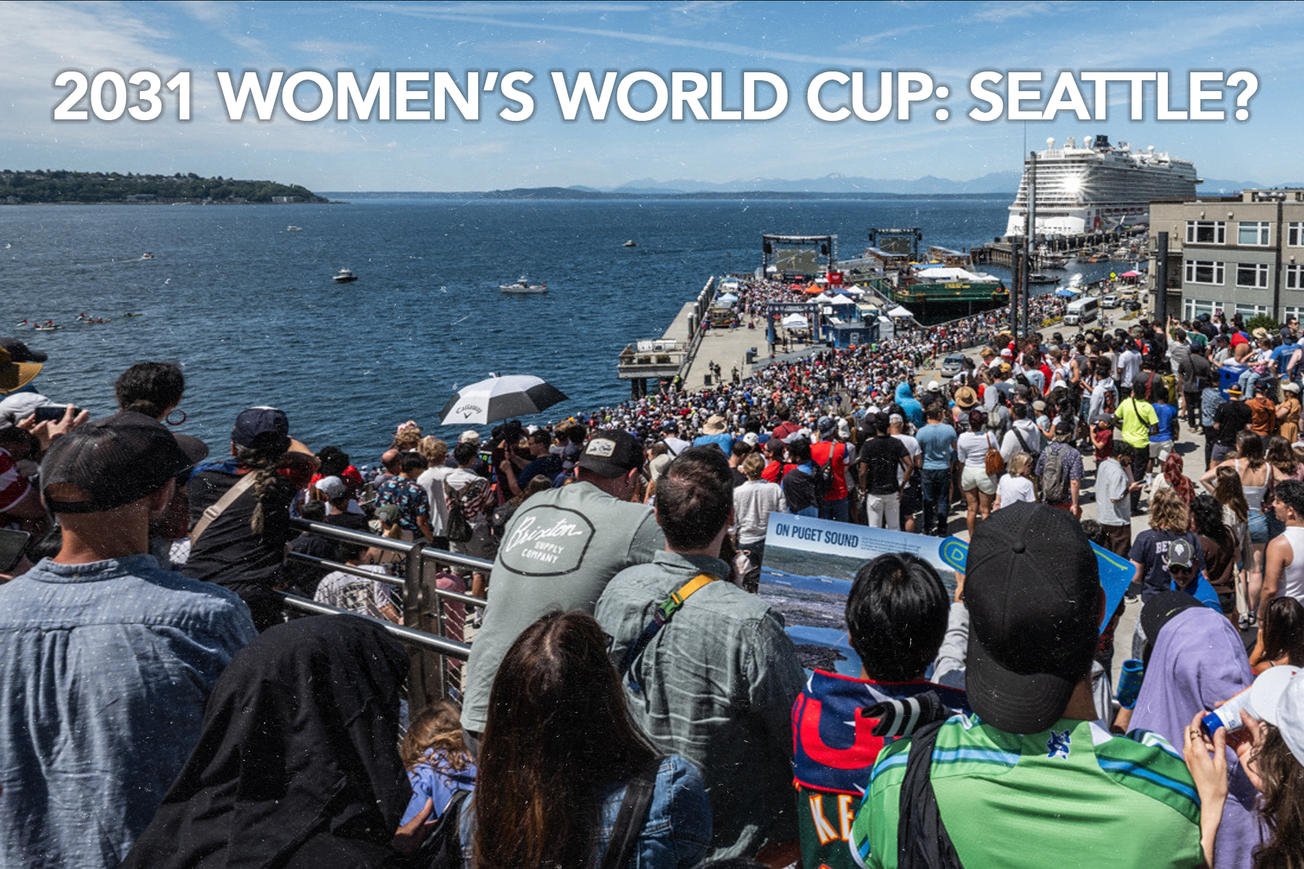
Local organizers from the 2026 men's World Cup have already started publicly talking about bringing the women's tournament here, too.
Here’s what you need to know:
 Jeremiah Oshan
Is the 2031 Women’s World Cup really coming to the United States?
While it’s not official until the FIFA Congress meets in November and votes on the bids, it appears to be a fait accompli at this point. With the tournament growing to 48 teams in 2031 and FIFA desiring to cycle each edition between different continents, no other bids were received for 2031. Similarly, a joint UK/Ireland bid is the sole proposal for 2035 and is expected to be approved at the same FIFA Congress meeting.
However, the vote was originally scheduled to occur at a FIFA meeting in April, but had to be delayed after the Trump administration refused to sign off on required guarantees while attempting to pressure FIFA and U.S. Soccer to adopt draconian anti-transgender athlete policies. Whether either side budges before November remains to be seen.
Why was Canada not included in this bid, unlike the 2026 Men’s World Cup?
Having recently hosted the 2015 Women’s World Cup on their own, Canada Soccer felt that the Concacaf bid would be received more favorably without their involvement, which opened the door to the USA and Mexico inviting smaller Concacaf nations to join them.
What does it mean that Seattle was profiled in the bid book?
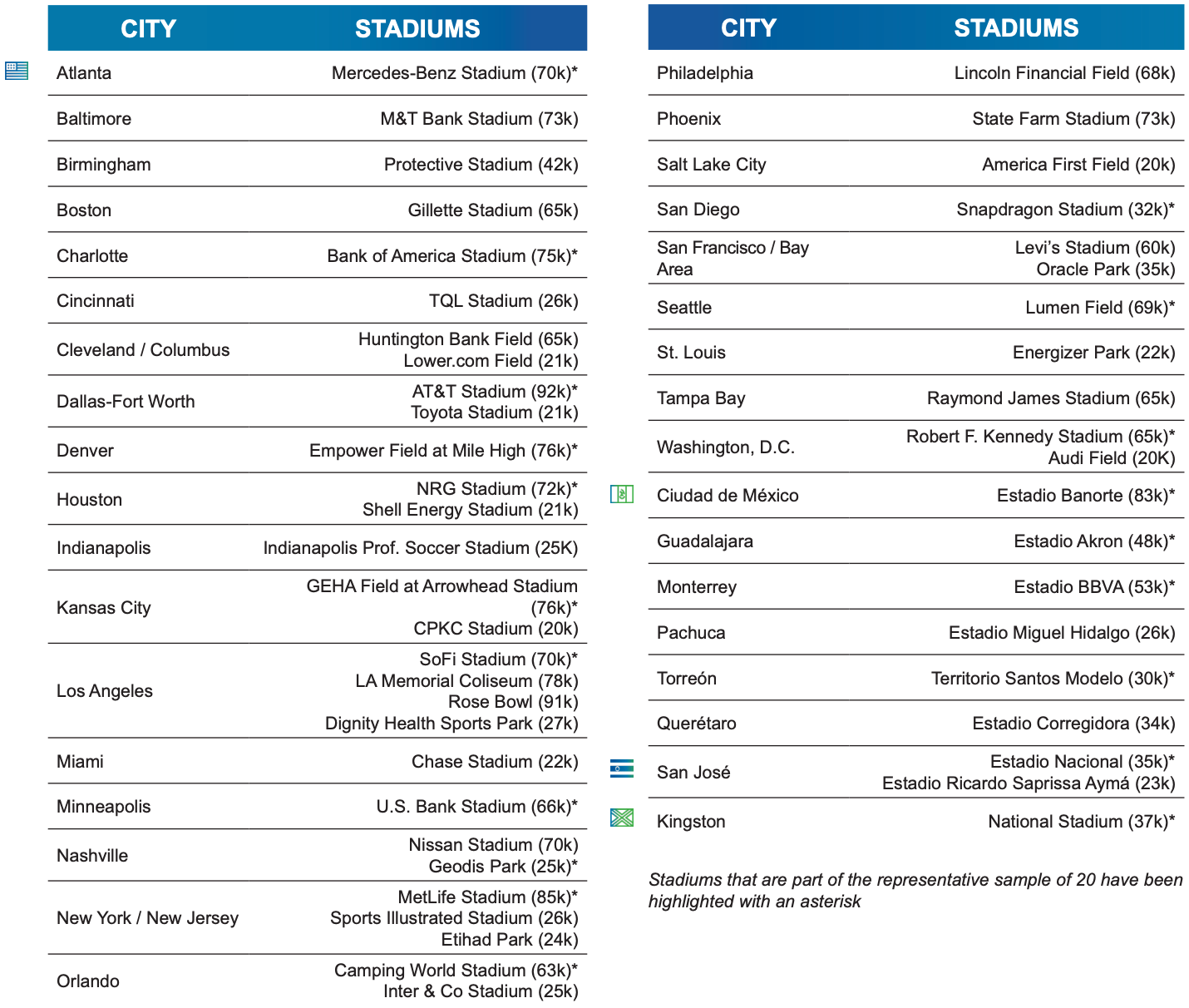
The overall proposal lists 35 potential host cities and 49 venues, with a subset of 20 profiled more in-depth. Some of this likely reflects the reuse of content which was already available from the 2026 men’s World Cup bid book, and let’s be honest – it’s a lot easier to hype up the metronatural wonders of Seattle than somewhere like Birmingham or Salt Lake City.
The venues that are profiled were selected to represent “the diversity in geography, scale, and infrastructure readiness”, but all 49 venues will be given equal consideration when it comes time for FIFA to select host cities.
Why is Portland not in the bid?
That’s a good question! The minimum venue size for the women’s tournament is 20,000 and a number of stadiums of similar size to Providence Park are included. I expect that many of the smaller venues will be weeded out during the review process because FIFA wants that sweet, sweet ticket revenue, so perhaps they knew they’d be overshadowed by us.
How likely is Seattle to be selected?
The odds are good! For broadcast purposes, the tournament organizers will want to spread games across time zones and there are only a few West Coast cities in the proposal – Seattle, San Francisco/Bay Area, Los Angeles, and San Diego. Seattle also benefits from being geographically distinct, offering the potential to draw fans from the wider Pacific Northwest area, especially if Canada plays any games at Lumen Field. The rave reviews the stadium and city just received during the 2026 men’s tournament are also going to be a big net positive during the selection process.
Previous Women’s World Cup tournaments have typically included 6 to 10 host cities, but with the event doubling in size from 2019 (when 9 cities were chosen for 24 teams) and global media wanting matches spread out in more timeslots, there will be a need for more venues than ever before. The 2026 Men’s World Cup serves as a model, with 16 host cities for that 48-team tournament. Costa Rica and Jamaica will each have one venue and Mexico has six potential host cities, meaning the US will likely have at least eight host cities, if not more. It is also unlikely that multiple cities in close proximity would be selected – for example, no more than one of the three Florida candidates would likely be selected, if any; and likewise only one of Baltimore or Washington, D.C.
What will the atmosphere be like?
Much of what you’ve witnessed for the 2026 tournament will also feature in 2031. All of the fields will have natural grass surfaces. Host cities will have dedicated fan zones with supporting programming and watch parties, bars will host events, and you can expect a lot of traveling support bringing their own culture and stadium traditions to games.
Will this be another wild goose chase to get overpriced tickets?
Historically, the Women’s World Cup has been significantly more affordable and accessible than the men’s tournament. For example, packages with a ticket to both semifinals and the final in 2019 in France started at €50 (about US$60), and tickets to the 2023 final in Australia started at AUD $40 (about US$28), while group-stage games were even less expensive. The past five women’s finals have sold out, but there was ample time to get tickets in the lead-up to the games without submitting to a lottery to win a chance to wait in a second queue a month later for the possibility of buying a ticket that’s more expensive than your mortgage payment.
But the sport is growing quickly, with a huge influx of money and more sponsor and media attention around the globe, and more federations finally getting serious about investment and promotion for their women’s sides. The experience and demand in 2031 might look completely different from 2023. That said, even with higher demand and price inflation, tickets should not be remotely near the eye-watering dynamic prices being charged for the 2026 tournament, nor as difficult to obtain.
When will we know if Seattle is selected?
The first step won’t come until after the bid is formally approved this winter. Then there will likely be several rounds of review, with some candidate venues dropped after each round. The final venues for 2026 were selected about four years in advance, which means we might get an indication of Seattle’s status in late 2027. Until then, one of the biggest things you can do to help the cause is to continue showing up to other women’s soccer games happening in Seattle.