The Chicago Fire’s evolution under Gregg Berhalter has been seriously impressive, with the former USMNT coach continuing to shape the Men in Red into one of MLS’s elite sides.
While the undermanned, under-pressure Seattle Sounders will certainly face a tough test against the Fire, expect some squad rotation as they’re still in the middle of a hectic schedule. That could play into the Sounders’ hands in their quest for a second consecutive positive result, following their 1–1 road draw with FC Cincinnati.
With Berhalter bringing the nous and a blend of profiles to set his troops up in multiple ways, the team morphs between 4–2–3–1, 4–4–2, and 4–3–3 variants. That allows him to constantly reconfigure their many attacking and midfield options.
The fluidity, rotations, and adaptability mean they can tailor their approach depending on the personnel available, game state, weather conditions, or even accumulated fatigue.
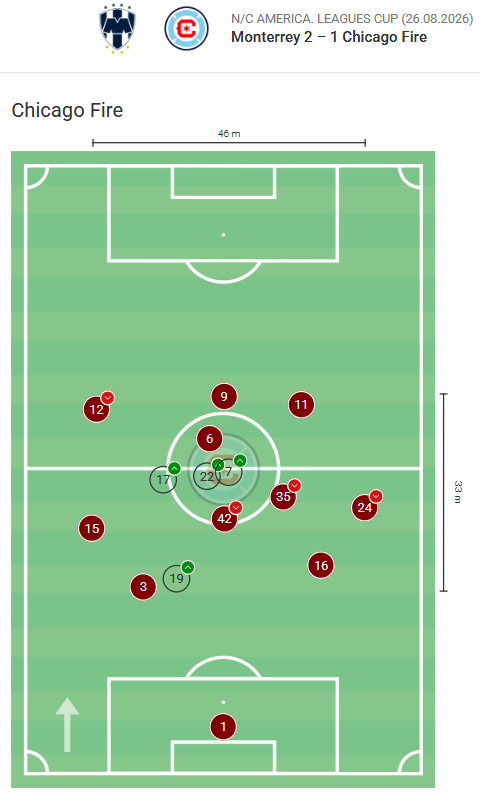
Having reigned supreme in six of their last nine MLS fixtures and three of their four Leagues Cup outings, they deserve immense credit for managing their brutal recent period so well, with Berhalter astutely alternating between sitting deep and looking to hurt opponents on the counter and controlling proceedings with more patient, methodical possession.
Boasting plenty of firepower and class in attacking areas such as superstar Robert Lewandowski, Philip Zinckernagel, Jonathan Bamba, Puso Dithejane, Maren Haile-Selassie, and Robin Lod, this has been an enormous weapon for them, for it’s ensured they can punish opponents at will and possess game-changers that can turn a contest in an instant with a moment of magic even when they're flattering to deceive. This makes them so dangerous and difficult to play against.
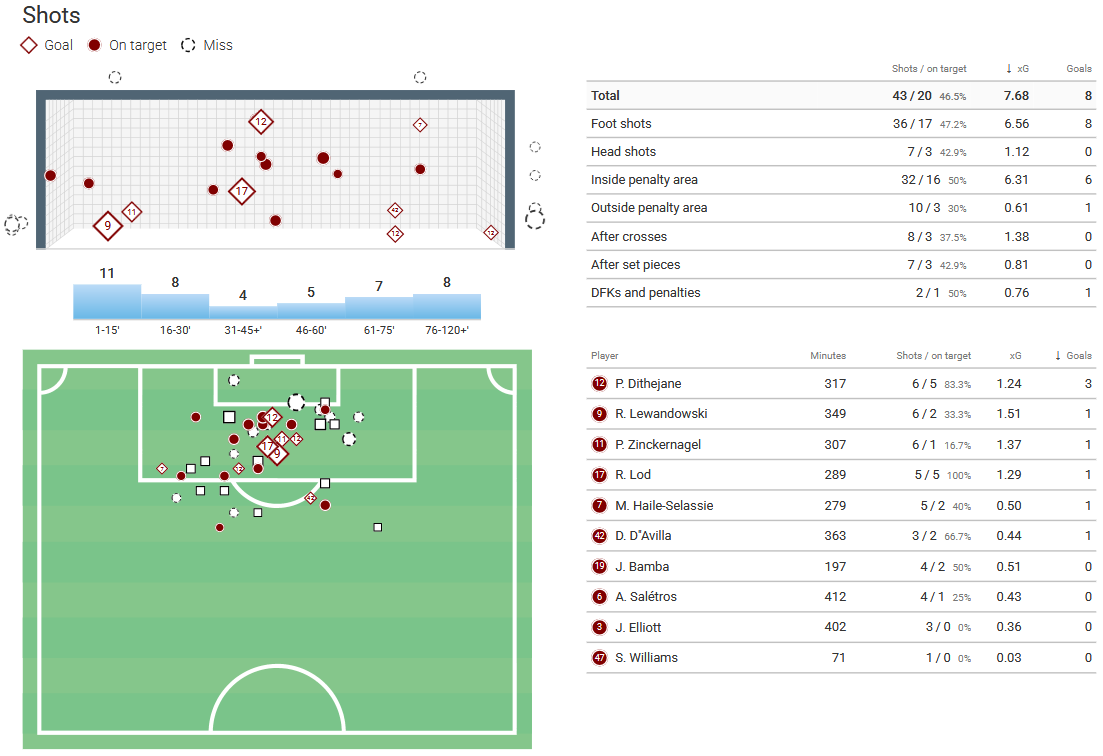
With a plethora of talking points to unpack from a tactical perspective, here’s a breakdown of what the Sounders need to be alert to when they face the Fire.
In build-up, the center backs and fullbacks spread wide to stretch the first line of pressure, with Djé D'Avilla often tasked with dropping deeper as a vital connection point. His capacity to facilitate numerical and positional superiority, hit crisp one-touch passes through the press, and release the fullbacks is integral to how Chicago progresses upfield.
USMNT reserve goalkeeper Chris Brady’s key too, for he acts as an extra man and helps to open up different angles and lanes to overcome the press.
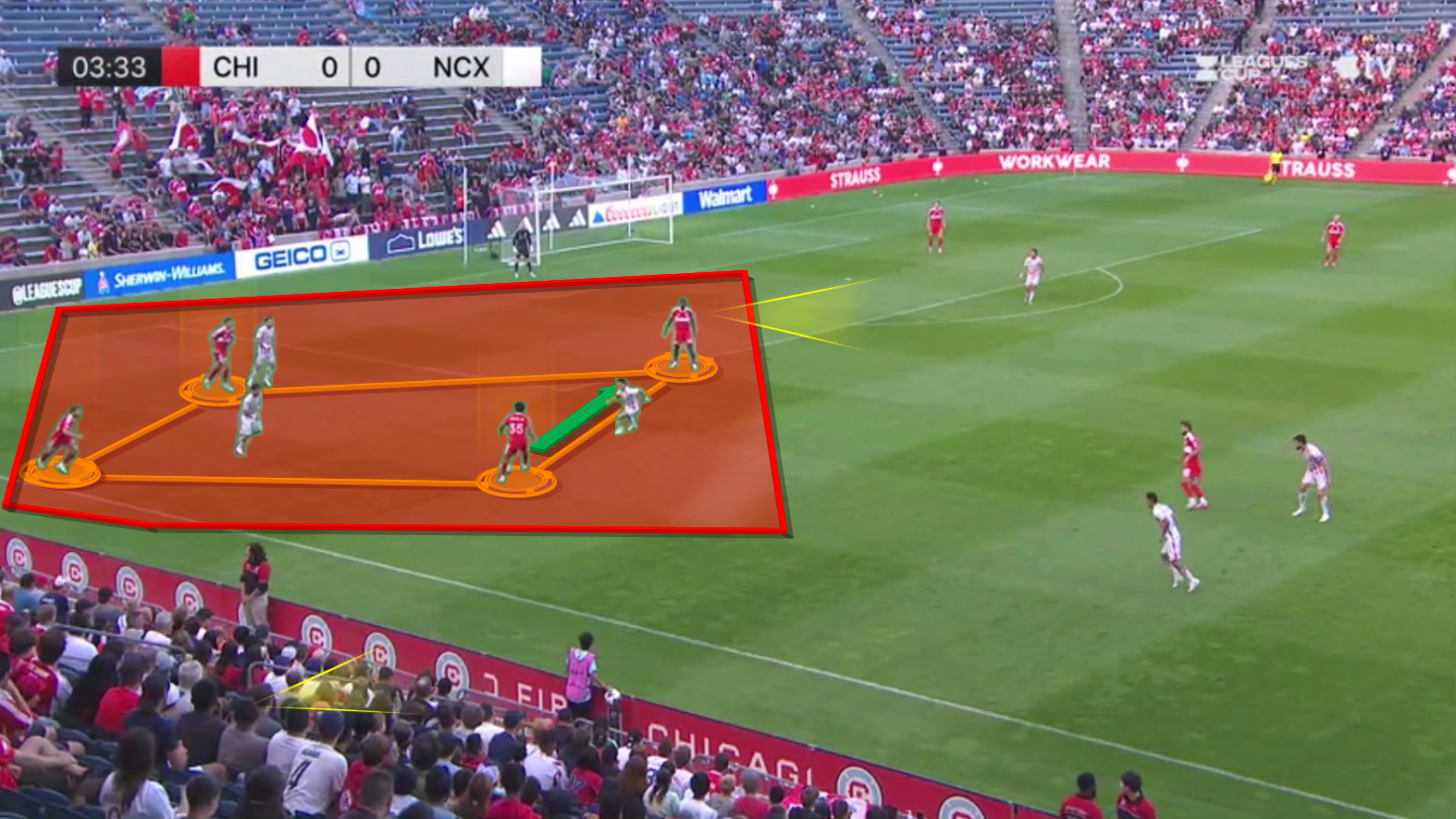
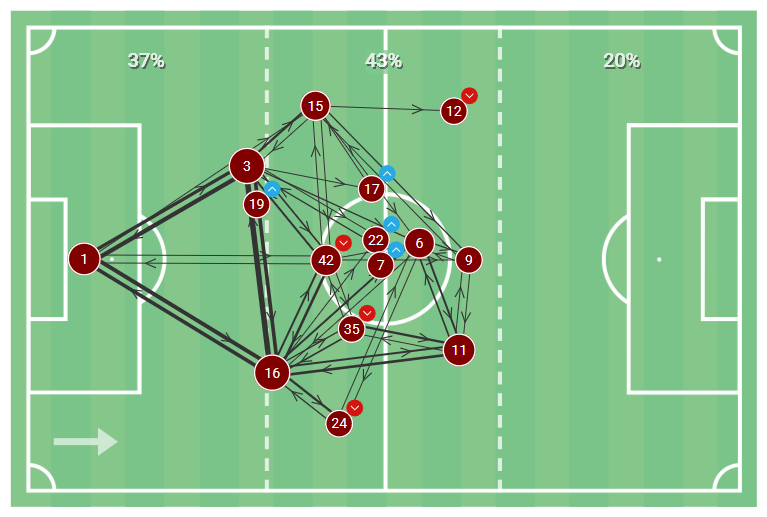
With the central defenders being so comfortable on the ball and willing to carry it forward, their ability to invite and provoke pressure to commit numbers and then find the spare man is a valuable asset toward bypassing the opposition’s first line.
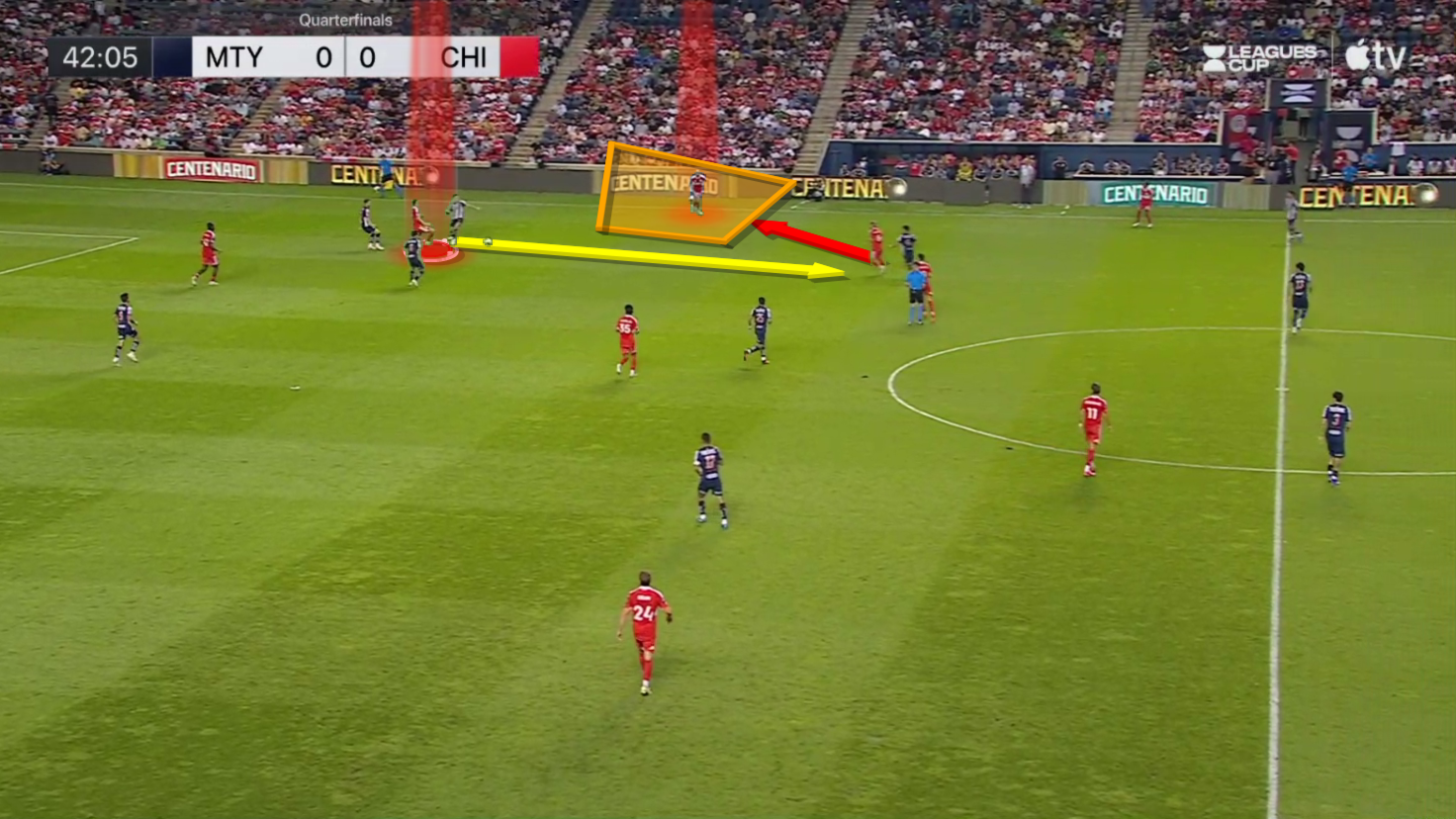
This scene highlights the aforementioned aptly, as center back Jack Elliott dribbles ahead, lures out Andrew Gutman’s marker, then pinpoints Anton Salétros, who completes the third‑man combination to find Gutman unmarked underneath the pressure.
Zinckernagel’s role in progressing the ball is pivotal as well, as he regularly drifts infield from his right wing berth to create overloads in midfield. Here’s a perfect example, where he smartly edges centrally to become the free player before being found via an up‑back‑through combination to set Chicago away.
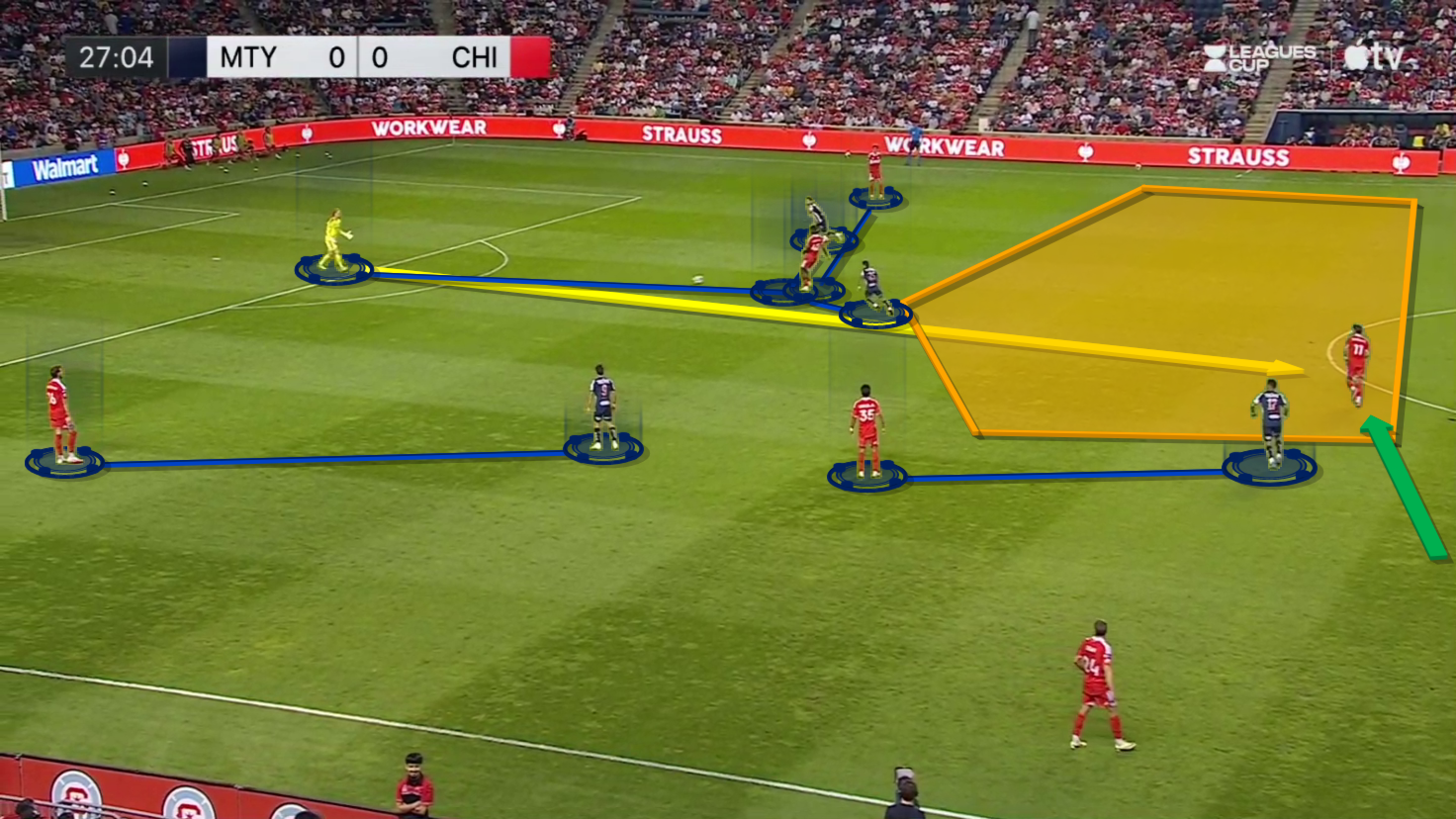
This image demonstrates his awareness and intelligence too, where his positioning allows him to take advantage of the open passing lane to outnumber their foes to progress.
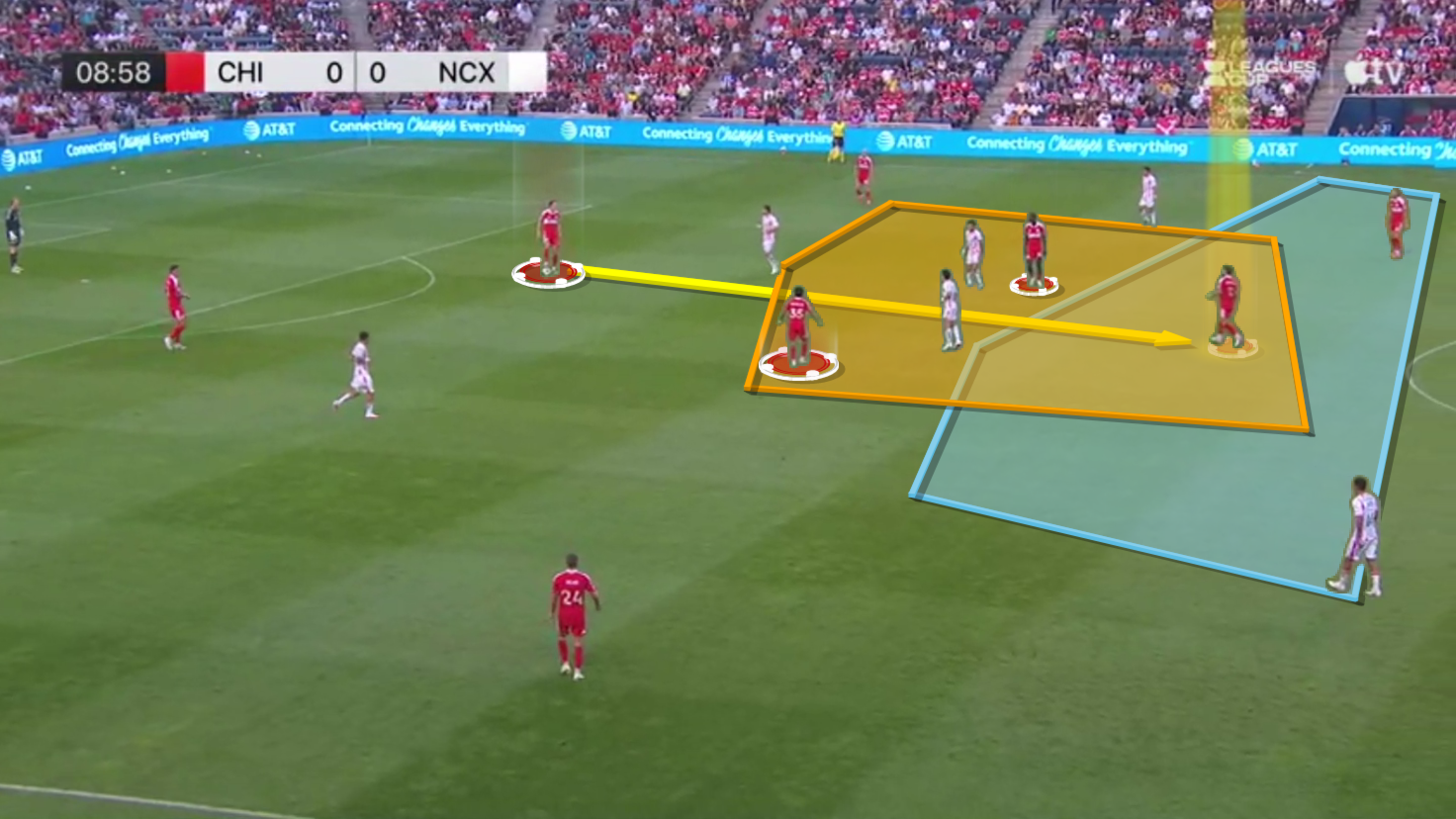
The Danish wizard’s inside movements also make him a menace higher up between the lines and when marauding in behind, as illustrated in the screenshot below. With Salétros drawing his man, Jonathan Dean pushing on from right back, and Lewandowski and Dithejane rotating shrewdly, Zinckernagel made the most of the disconnect in the Monterrey backline to drive into the gap.
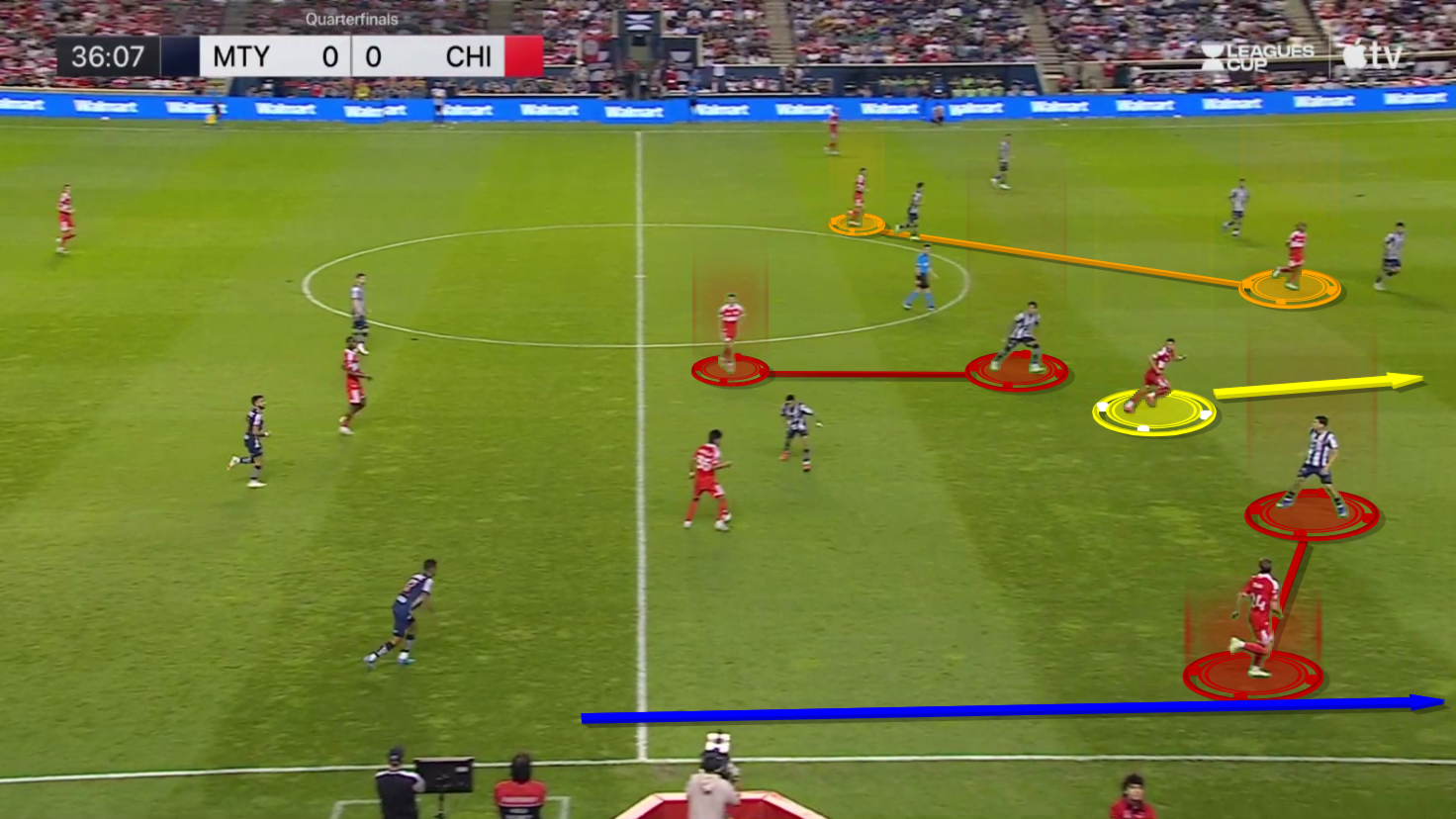
To build further on the theme of rotations, Chicago uses these frequently to destabilize rearguards, add variety, and inject an element of confusion by disrupting marking assignments and reference points. It’s common to see midfielders switching with fullbacks, attackers rotating with each other, and even Lewandowski swapping with the center mids (more on that later) to keep adversaries guessing.
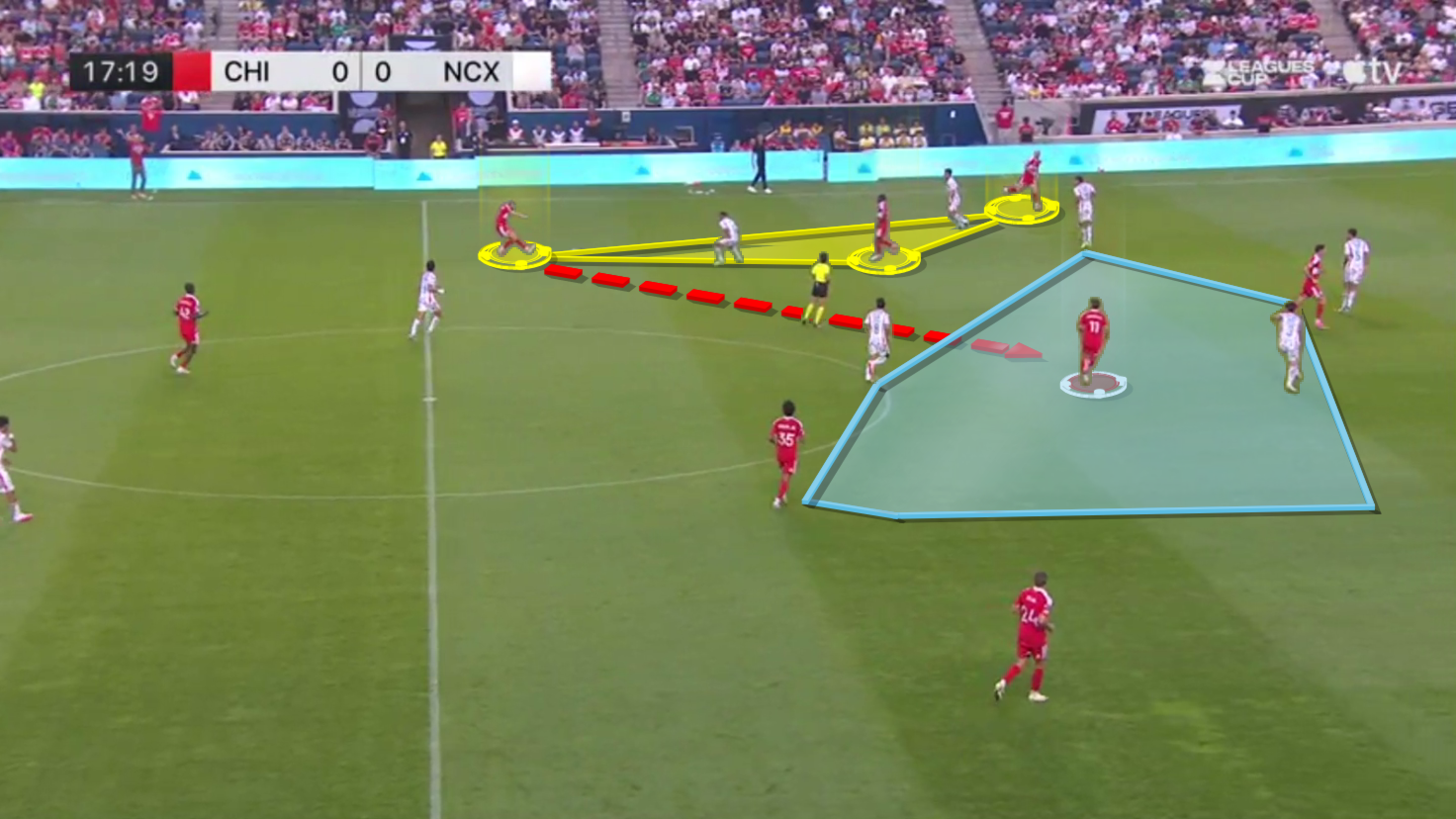
This screengrab depicts one of their trademark exchanges, where the triple-layered rotation between the central midfielder, fullback, and winger successfully opens the space between the lines and unbalances their opponents for Zinckernagel to breathe life into the attack.
Another handy source of danger in their armory is the penetrative bursts from deep by Salétros, whose energy and running power really increases their unpredictability and final‑third threat. Timing and directing his surges superbly while defenders are preoccupied or ball‑watching, he targets gaps wickedly to ghost in behind or into the box undetected to propel Chicago into the final third with gusto.
Dovetailing especially well with Lewandowski, how the dynamic duo rotate and the Pole manufactures space for Salétros to target when he checks towards the ball has amplified the Fire’s offensive impact.
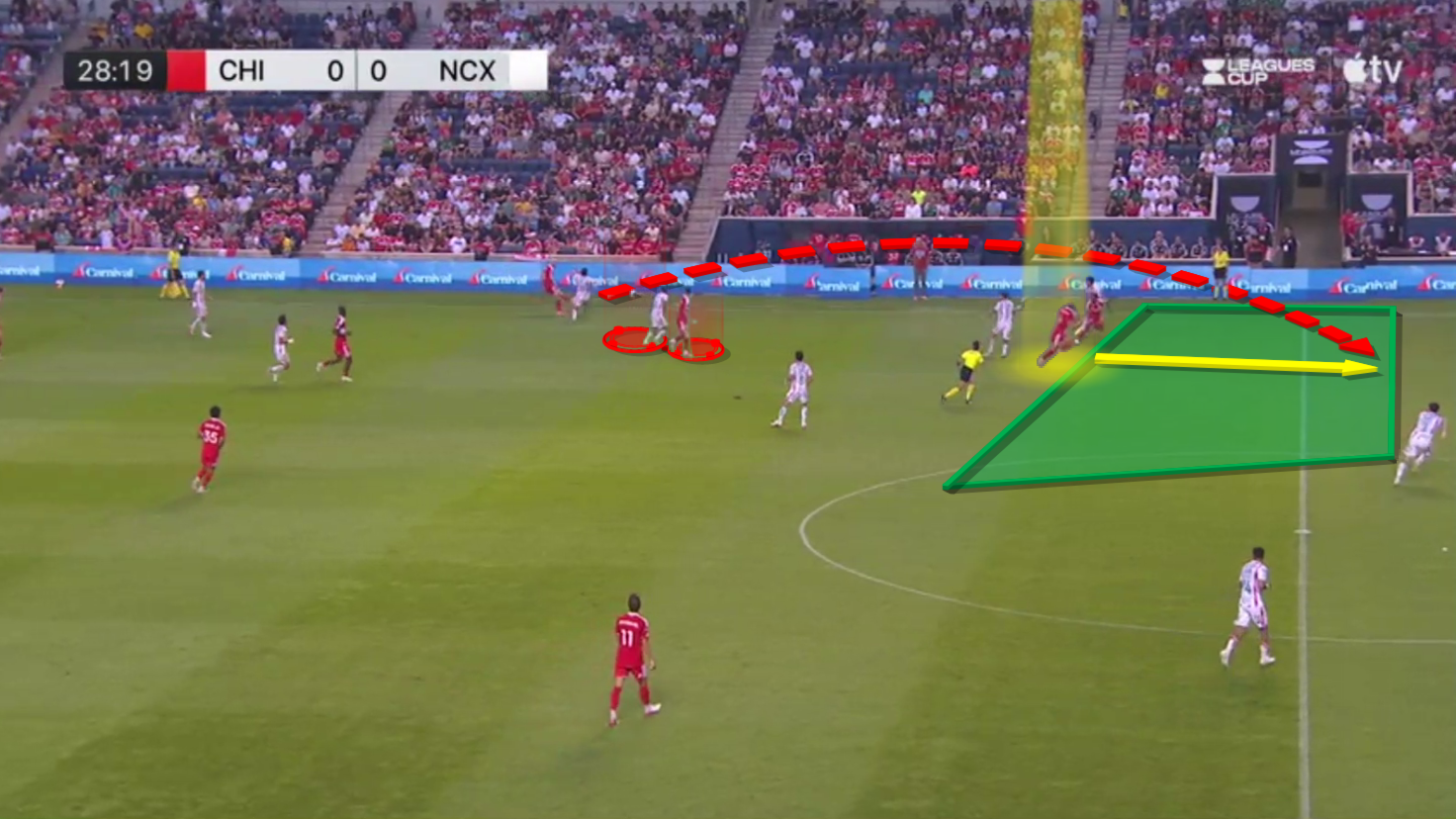
Their frontline narrowing to combine in close proximity is another useful mechanism, as it also condenses the opposition’s defense and allows them to interchange smoothly while creating room for the fullbacks out wide. This serves as an effective tool for attacking disorganized opponents and exploiting defenders on the blindside.
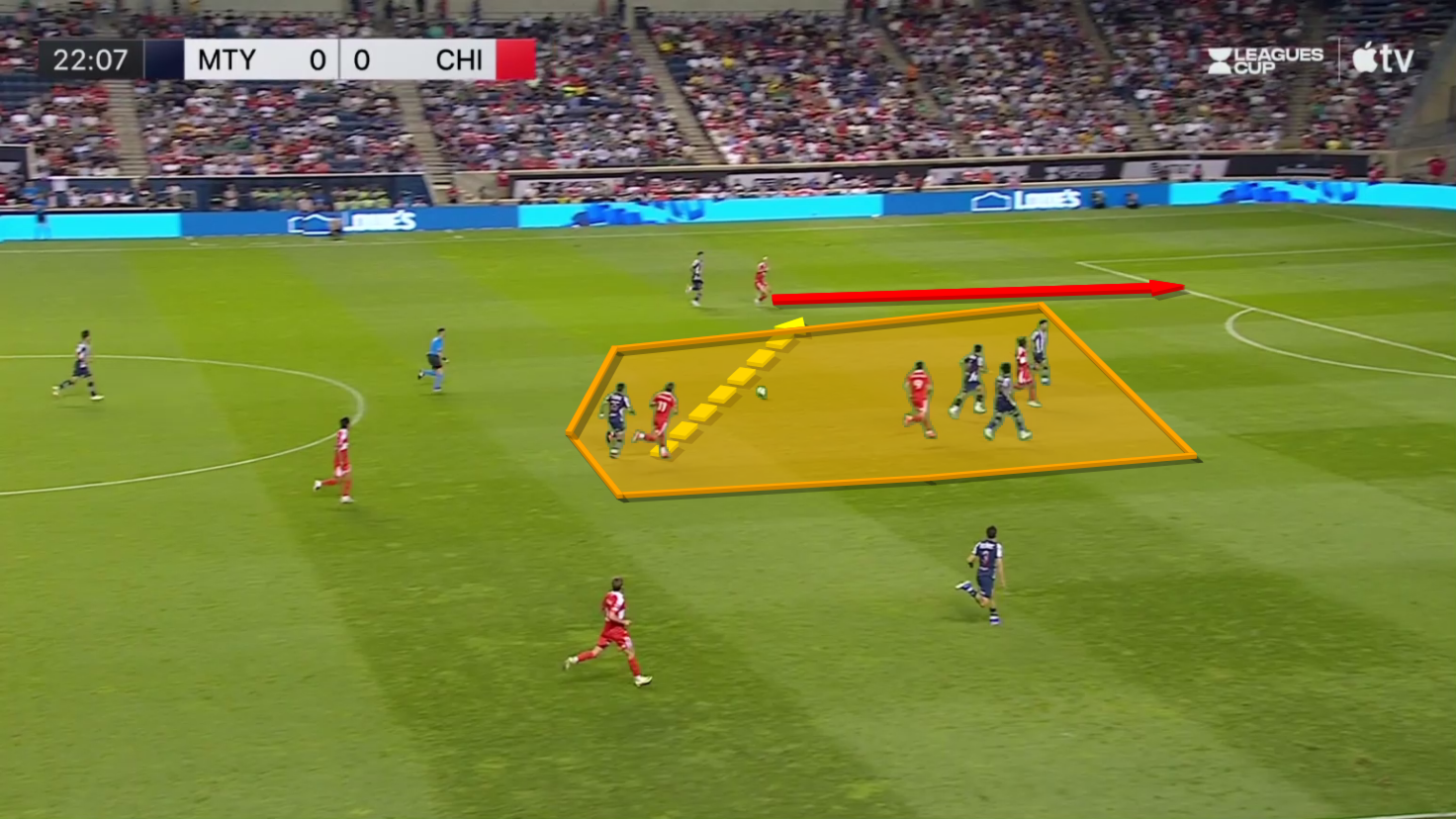
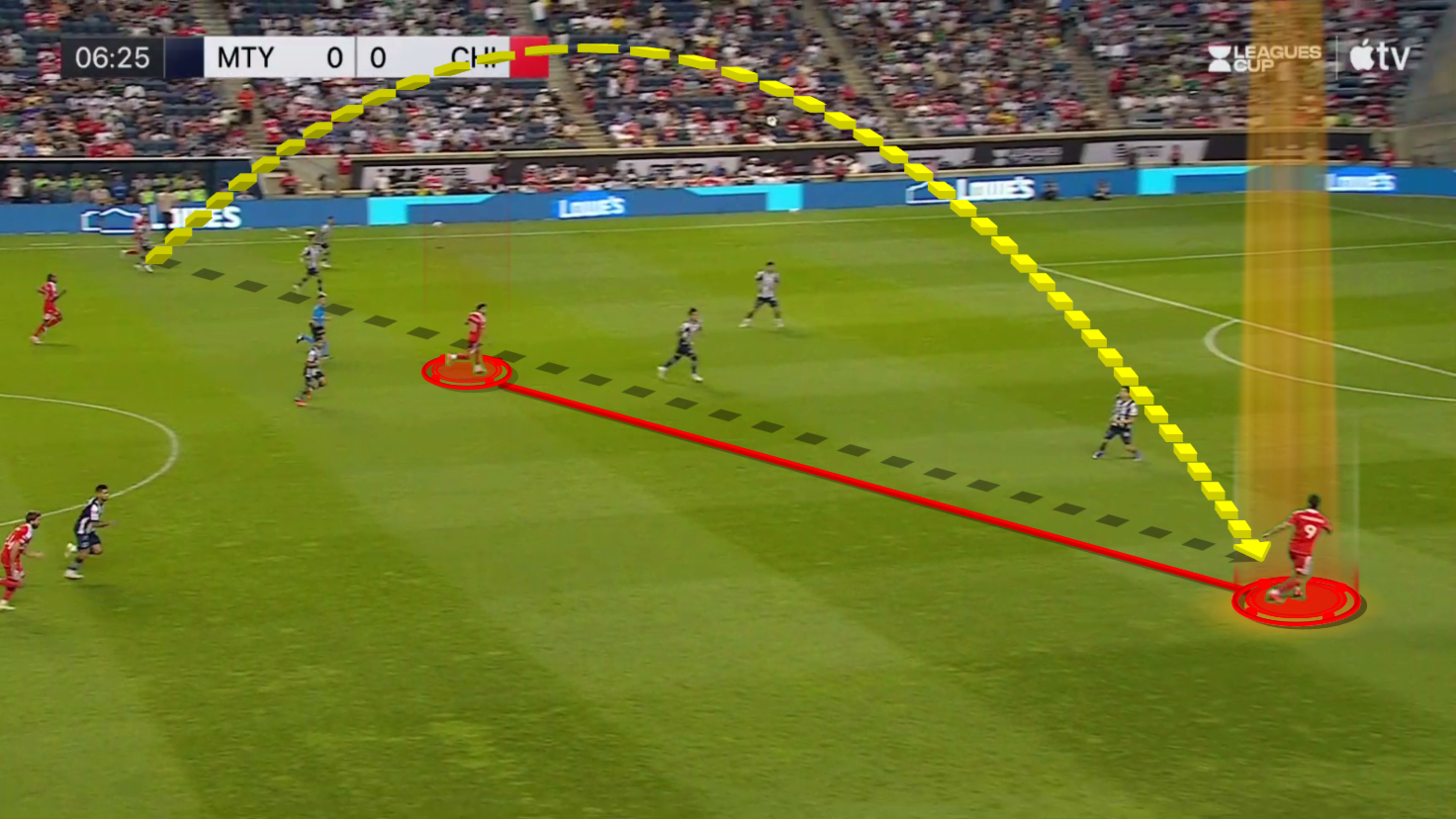
This example is especially outstanding. With Lewandowski drawing so much attention and Dithejane edging centrally to clear the lane for Gutman to advance, Chicago go long from center‑back Elliott to rapidly spring forward and oblige Gutman’s run so he can attack the vacant space. They move coast to coast in seconds to conjure the opportunity.
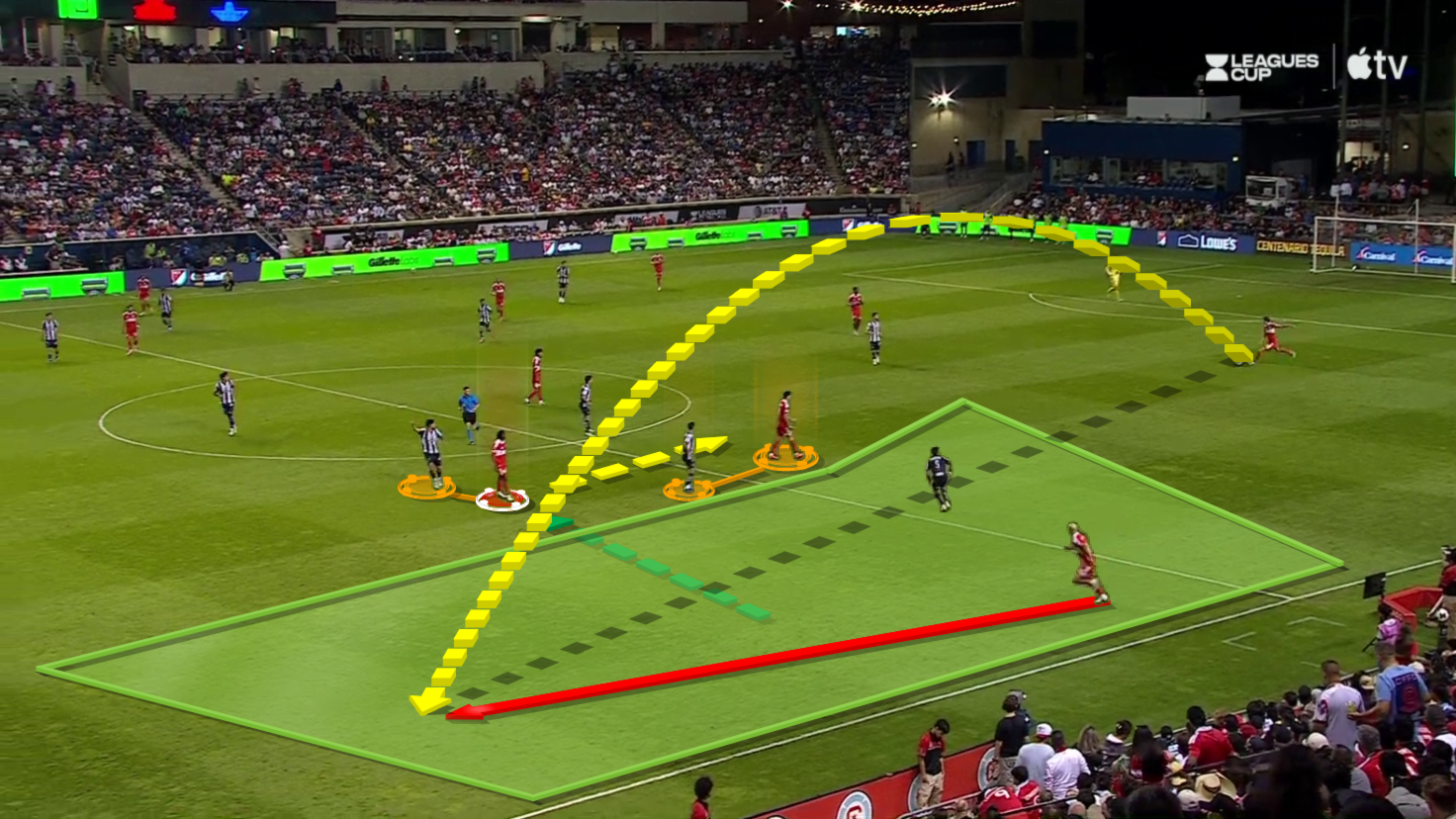
They’re also a genuine force to be reckoned with in transition, as the speed of Dithejane and Bamba, combined with the quality of Zinckernagel and Lewandowski, means they can terrorize backpedaling, retreating defenses, who are often shorthanded.
Obviously having a legendary operator like Lewandowski ties it all together. Acting as a vital leader and as the offensive hub, the Polish ace serves as the focal point of the attack. He’s the backboard for layoffs, holds the ball up expertly, is so clever with his movement to connect play, boasts exceptional box presence, and has exquisite finishing instincts.
Moreover, with Chicago never afraid to launch it long to beat the press, his size, strength, timing of his leap, and aerial prowess make him a terrific outlet to win second balls high up, for his headed flick-ons and knock-downs have been a huge positive to help his team keep the ball or inject momentum into sequences out of nothing.
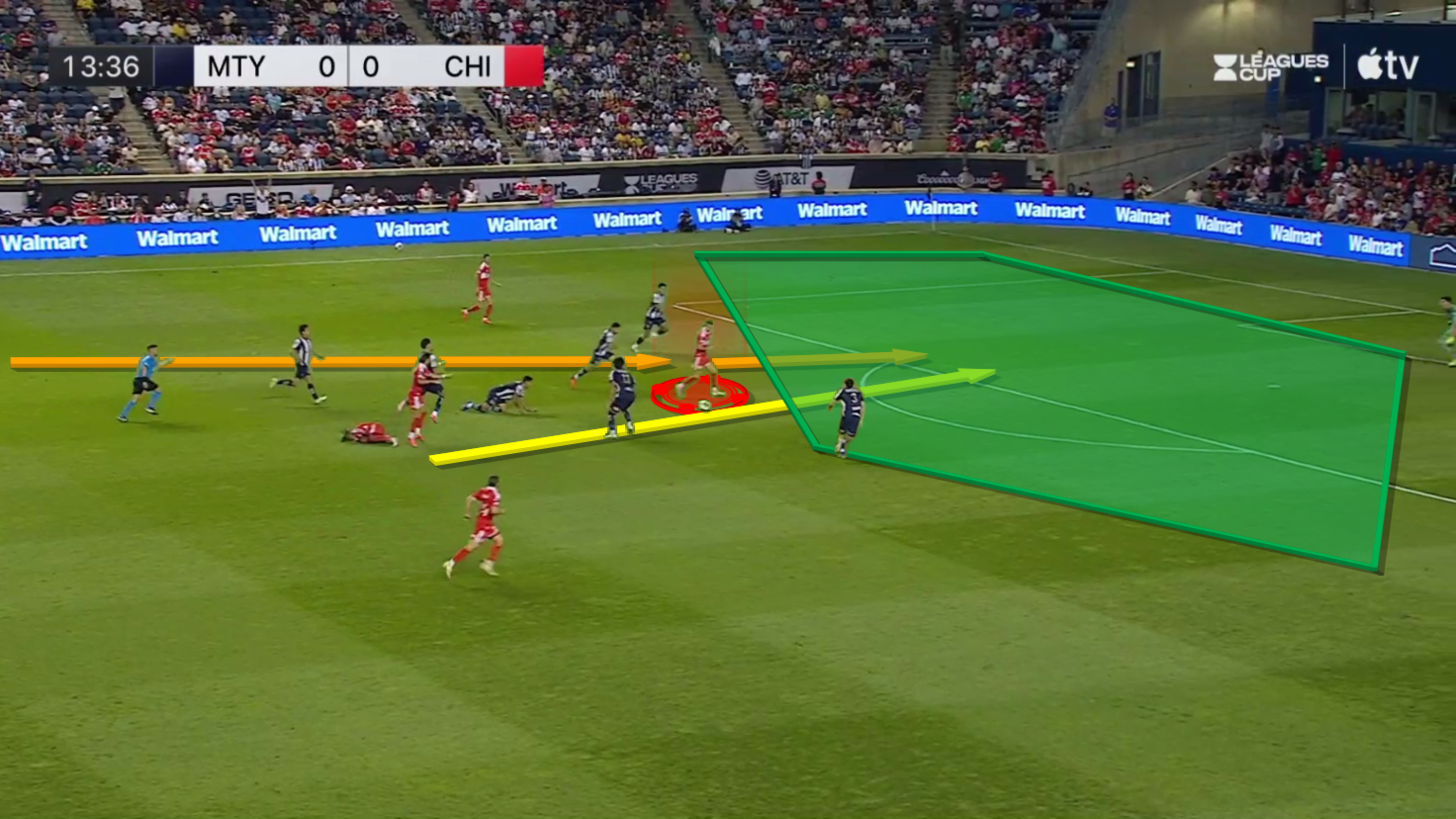
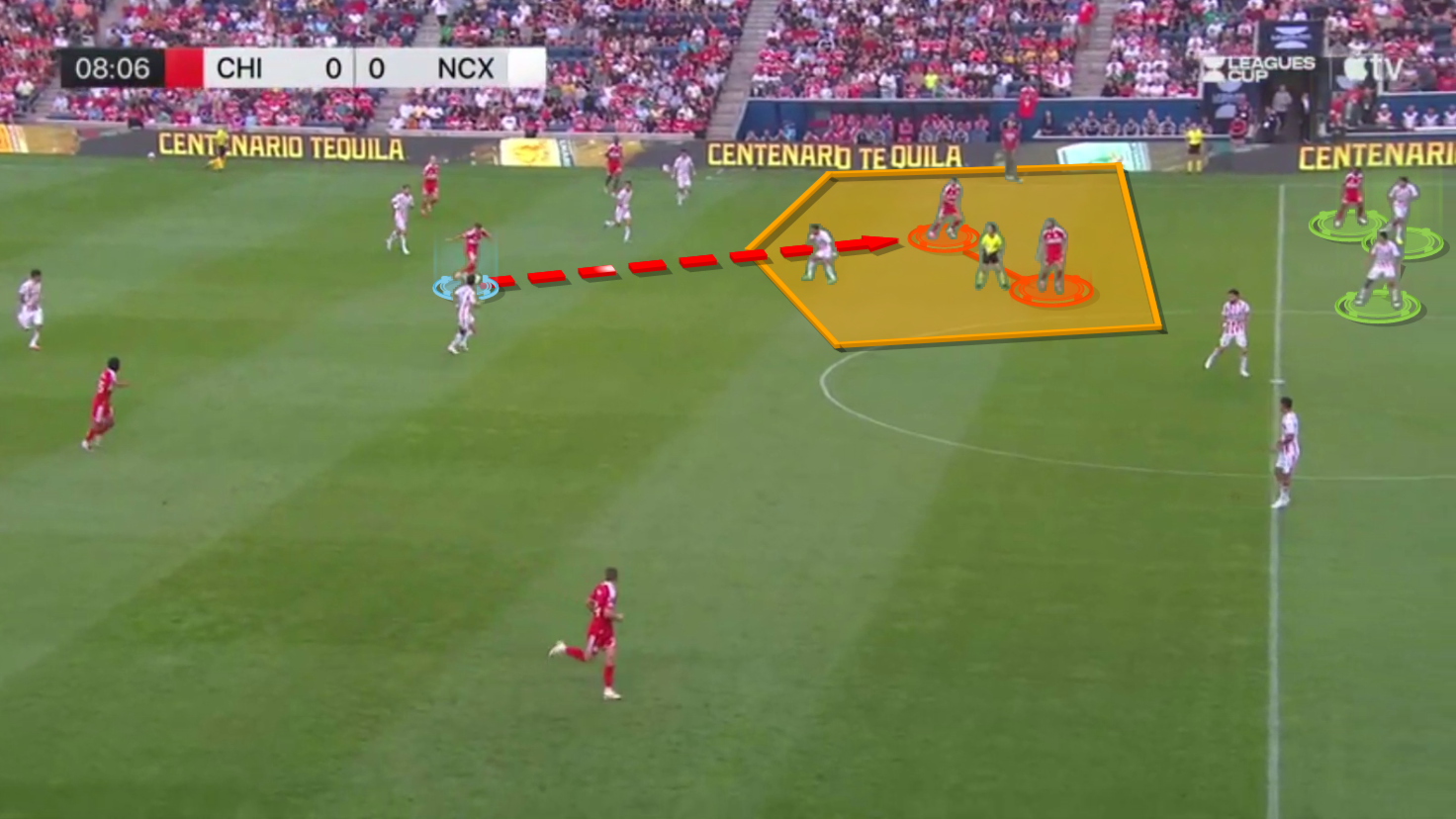
This can be seen in the subsequent images. The first one shows him dropping deep to generate the space for Dithejane to attack in behind, as these opposite movements are so challenging for trackers to stop. The second graphic then displays Chicago’s compact second ball structure, where they can use their overload around the ball’s drop zone to enhance their chances of winning the second ball in a good location.
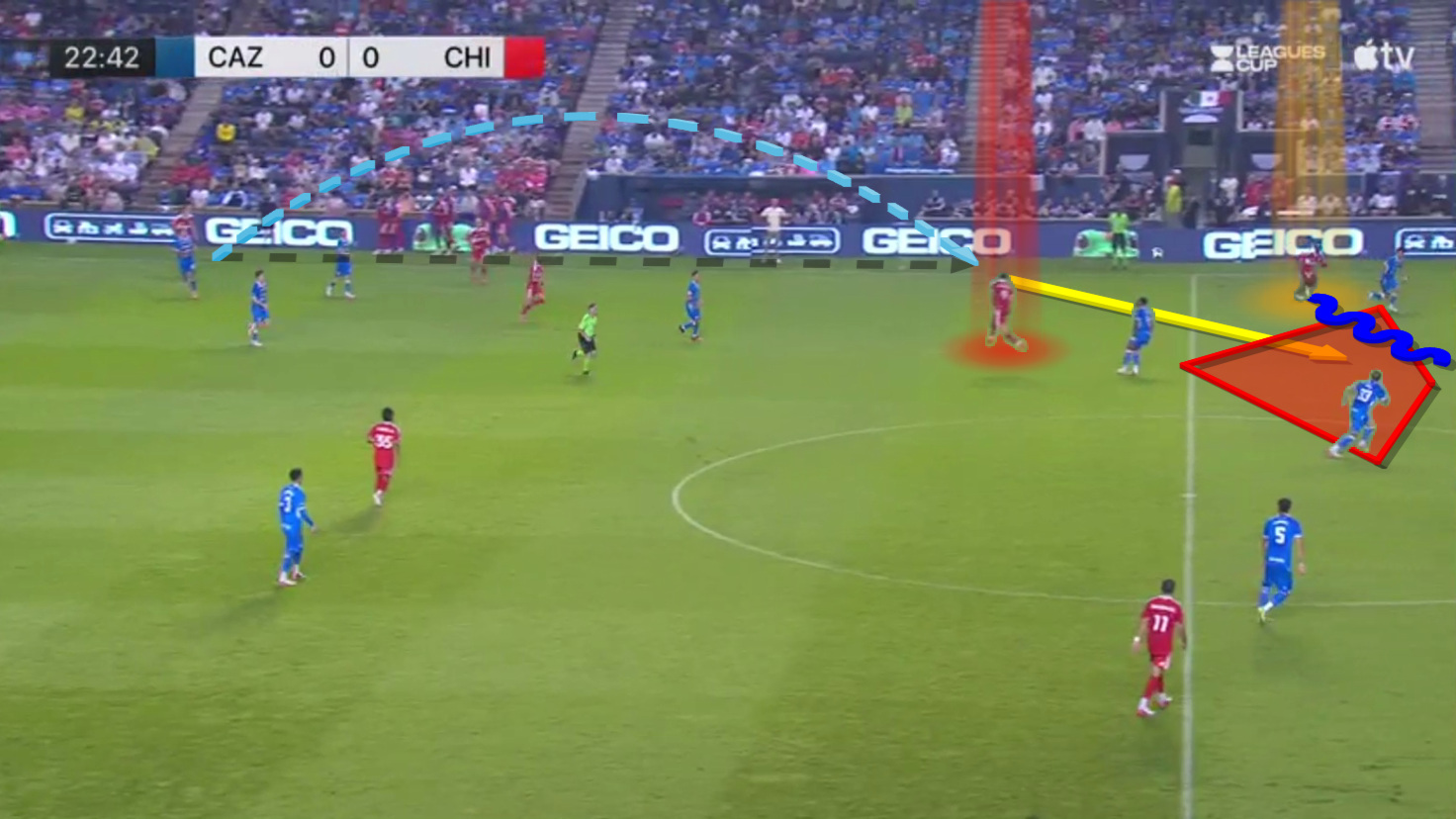
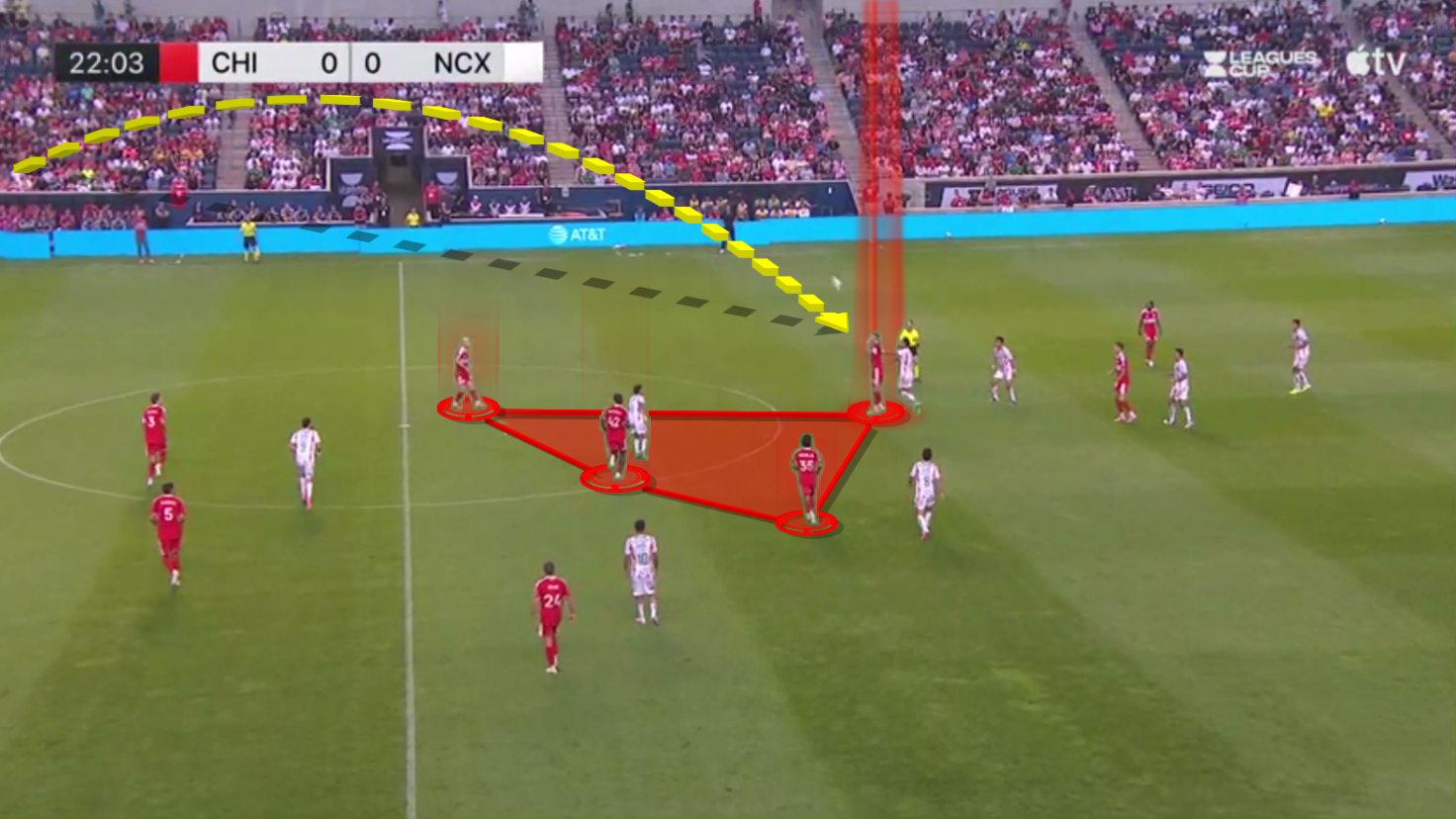
This all culminates to make the multifaceted 38-year-old a massive difference-maker, as he’s already been a tremendous acquisition to elevate their attack. The former Barcelona hitman gives Chicago that level of quality and reliability in the final third that few MLS sides can match.
Meanwhile, on the defensive end, Chicago picks their moments nicely when deciding whether to press high or retreat into a mid or deep block. They’re happy to sit off, control spaces, and protect the middle, then press when specific cues arise. Their high press triggers are clear in the form of backpasses, sideways balls to the touchline, sloppy or underhit passes, or opponents receiving on their non‑preferred foot.
Using their framework vs. Monterrey as a reference, the nominal wingers, Zinckernagel and Dithejane, typically pressed the center backs, as Lewandowski had a dual role, with him monitoring the deepest midfielder and pressing the goalkeeper while keeping that deeper option in his cover shadow.
The 8s, Salétros and Sergio Oregel, were then responsible for jumping out to press their nearby fullback when the ball was played wide. Their shifting and coordination in this phase, especially in the first half, was excellent, and something the Rave Green will need to be wary of.
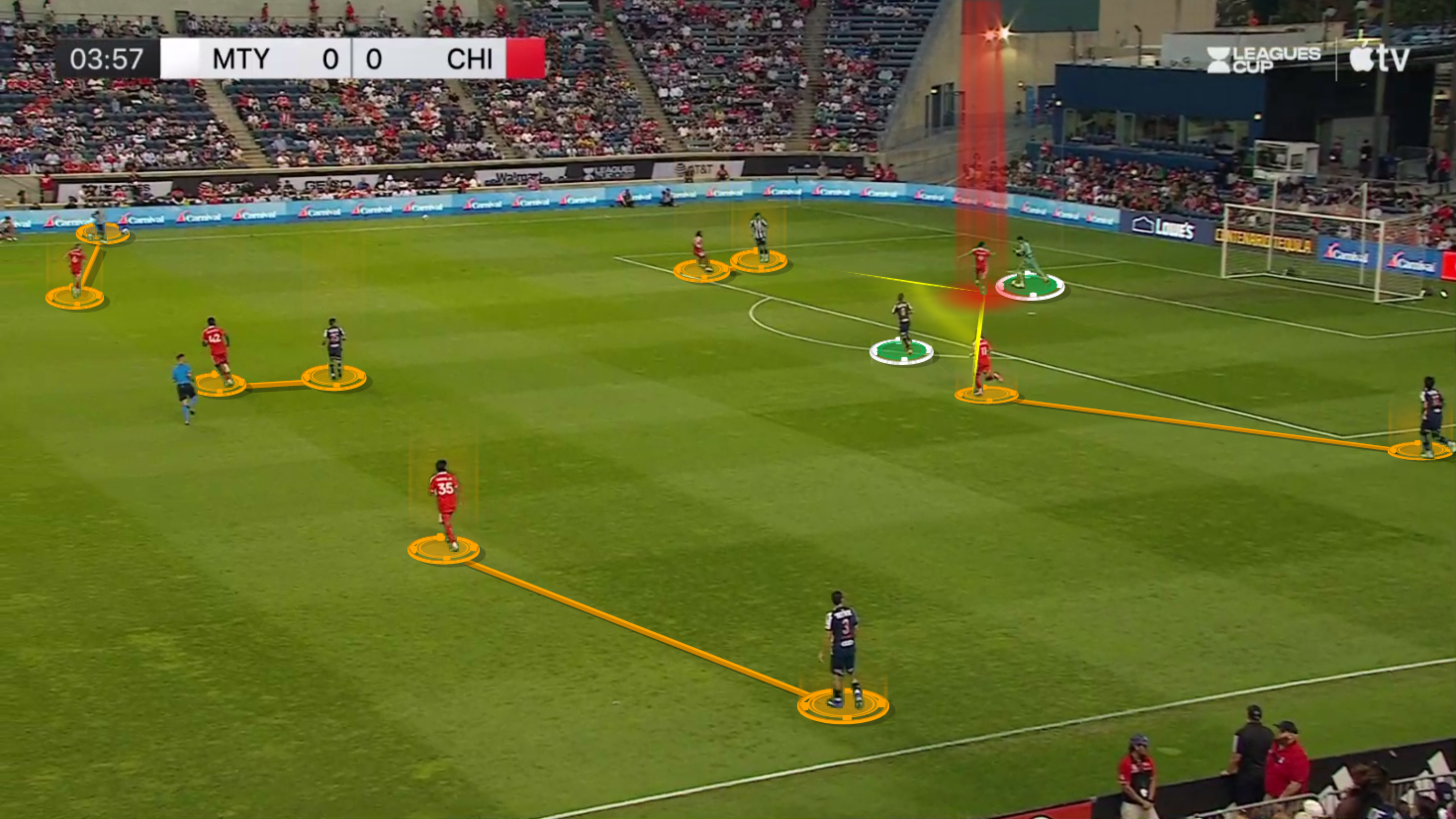
This setup does demand a significant amount of work from the central midfielders and can be exposed on the flanks if the timing of the jumps is off, which the Sounders will be awake to. But with D’Avila, Salétros, and Oregel, they have the mobility and tactical class to execute Berhalter’s plans.
The Fire’s counterpressing from their usually cohesive possession structure warrants mention too, for their sound rest defense shape has consistently allowed them to react sharply and win the ball back quickly to bring the heat to spread-out opponents who are preparing an attack of their own.
By the numbers, the fact they rank 5th for touches inside the penalty area (21.22 p90), 5th for long passes (37.39 p90), 5th for deep completions (9.36 p90), 6th for goals scored (1.66 p90), 6th for key passes (4.39 p90), 8th for shots (11.60 p90), and 13th for possession (50.8 percent) in MLS, while also placing 6th for goals conceded (1.16 p90) and 11th for PPDA (12.75), underlines just what a well‑rounded team they are.
Although the Sounders will have their work cut out against one of the finest outfits in MLS, if they can capitalize on Chicago’s fatigue, use the boost of securing an elite striker like Dejan Joveljić to lead the line, exploit any weaknesses or mistakes, and take their chances, anything’s possible.
All statistics sourced from Wyscout