The Seattle Sounders will be in for a massive test when they tackle the Vancouver Whitecaps on Sunday.
Statistically the best team in MLS in terms of expected points, xG for, and xG against, there’s no escaping what an exceptional outfit Jesper Sørensen has constructed.
While their form hasn’t been elite since the World Cup break – their 5–1 win over San Diego FC was just their third win in nine MLS matches — the Sounders know their Cascadia rivals aren’t to be taken lightly and are rarely second best in any encounter they play.
Boasting a squad littered with quality from back to front, and with a nice smattering of youth and experience, the Caps have shown how effectively they can excel in all phases of the game.
Defensively, they are well equipped with the likes of Tristan Blackmon, Mathías Laborda, Édier Ocampo, Tate Johnson, and Ralph Priso ahead of Yohei Takaoka in goal, while the midfield remains in strong hands despite the loss of star man Sebastian Berhalter, with Andrés Cubas providing steel and stability as Oliver Larraz and Aleksa Cvetkovic continue their impressive development. Further forward, proven match winners such as Thomas Müller, Brian White, and Ryan Gauld spearhead the attack, supported by a talented cast that includes Jeevan Badwal, Emmanuel Sabbi, Cheikh Sabaly, Yadaly Diaby, Bruno Caicedo, and Rayan Elloumi, giving them an abundance of firepower and depth in the final third.
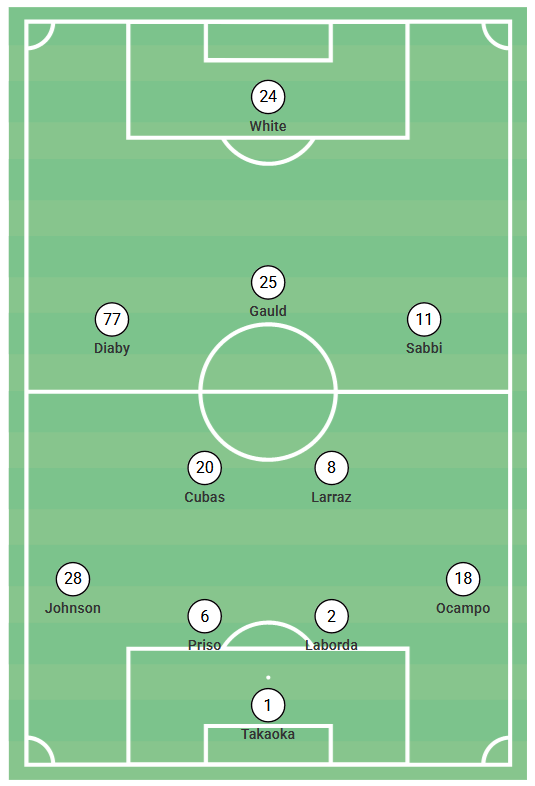
Watch for them to try to implement their possession-oriented approach built around controlling games from a base 4–2–3–1 that transforms into many different permutations. Their setup is designed to create numerical and positional superiorities to unbalance adversaries all across the pitch to enable them to manipulate opponents and open up space in key areas.
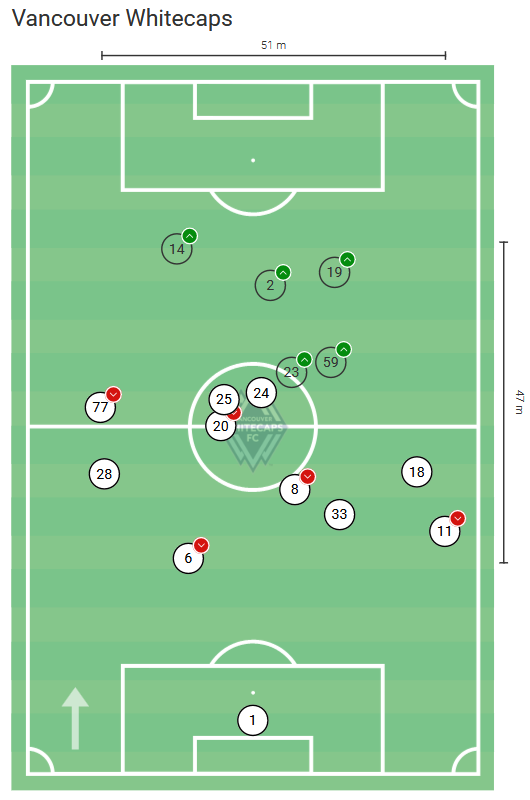
With control being a core principle of their philosophy, expect them to dictate the tempo and rhythm through their sustained possession. This not only helps them generate attacking chances and progress play successfully, but also serves as a defensive mechanism by limiting opposition possession and reducing the number of situations in which their backline is exposed due to their usually connected rest defense structure.
With many solutions in their armory to unlock rear-guards, seeing how the Sounders combat their mechanics and individual class will be fascinating.
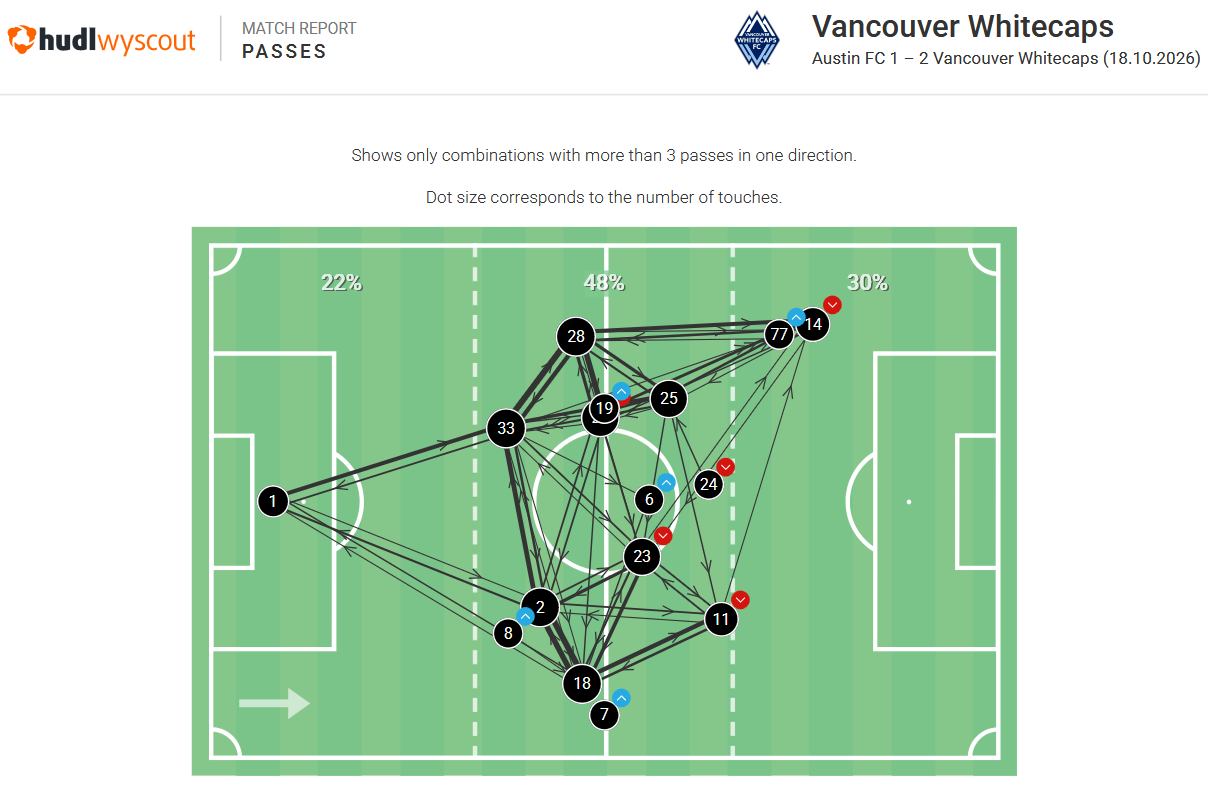
Typically looking to start attacks from the outstanding ball-playing Takaoka, who never shies away from taking risks and being brave with the ball, he’s a key man to provoke pressers to then destabilize structures and find the free man.
Vancouver's center backs and fullbacks will then spread wide in build-up to stretch the press, as Cubas and Larraz drop at varying heights to provide crucial passing links. Their ability to create overloads, execute quick combinations through pressure, feed their playmakers, and free the fullbacks is integral to their progression. Meanwhile, how their on-ball defenders are so adept at drawing trackers in before exploiting the spare man to break the first line of pressure is influential as well.
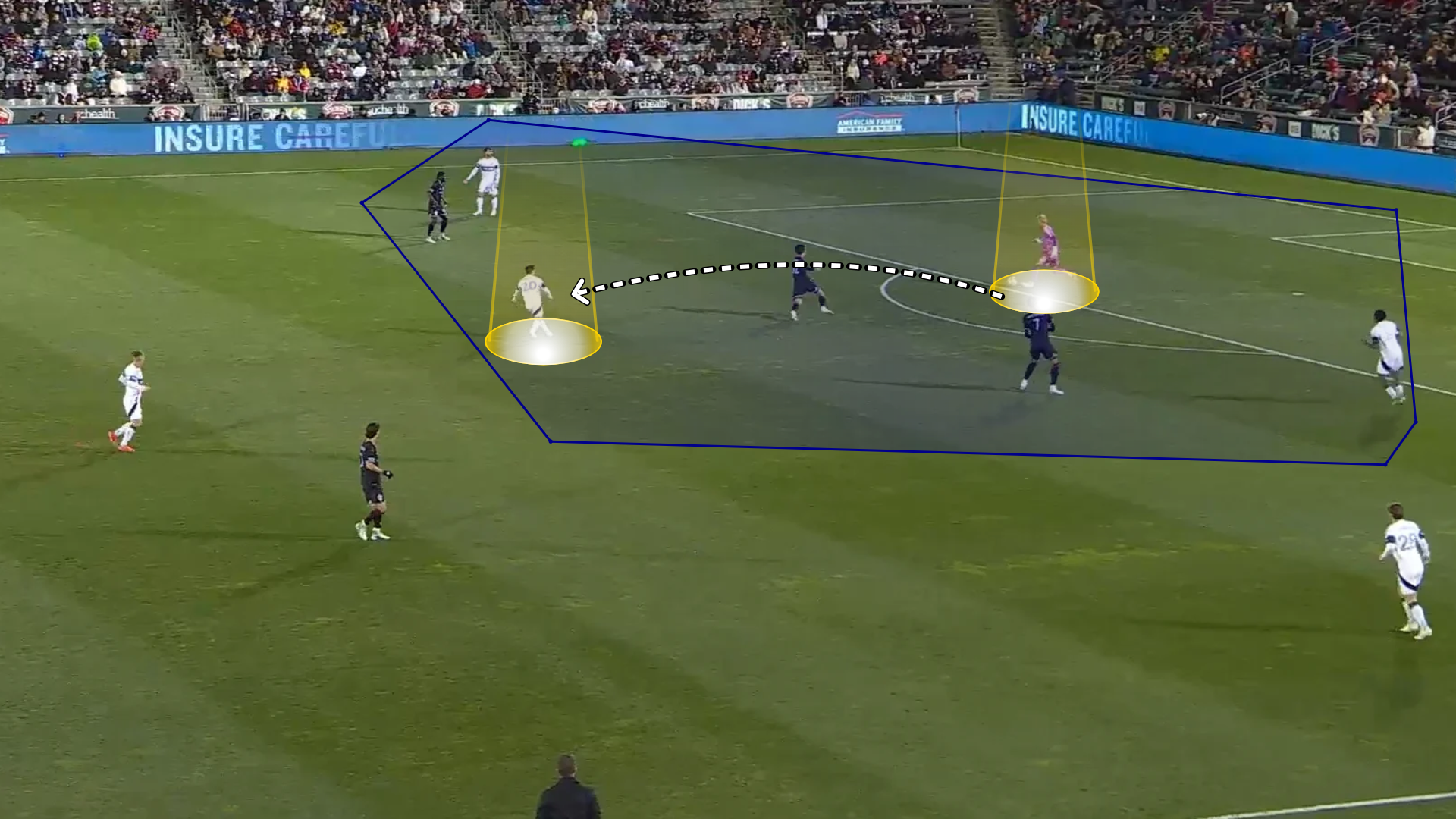
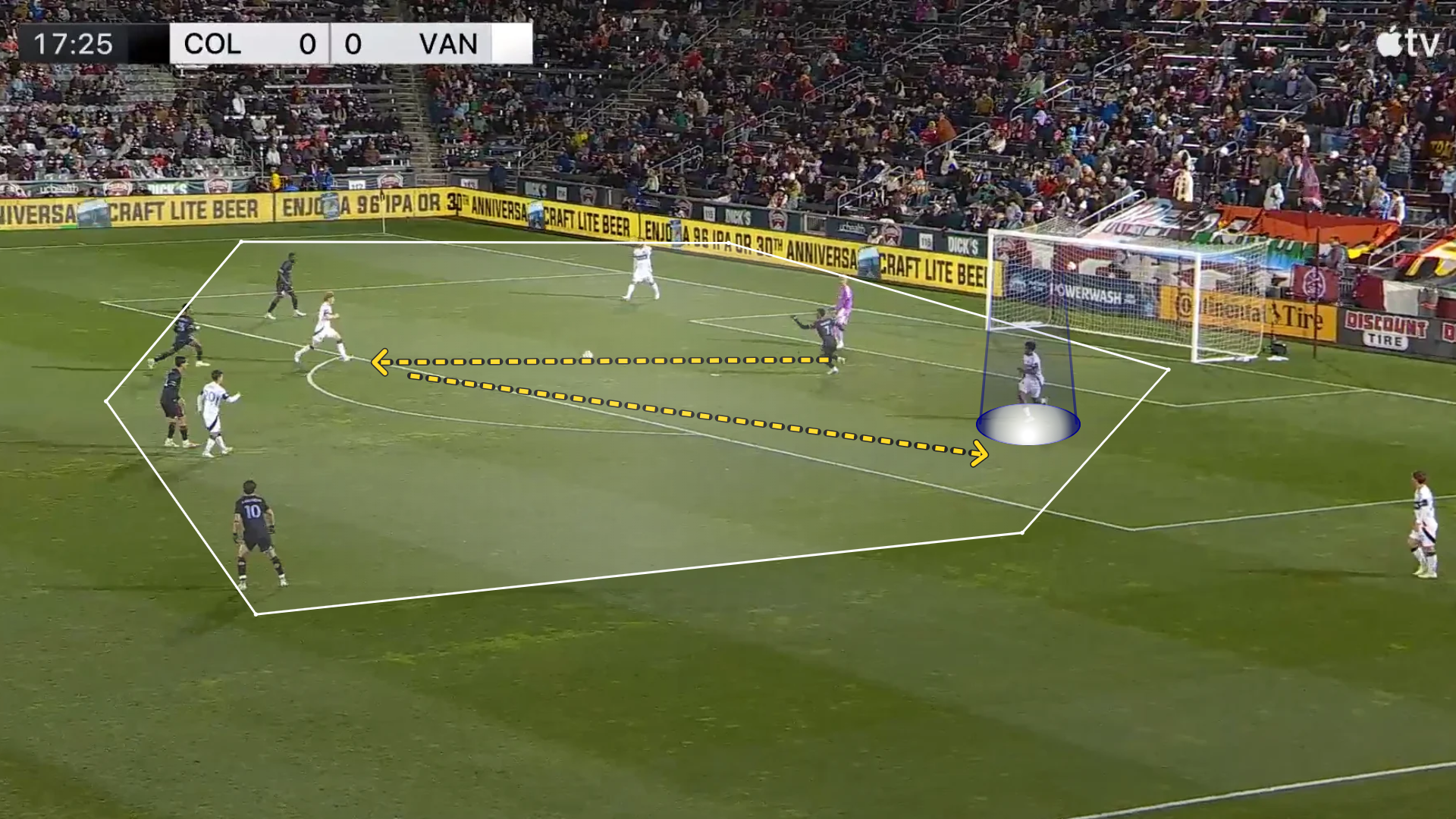
Vancouver frequently morph their build into a back three in possession, often with Ocampo pushing high and Johnson tucking inside alongside the central defenders. This structure maintains balance while creating overloads against the opposition's first line to offer valuable cover for the backline and ensure greater security in the event of a turnover. They also employ different variations of this three-man chain, with Cubas occasionally dropping into the defensive line and Johnson advancing higher, as Gauld drops alongside Cvetkovic or Larraz in midfield.
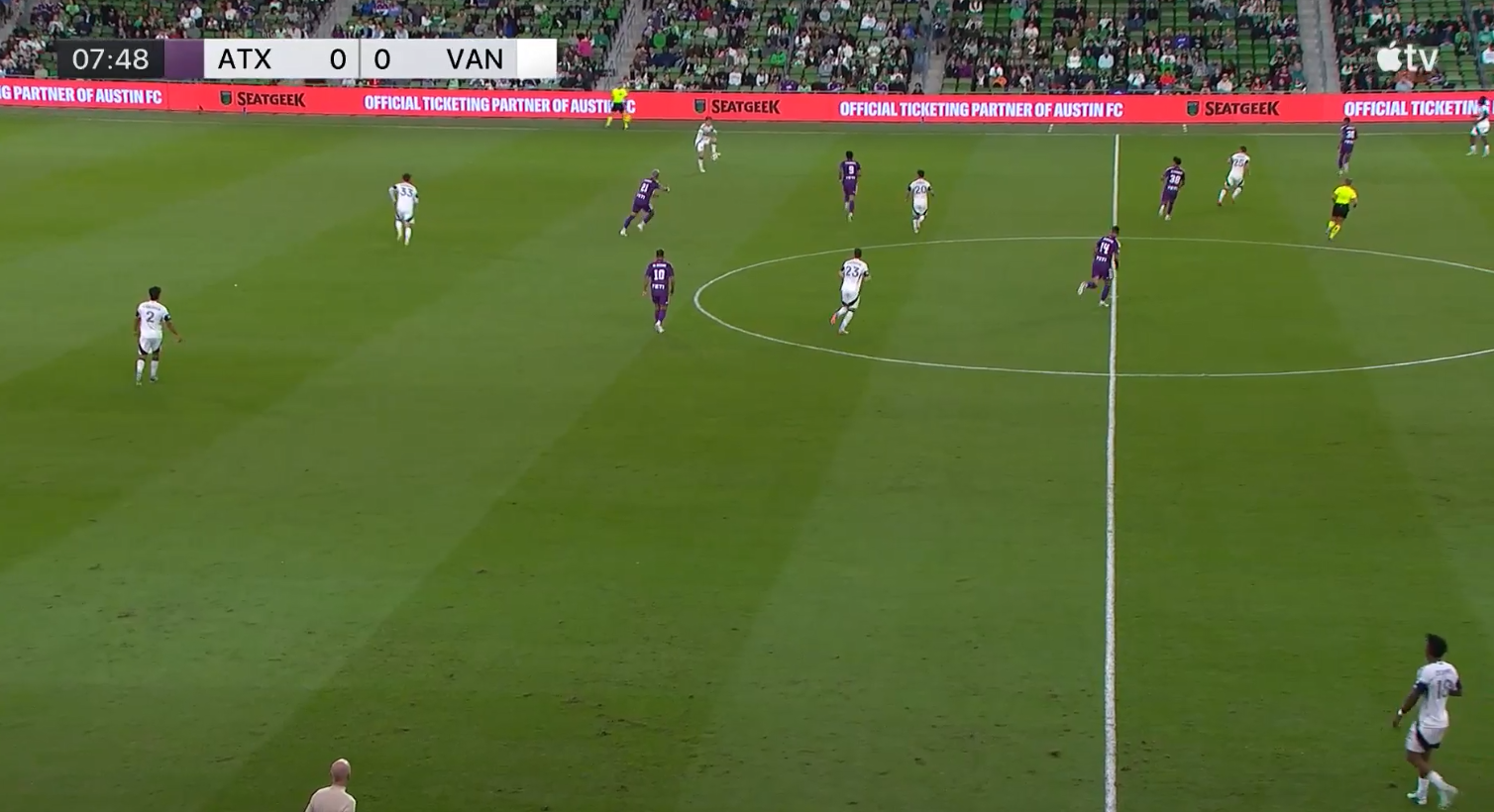
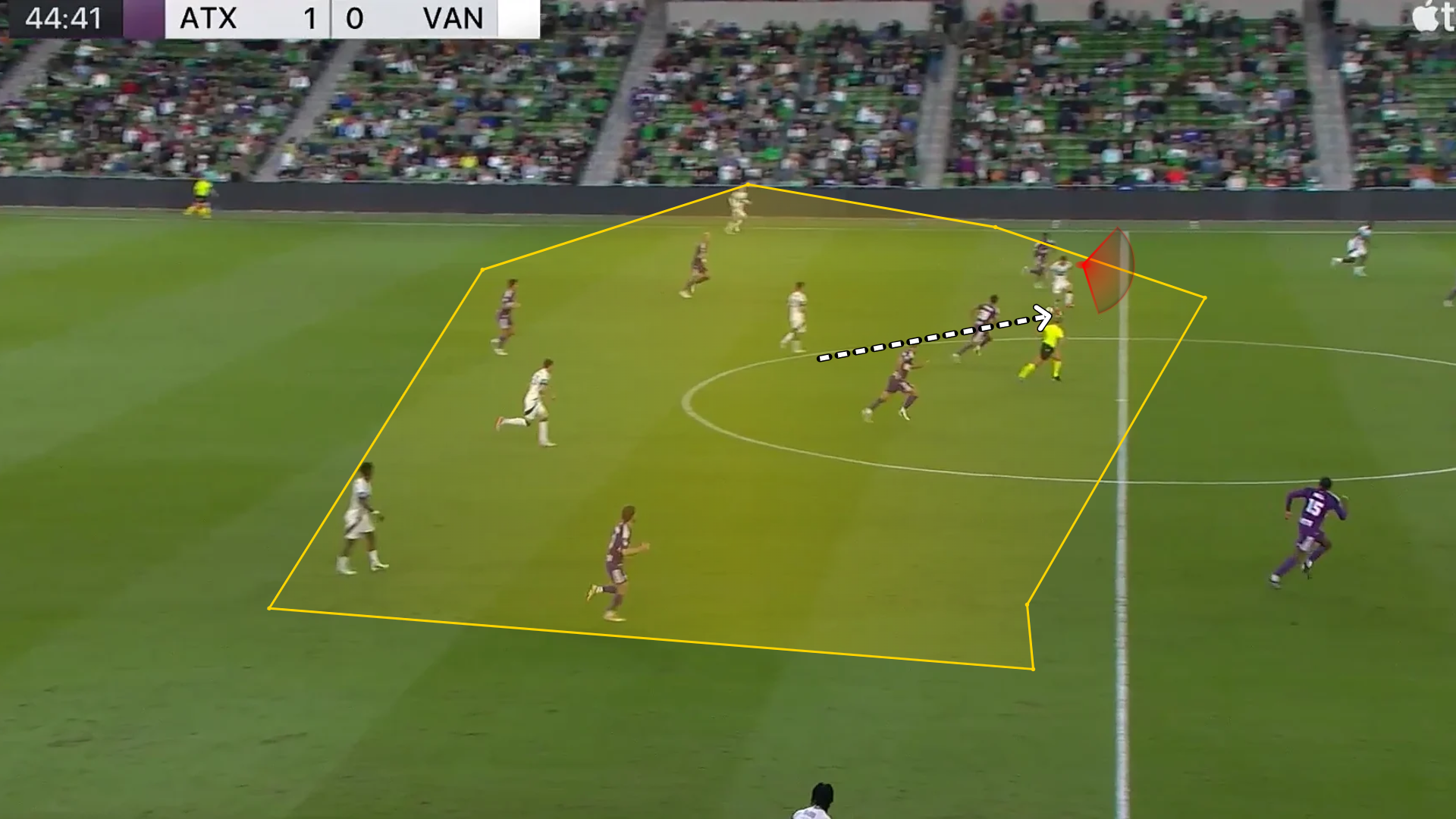
Their midfield rotations and fluidity have also proved effective at manipulating opponents. By drawing markers out of position, they open passing lanes for White to drop deeper and connect passes before finding Gauld or Müller between the lines facing forward, to ensure they can progress attacks swiftly. Central to such sequences are Gauld and Müller, two expert interpreters and exploiters of space whose intelligent movement and positioning consistently help link attacks and connect different phases of possession.
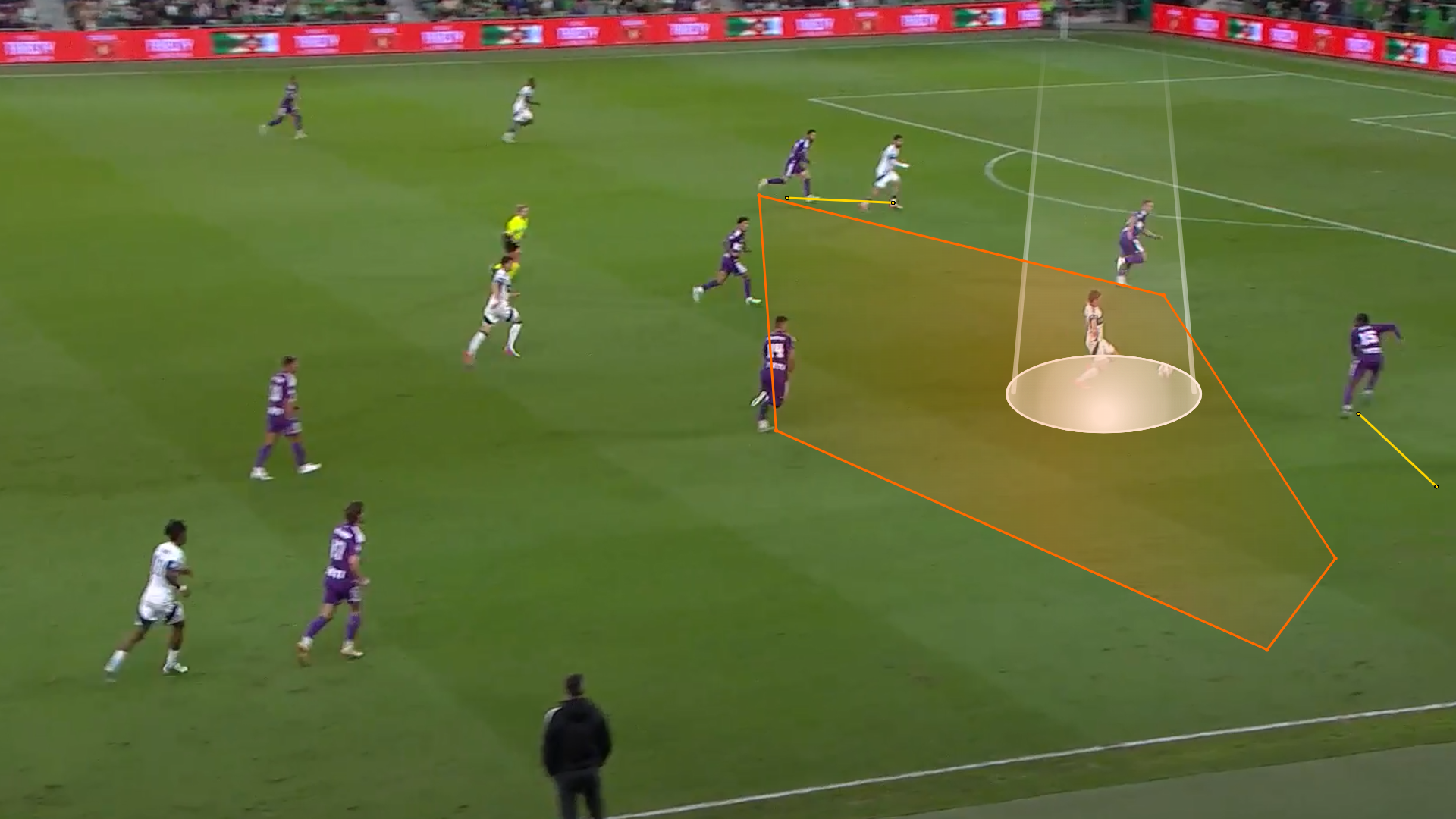
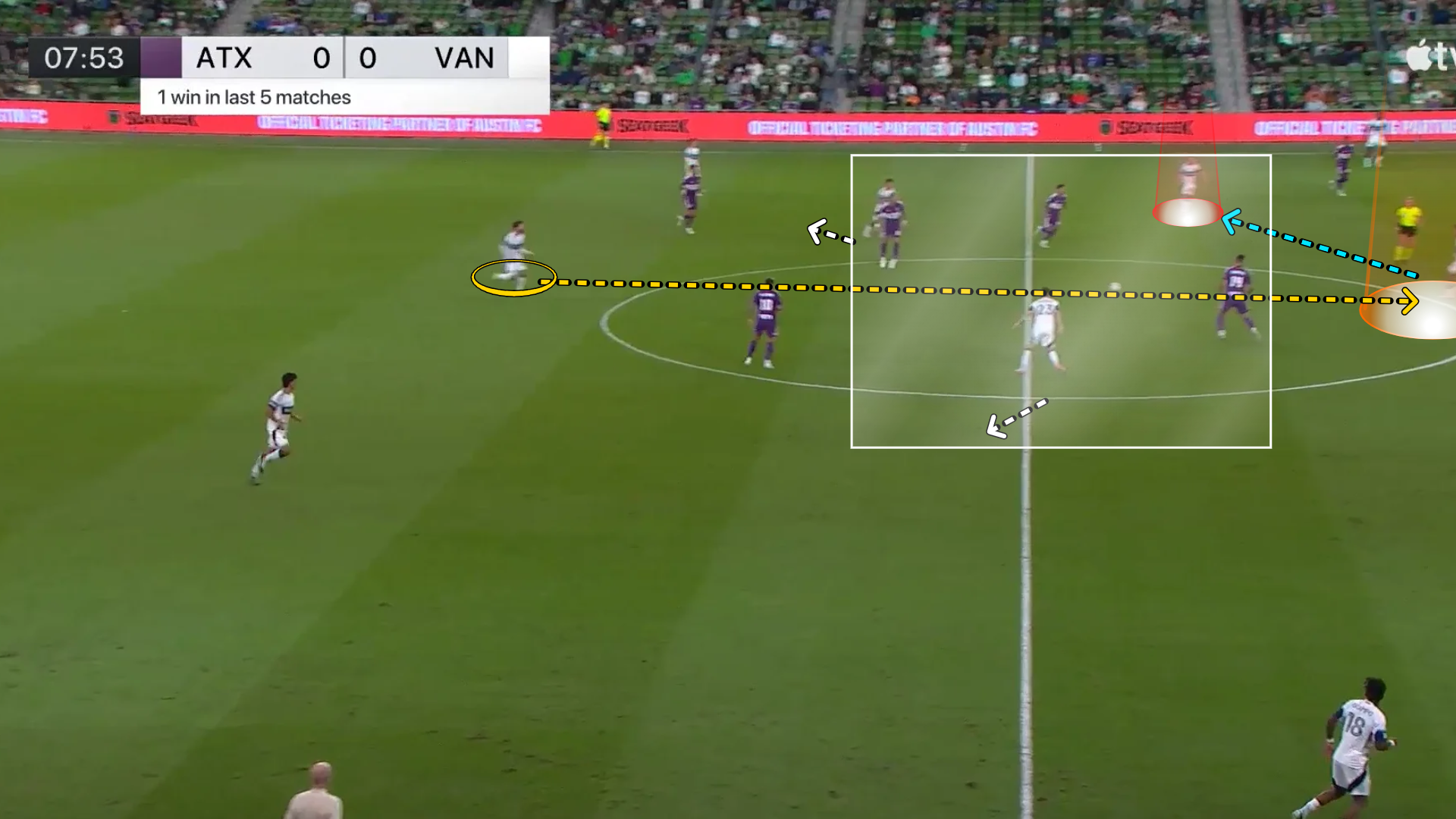
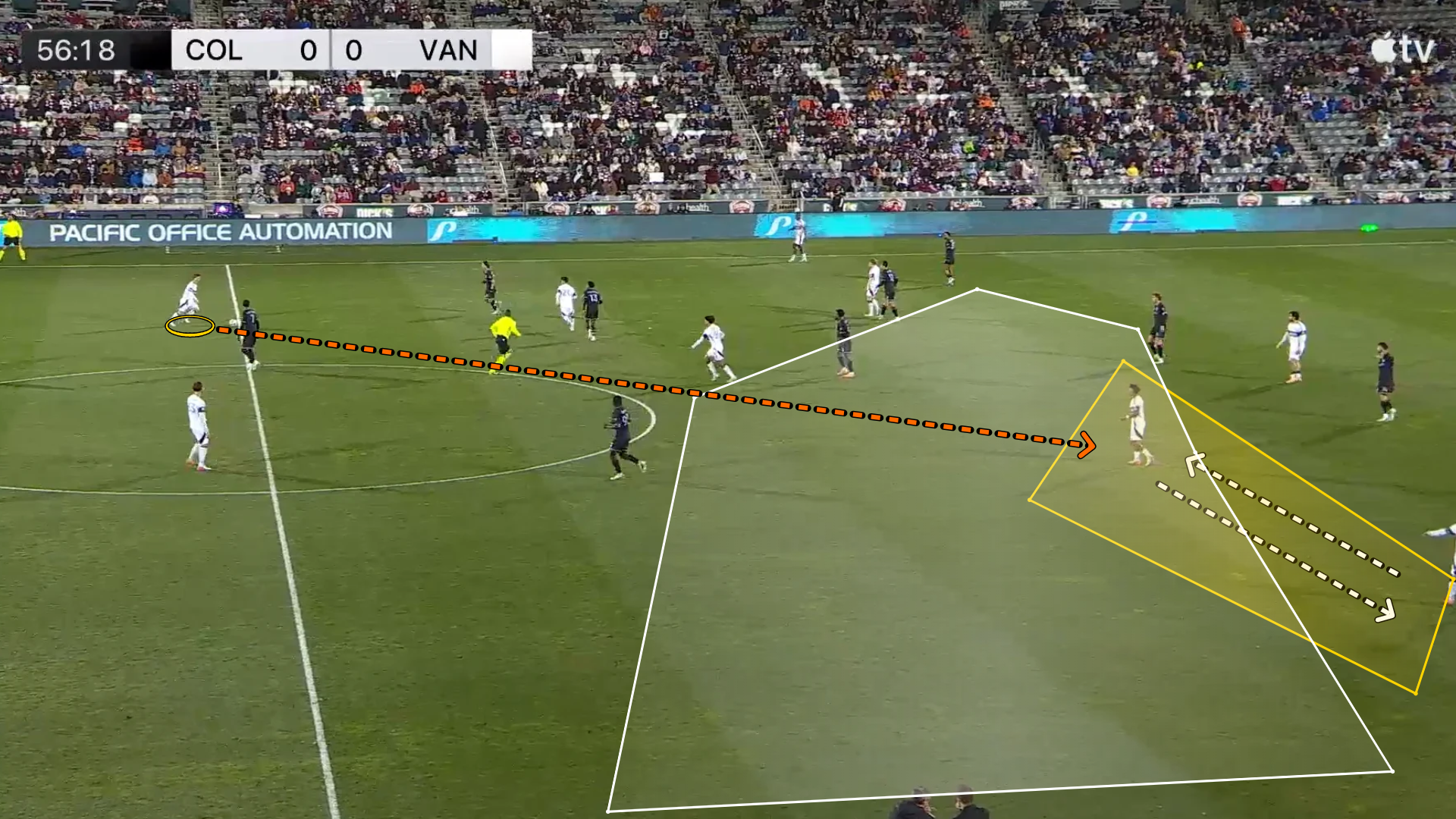
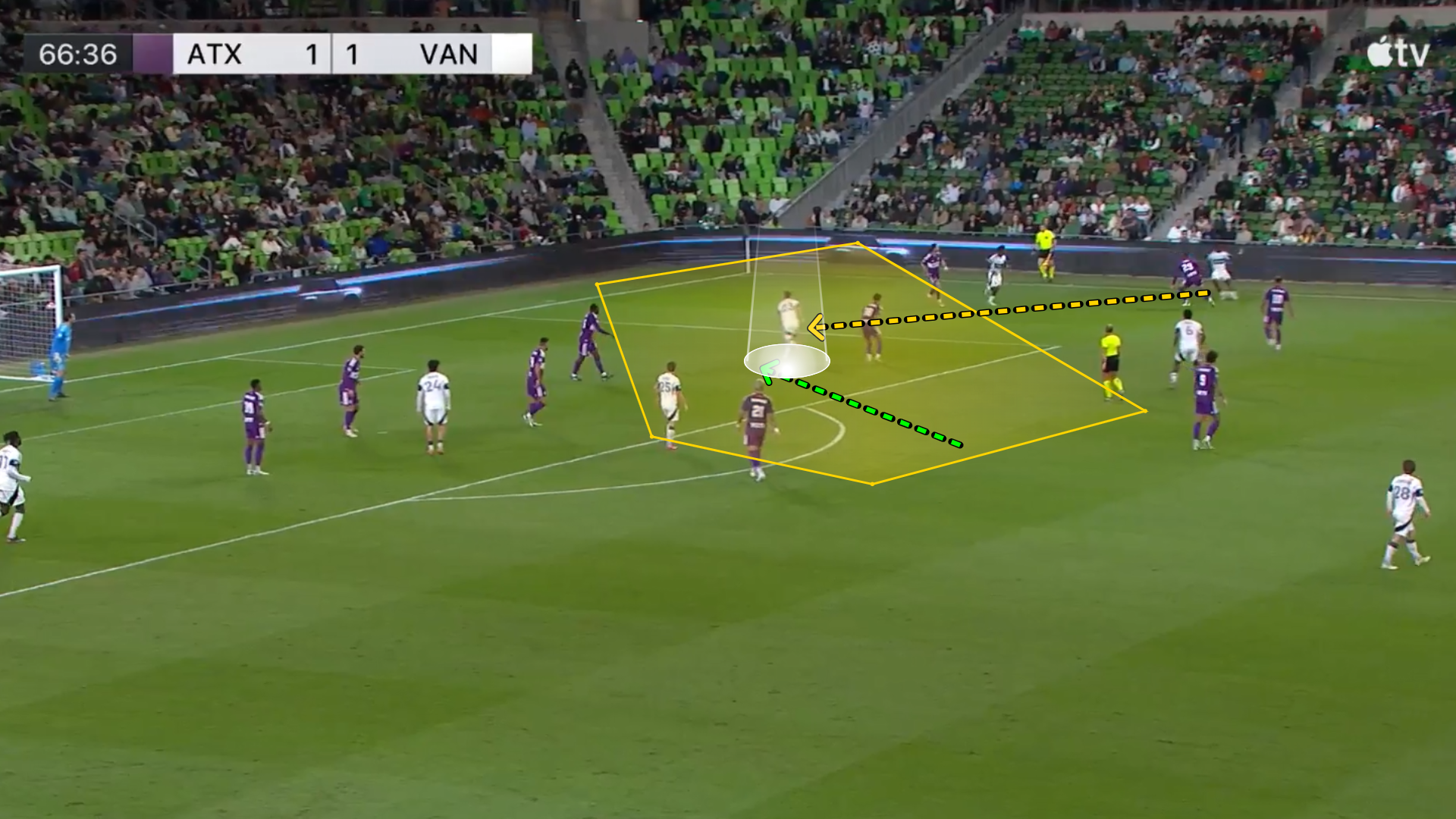
If opponents commit numbers to a high press, Vancouver are just as comfortable bypassing it by going direct toward White. An excellent target man and reliable outlet, White's aerial prowess allows them to compete for first contacts and conjure opportunities from second balls. This dimension complements his masterful finishing, fierce mentality, sharp poaching instincts, and nifty movement in behind and into the penalty area to make him a constant threat through multiple avenues. The example below demonstrates the value of this route, as White's chest-down enables Larraz to receive facing forward in a 2v1 and immediately drive the attack.
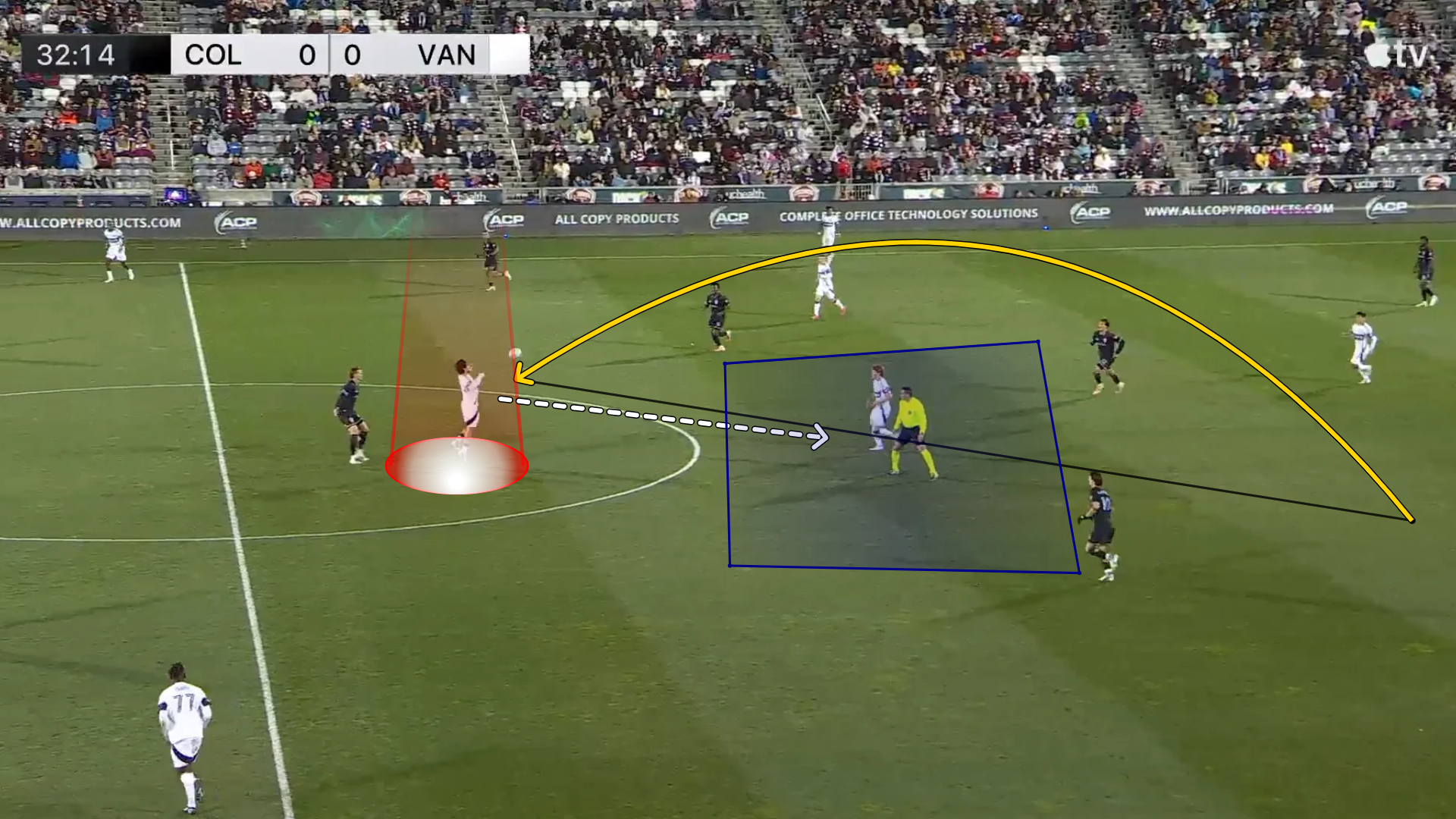
The effectiveness of this direct approach is enhanced by the positioning of Vancouver's wingers, who frequently edge infield to be within close proximity of White to regain possession in damaging spots down the middle.
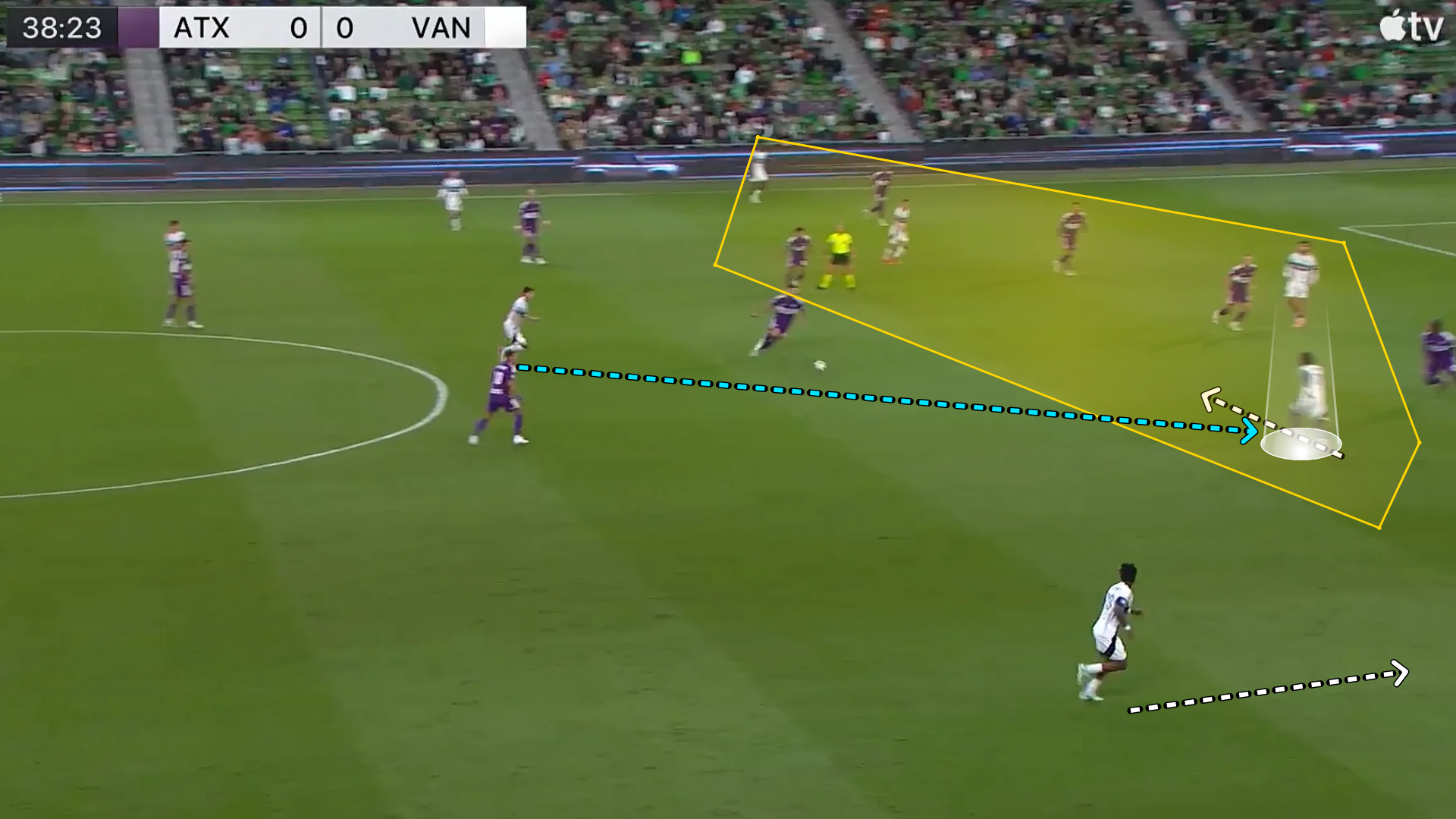
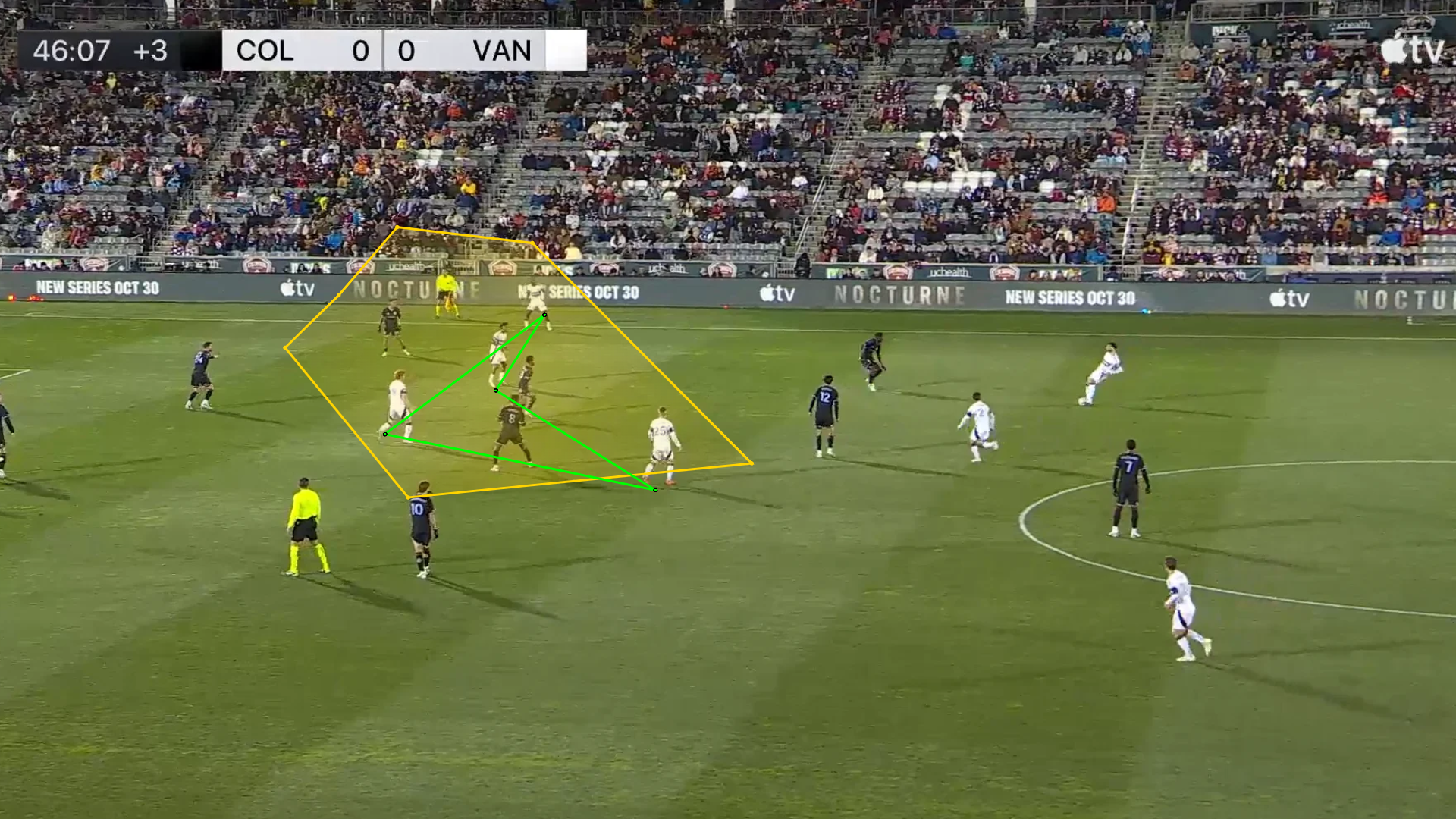
Vancouver are extremely dangerous on the flanks too, where they routinely form strong triangular structures to facilitate zippy interplay, rotations, and third-man sequences. These connections guarantee the ball carrier always has nearby support, helping them progress play and maintain possession under duress.
Their capacity to hurt foes out wide is further elevated by the clever movement of their fullbacks, who regularly mix underlapping and overlapping runs to create uncertainty for defenders. The smooth swaps between the fullbacks, wingers, and central midfielders make them difficult to track, for they not only open passing lanes but also drag opponents out of position to manufacture space for runners to exploit in advanced locations.
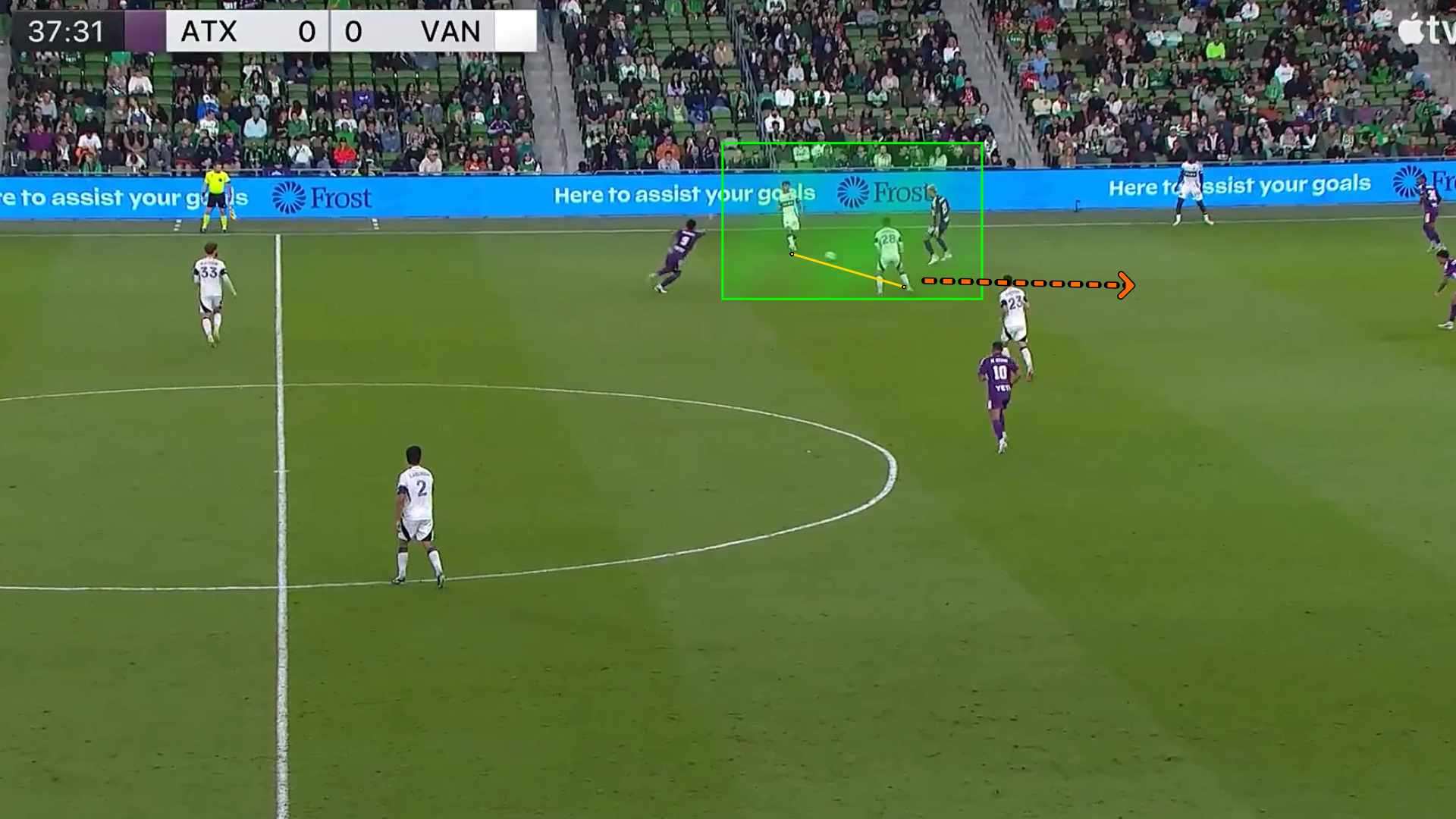
Vancouver's wingers are a major weapon that need mentioning, as they thrive in the one-on-one situations that Sørensenn's system is designed to create. Blessed with pace, skill, and trickery, flyers such as Caicedo, Sabbi, Diaby, and Sabaly are all capable of unsettling defenders in isolation courtesy of their directness and verticality. Whether driving to the byline, attacking the space in behind, or cutting inside onto vital central positions, they constantly ask questions of opposing backlines. Their inward movements are especially important to supplement the afore, as they bring them closer to goal where they can connect with teammates in tight spaces. This, in turn, frees up the fullbacks to attack the vacant wide areas through overlapping runs. Collectively, these movements help Vancouver stretch opponents both horizontally and vertically to engineer gaps to be exploited.
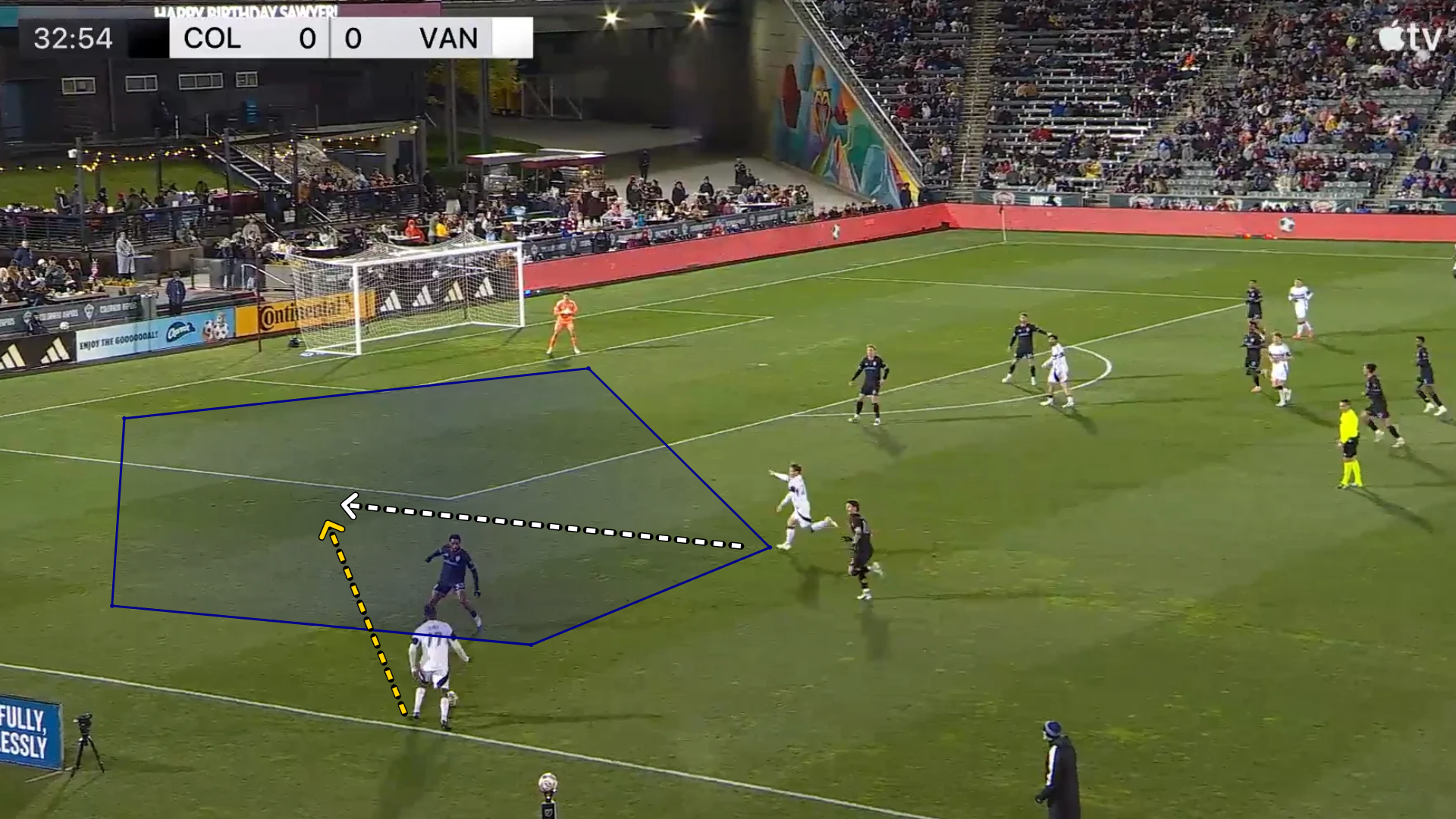
They are equally lethal in transition, where their speed and directness can quickly punish opponents after turnovers. White often acts as the conduit that brings these counter-attacks to life, using his hold-up play, intelligent lay-offs, and movement to connect the first pass before Vancouver surge forward.
Another important feature of Vancouver's attack is the willingness of their midfielders to run beyond the forward line to attack depth. Cvetkovic, Larraz, Gauld, and Müller, are superb at timing movements into the channels between center backs and fullbacks to exploit gaps that emerge. They provide a pivotal source of penalty-box penetration as well, making smart late runs that often go unnoticed by defenders occupied with their direct opponent or focused on the ball. Their timing and directional changes are particularly impressive to ensure they arrive in dangerous areas at precisely the right moment and add an extra layer of unpredictability to Vancouver's offensive play.
The numbers illustrate just how dominant Vancouver have been going forward this season, for which Sørensen deserves immense credit. They rank first in MLS for expected points (62.2), an astonishing figure that sits 15 points clear of Supporters’ Shield winners Nashville (47.2), as they also lead the league in expected goals (2.09 per 90), shots (13.92 p90), touches inside the box (24.77 p90), key passes (4.75 p90), passes into the final third (56.75 p90), and progressive passes (70.26 p90). They additionally place second for crosses (17.19 p90) and deep completions (10.94 p90), and are fourth for goals scored (1.82 p90), fourth for average possession (55.9%), and fourth for progressive runs (14.76 p90), while their seven goals from corners ranks them equal third in the competition.
The Sounders will also need to be mindful of Vancouver's aggressive pressing and overall defensive quality, even if their attacking threat is likely to command the most attention. Placing first in MLS for expected goals conceded (36.53) and challenge intensity (5.2), plus notably sitting second for PPDA (10), this underlines the effectiveness and aggression of their stopping game.
In addition, they boast the second-best goals conceded average (0.93 p90), allow the second fewest shots against (8.13 p90), and rank third for defensive duels (56.75 p90).
These numbers highlight a side that blends attacking dynamism with defensive solidity, which has emphatically established Vancouver as one of the most complete and formidable teams in MLS.
In the latest chapter of this Cascadia rivalry, it will be intriguing to see how the contest unfolds. With both sides eager to hit form ahead of the playoffs, all eyes will be on whether the Sounders or Whitecaps can reign supreme and gain the upper hand in one of MLS's fiercest rivalries.