


Fresh off scraping into the playoffs with a clutch victory over LAFC on Decision Day, the Seattle Sounders now take on a determined and resurgent Real Salt Lake in the Western Conference Wild Card game.
RSL secured their postseason berth with an impressive triumph over the LA Galaxy to extend their playoff streak to six consecutive seasons, the longest active run in the West.
Written off by many and seemingly out of contention after a 13-match winless run following the World Cup break, RSL completed a remarkable turnaround by beating the Galaxy 2–1. With the Portland Timbers and Sounders both winning, they also needed the Colorado Rapids to drop points, and FC Dallas delivered, scoring three times in the final 15 minutes, including twice after the 87th minute, to seal a dramatic 3–1 comeback victory.
RSL's achievement is made all the more striking given they lost phenom Zavier Gozo to Crystal Palace in August and have been dealing with a shocking run with injuries.
"I think what I am is relieved, but the benchmark was always higher than this. This is not a celebration moment for me. But it is a testament to the willpower and the belief in man when you're down in the dumps, everyone's written you off, and you find a way to squeak in,” RSL manager Pablo Mastroeni explained to KSL’s Matthew Casey.
"I don't waste my life or time on anything I can't control. We can only do what we could, which is win the game. And then the universe has to do its thing. It's gotta cook."
While Mastroeni tinkered with RSL's defensive shape recently, moving from a back five to a back four, he ultimately reverted to his tried and tested base 3–4–2–1, which was on display against the Galaxy, which drops into more of a 5–4–1/5–2–3 without the ball. This proven formula, combined with the return of some key players, the acquisitions of Luc de Fougerolles and Saba Lobjanidze, an improved defensive record, and a rise in confidence, has been vital to their resurgence.
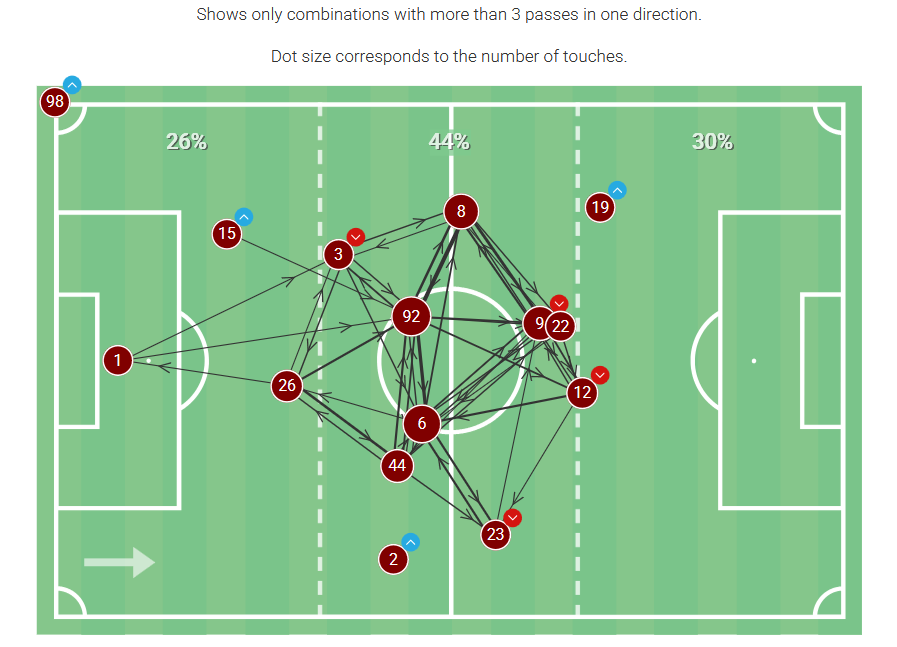
Hitting form at an ideal juncture and playing with the fierce mentality Mastroeni craves, they'll pose a tremendous test for the Sounders.
Mastroeni's objectives are clear; he aims to give his team control over matches by influencing as many phases, zones, and moments of the game as possible. To achieve this, RSL’s structure promotes dominance in possession and immediate pressure after turnovers.
Central to this approach is the 3-2-4-1 formation that can transform into a 3-2-5 or even a 3-6-1. With three centerbacks forming the base, two midfield pivots providing balance and four advanced players operating behind the striker, the system gives RSL a front five in attack and maintains strong support underneath.
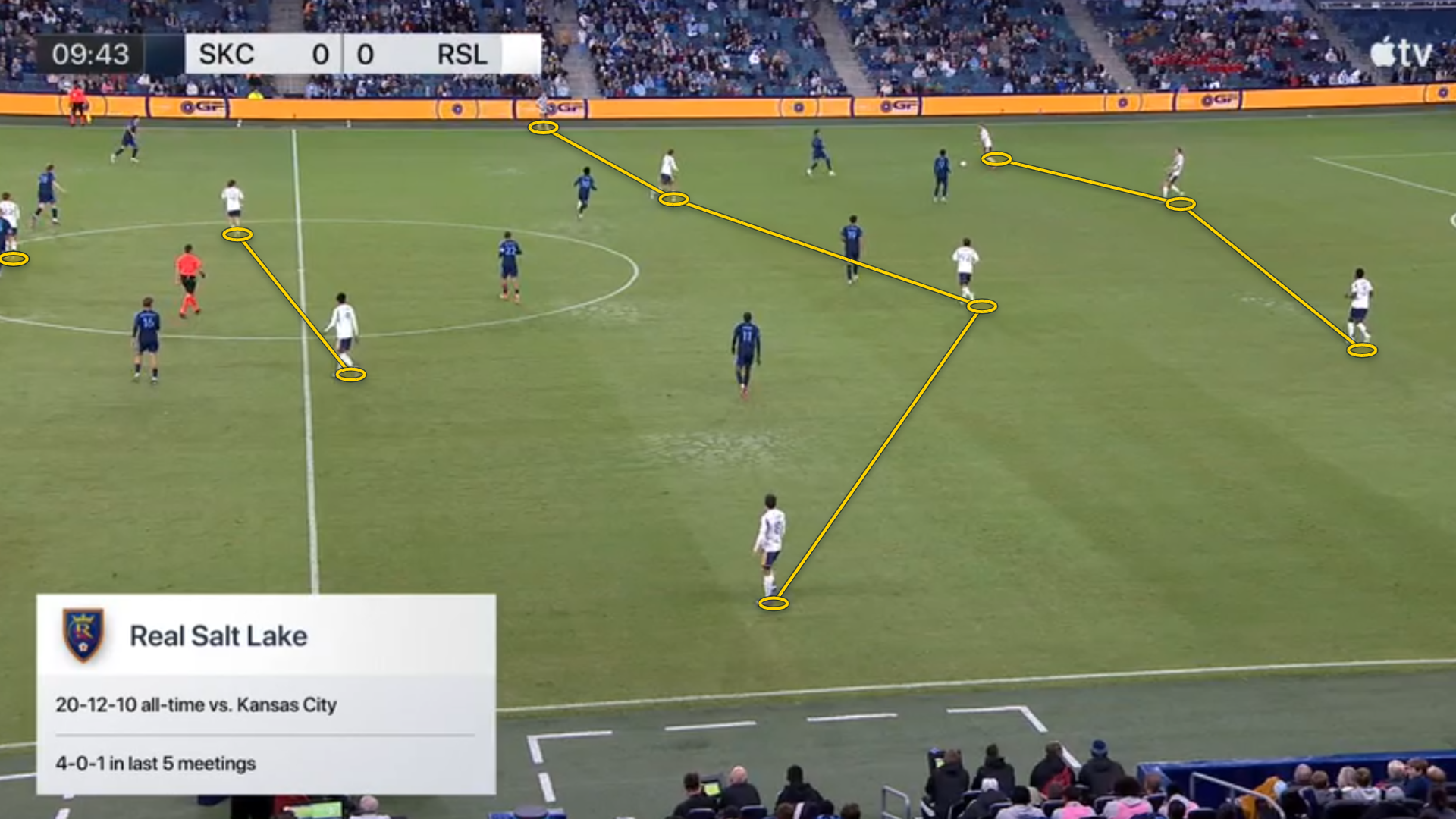
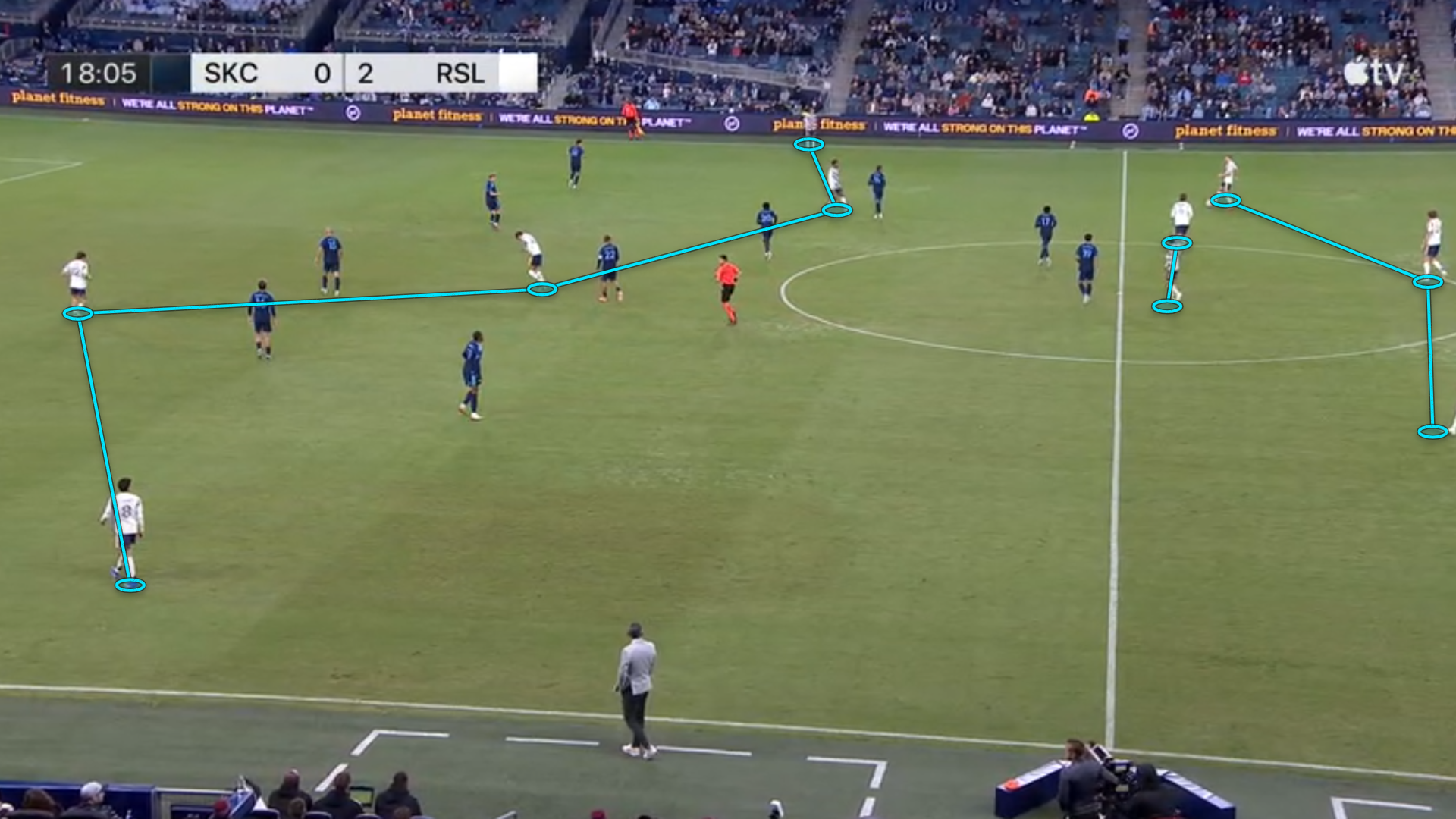
The structure establishes a wealth of passing lanes and connections across the pitch to facilitate smooth ball circulation to help RSL progress through the thirds. Given it places plenty of players close to the ball in advanced areas, this improves ball retention and enables aggressive counter-pressing whenever possession is relinquished.
By ensuring numerical superiority in strategically beneficial locations and keeping players connected, this allows RSL to sustain attacks, retain possession, pin opponents deeper, and exert greater control over proceedings.
With a solid defensive core featuring the likes of Rafael Cabral in goal, de Fougerolles, Justen Glad, Philip Quinton, and Kobi Henry, dynamic wingbacks in Juan Manuel Sanabria, Zach Booth, Dominik Marczuk, and Alexandros Katranis, a battle-hardened midfield pairing of Noel Caliskan and Stijn Spierings, and Morgan Guilavogui and Lobjanidze supporting Sergi Solans up front, Mastroeni has a dangerous and multifaceted side despite star man Diego Luna being sidelined with a knee injury.
RSL's build-up is fluid and designed to generate numerical advantages. Although they nominally operate from a defined three-chain setup, their shape frequently morphs depending on the phase of play and opponent. In the initial stages, the goalkeeper usually acts as an extra outfield player, while one centerback can drift wider into a fullback position and a wingback pushes high, often creating a 4-2-4.
Effective build-up by RSL, who form a back four and use a neat third-man combination to start before Guilavogui's dropping movement creates a diagonal lane into Solans. Solans then finds Guilavogui, who'd spun off his marker to attack the vacated space. pic.twitter.com/5doiCpSe3u
— Edward Stratmann (@EdwardStratmann) November 12, 2026
The centerbacks’ involvement extends beyond the aforementioned, as once RSL breaks an opponent's first line of pressure, they’re encouraged to carry the ball forward and gain territory, forcing trackers into difficult decisions. This draws markers out of shape and yields opportunities to pinpoint free teammates either directly or via third-man combinations.
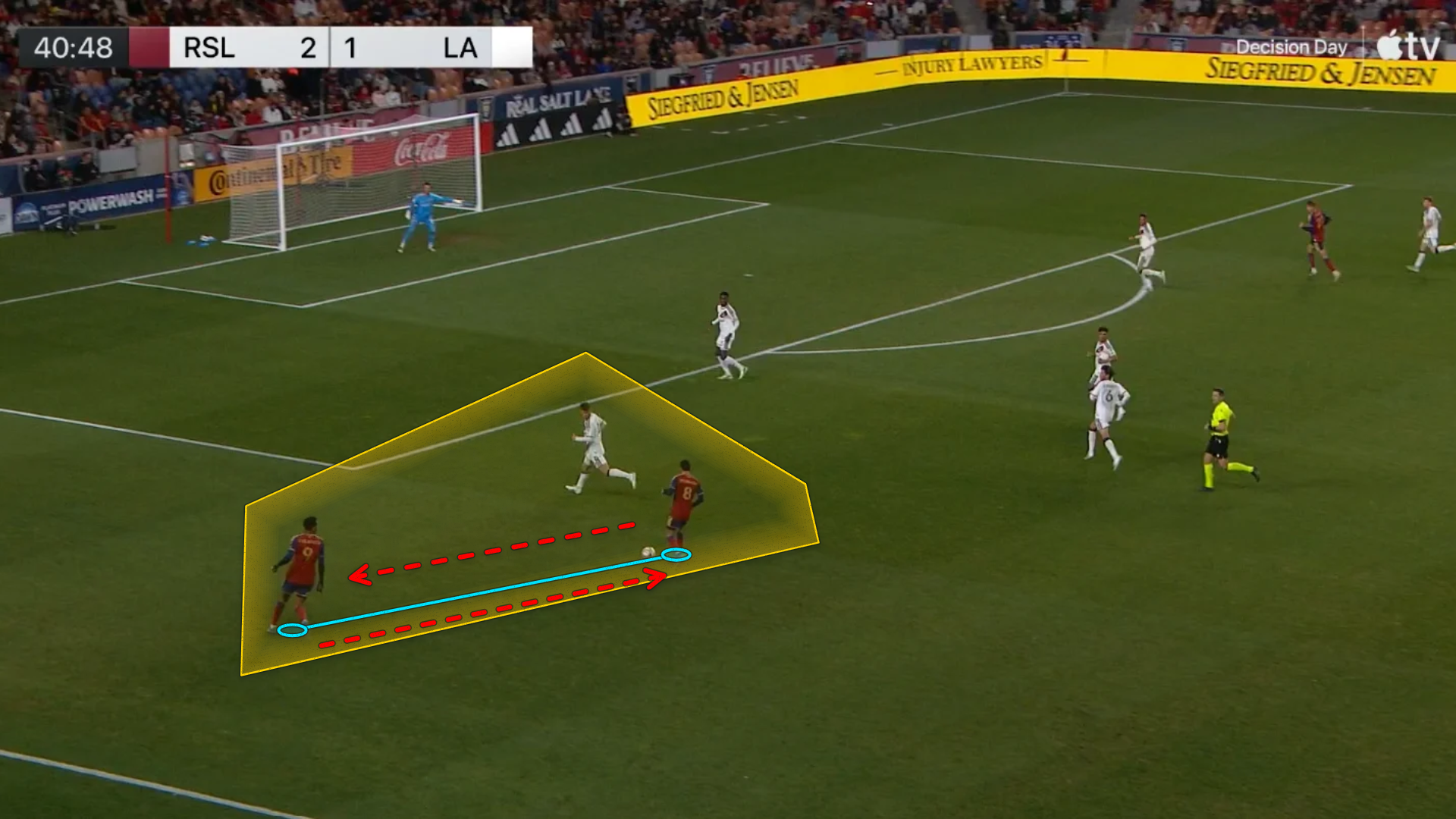
Rotations featuring the centerbacks further enhances this dynamic, with one specific example vs. the Galaxy seeing Spierings exchange positions with de Fougerolles to allow the latter to receive between the lines and continue the attack. These constant movements, in alliance with RSL's strong positional structure and coordinated dovetailing, make them an extremely tough side to contain.
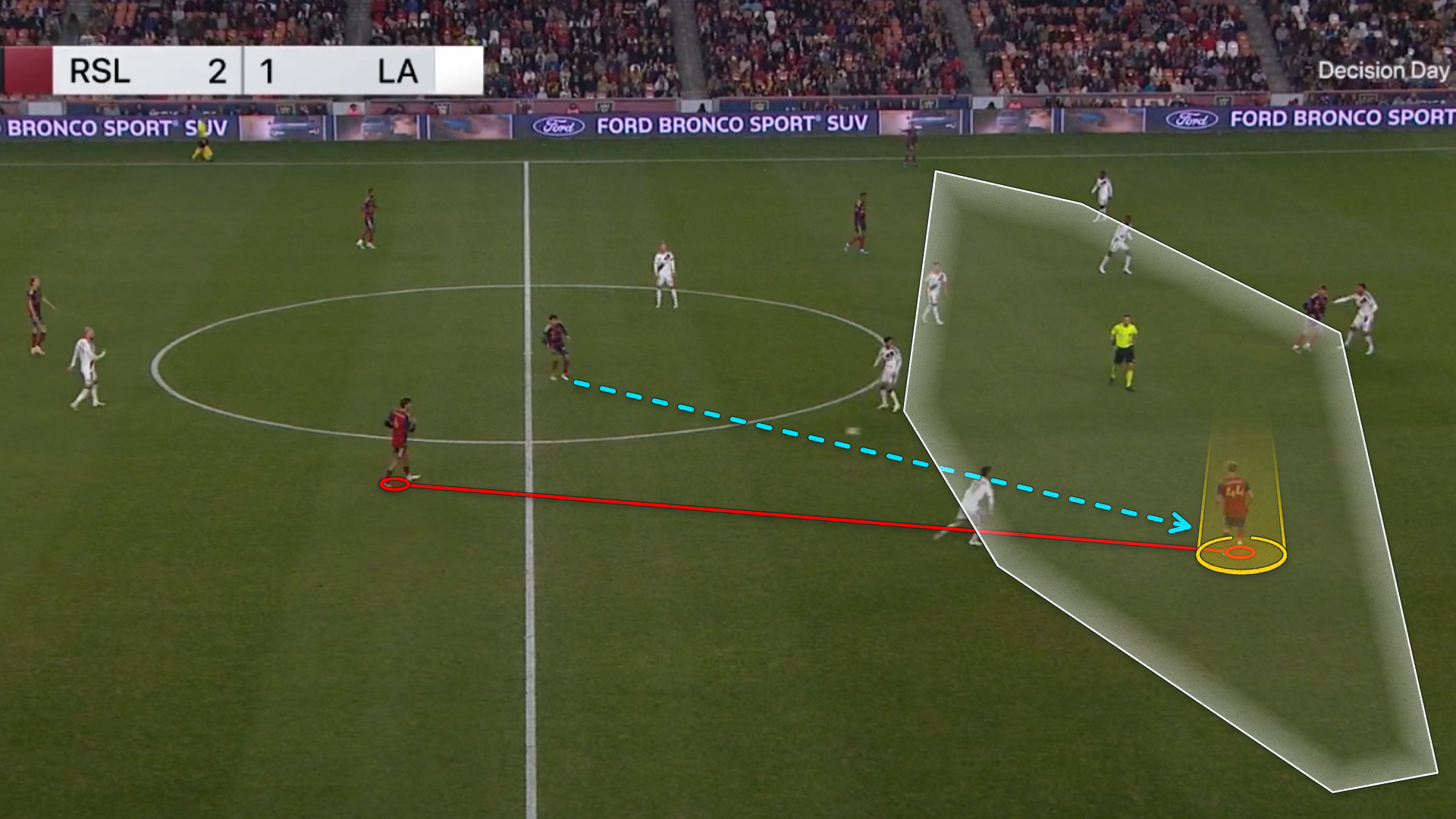
Meanwhile, the double pivot and offensive midfielders consistently adjust their positioning and interchange to open diagonal passing lanes to improve progression through the thirds. Their box constellation plays an integral role here as well, with the two central midfielders and twin attacking midfielders offering angles, occupation of different heights and depths, and frequent opportunities to overload central zones.
Seattle's central midfielders will need to have their eyes peeled around them; the likes of Lobjanidze and Guilavogui are a serious nuisance to manage in these zones, as Seattle will want to avoid them getting on the ball between the lines, where they routinely wreak havoc, as Solans will plan to fix centerbacks as the wingbacks hold the width.
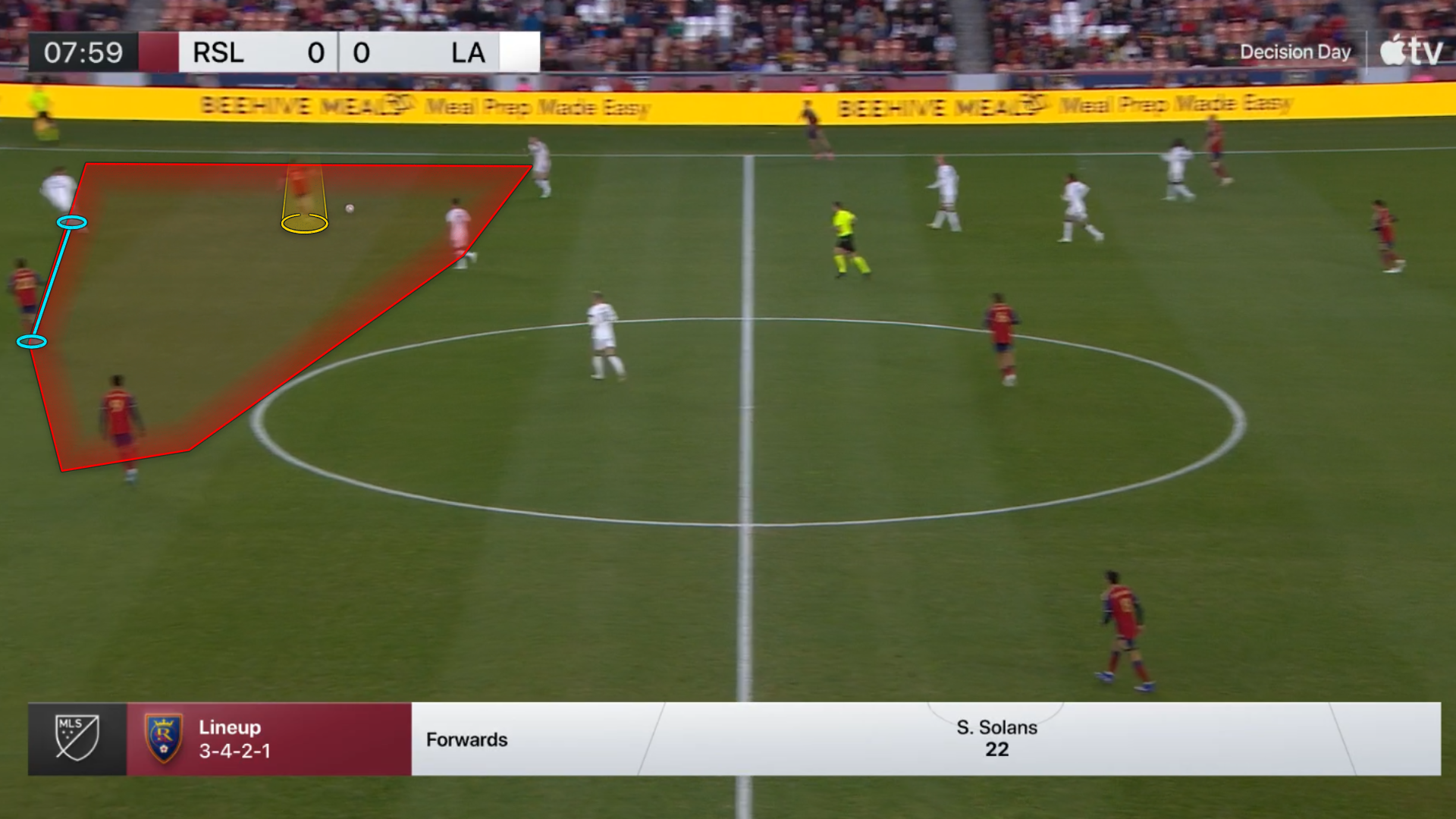
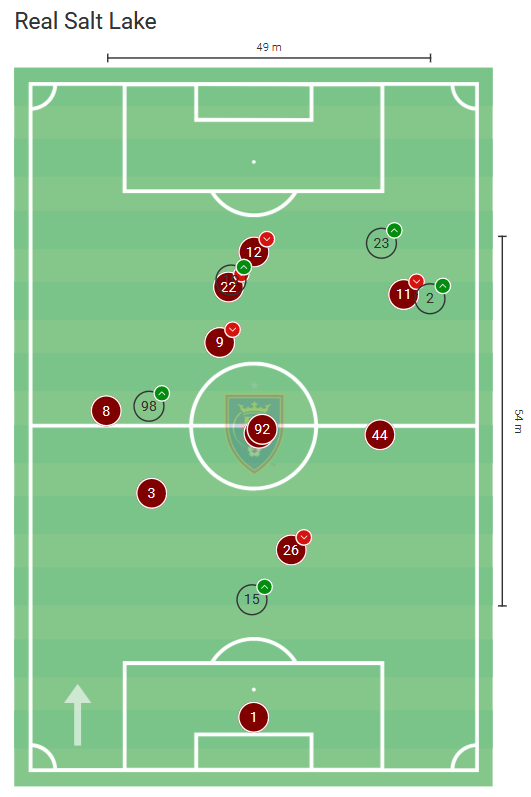
What’s more, if adversaries commit to stopping the short build-up, RSL are equally comfortable going long into Solans, whose physical presence and desire to compete doggedly offers a valuable outlet. Sanabria's aerial ability also provides another useful wide target when bypassing pressure.
Another crucial feature of their attacking play is the rotations within their wide triangles. These movements help create numerical and positional superiorities, manipulate markers, and generate advantageous receiving situations. One excellent example came early against the Galaxy, when RSL combined through a slick third-man sequence down the flank to break in beyond the defense.
Nice passage of play by RSL through their wide triangles, featuring a neat rotation between Saba and Spierings, a slick third-man combination to exploit a 2v1 out wide and an excellent decoy run by Saba before Booth whips in a wicked cross that Solans just misses. pic.twitter.com/W5n3cRviZS
— Edward Stratmann (@EdwardStratmann) November 9, 2026
The below screen serves an apt illustration of the intelligence within their movement, as Guilavogui and Sanabria drag defenders away from their designated zones to manufacture a huge channel for Solans to attack in behind.
Top space creation by RSL as Guilavogui and Sanabria (out of screen) draw their markers out of position, allowing Solans to exploit the huge space in behind down the channel. pic.twitter.com/997zwrTzqm
— Edward Stratmann (@EdwardStratmann) November 9, 2026
Those wide combinations are especially potent on the left, where the relationship between Sanabria, Guilavogui, the drifting Solans, and a nearby central midfielder are a constant source of problems for opponents, with their rotations opening spaces for underlapping runs. A notable passage (below) saw Solans peel toward the touchline while Guilavogui adjusted his position inside, freeing Sanabria to surge inward on the underlap as RSL exploited a 4v3 advantage to manufacture a quality chance. Then, in the match vs. Sporting Kansas City, Sanabria and Guilavogui again rotated cleverly to form a 2v1 and advance play dangerously.
Slick rotation between Guilavogui and Solans, who peeled to the flank, freed up Sanabria to underlap and allowed RSL to exploit their 4v3 overload on the left to create a quality chance. pic.twitter.com/NGuGxTiTUc
— Edward Stratmann (@EdwardStratmann) November 9, 2026
Great dovetailing by Guilavogui and Sanabria down the left. Guilavogui drifted wide and played a wicked pass against the pressure, as his movement created the space for Sanabria to underlap before the Uruguayan found his teammate as RSL broke away in a 2v1. pic.twitter.com/VJCY7Nl8x1
— Edward Stratmann (@EdwardStratmann) November 12, 2026
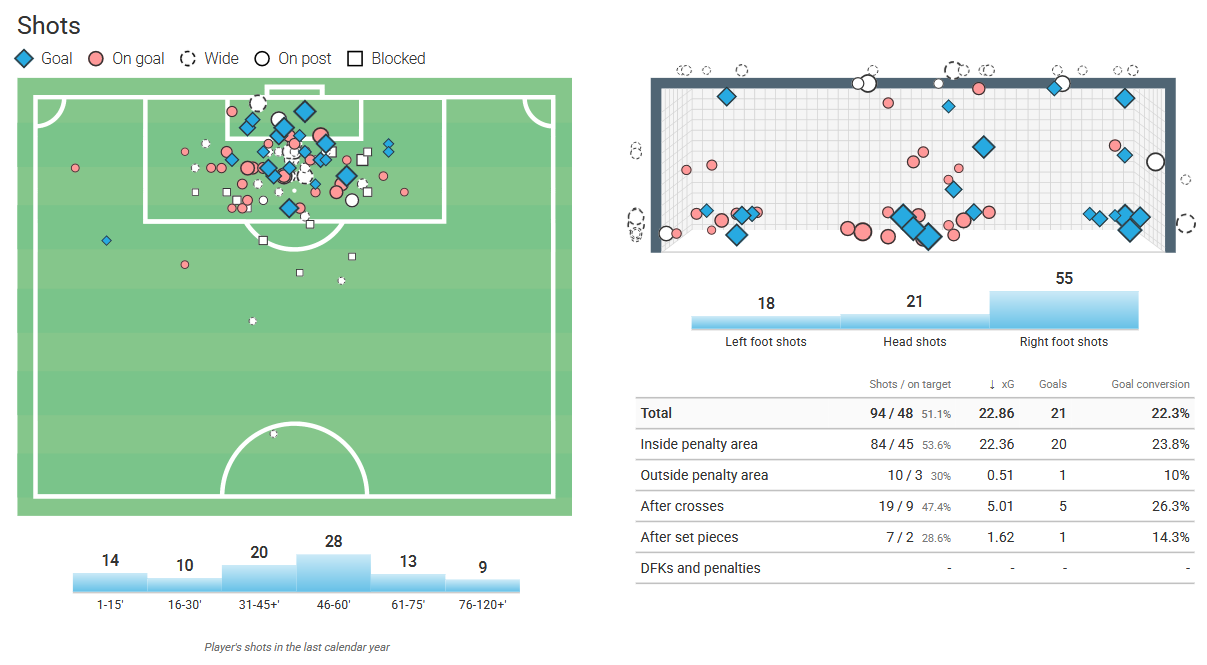
The versatility of Solans elevates the entire attacking framework. Even though he can act as a traditional target man and battles manfully in the air, his willingness to stretch defenses with his well-timed runs in behind adds a valuable dimension. His pace, movement, awareness of space, and finishing make him an immense threat on the counter, giving RSL depth, verticality, and unpredictability in attack. Equally importantly, his intelligent positioning often creates opportunities for colleagues by pinning defenders and opening passing lanes between the lines for players such as Lobjanidze and Guilavogui.
Effective build-up by RSL, who form a back four and use a neat third-man combination to start before Guilavogui's dropping movement creates a diagonal lane into Solans. Solans then finds Guilavogui, who'd spun off his marker to attack the vacated space. pic.twitter.com/5doiCpSe3u
— Edward Stratmann (@EdwardStratmann) November 12, 2026
RSL are adept at creating promising scenarios courtesy of subtle positional adjustments, too. By tilting towards one side of the pitch, they can generate superiorities and a host of options against in close proximity at varying levels to combine and unlock opposing midfield and defensive lines.
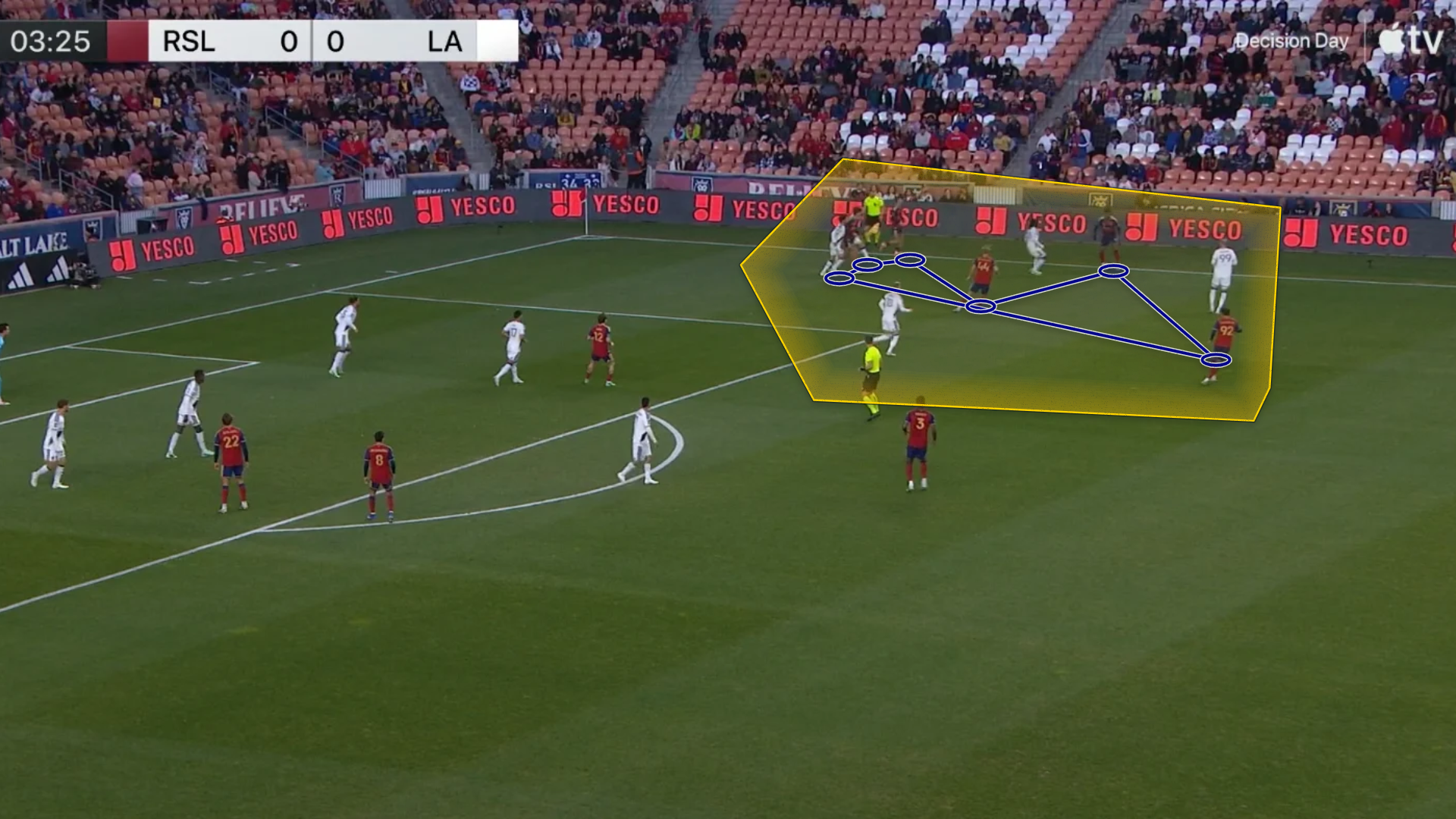
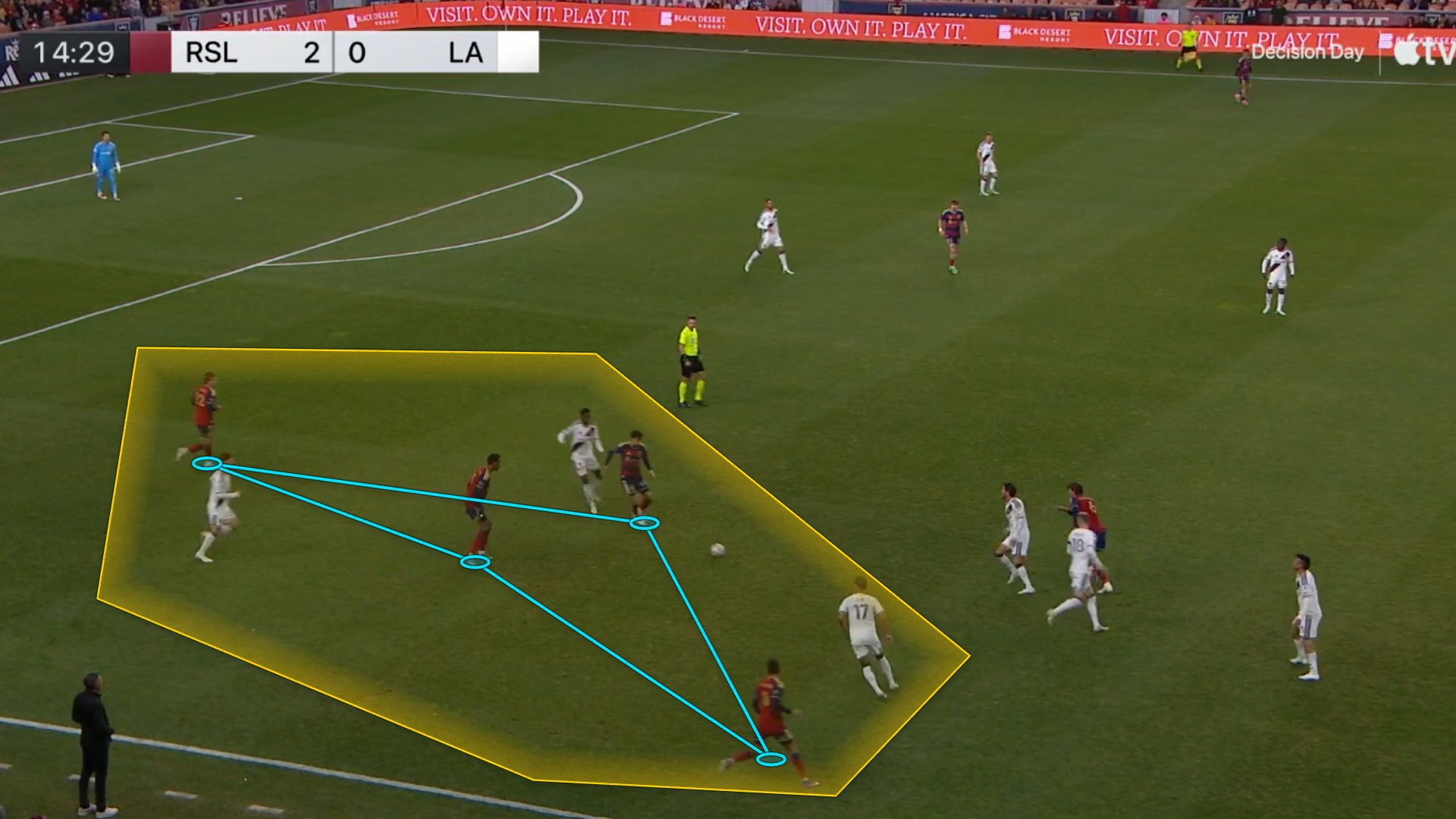
Further gains stem from their execution of the overload-to-isolate principle. By massing players on one flank as mentioned, they successfully drag the defensive block across. Once that shift occurs, they strike a rapid switch of play to the far-side wingback to conjure a one-on-one in the final third. The example below shows this coherently, as they create a 5v4 after shifting towards the right flank, which saw them progress and attack the exposed weak side.
Successful use of the overload-to-isolate principle by RSL ahead of their opener vs SKC, as they initially build down the right and populate that area of the pitch, ensuring SKC shifts across horizontally before quickly switching play to Sanabria, who is free on the left flank. pic.twitter.com/d7b4NYNfQw
— Edward Stratmann (@EdwardStratmann) November 12, 2026
Altering the focus to their stopping output, and RSL's high press is largely man-oriented and designed to force foes into predictable areas. The striker typically curves his press toward the goalkeeper while using his cover shadow to block the passing lane into the far centerback to usher play to one flank. From there, RSL can lock onto their direct opponents, compress the pitch, and get touch tight, which allows them to either set pressing traps or assertively pounce. They're especially alert to common pressing triggers such as backward and sideways passes, backpasses to the goalkeeper, sloppy or underhit passes, vertical balls into pressure, and passes played to the touchline.
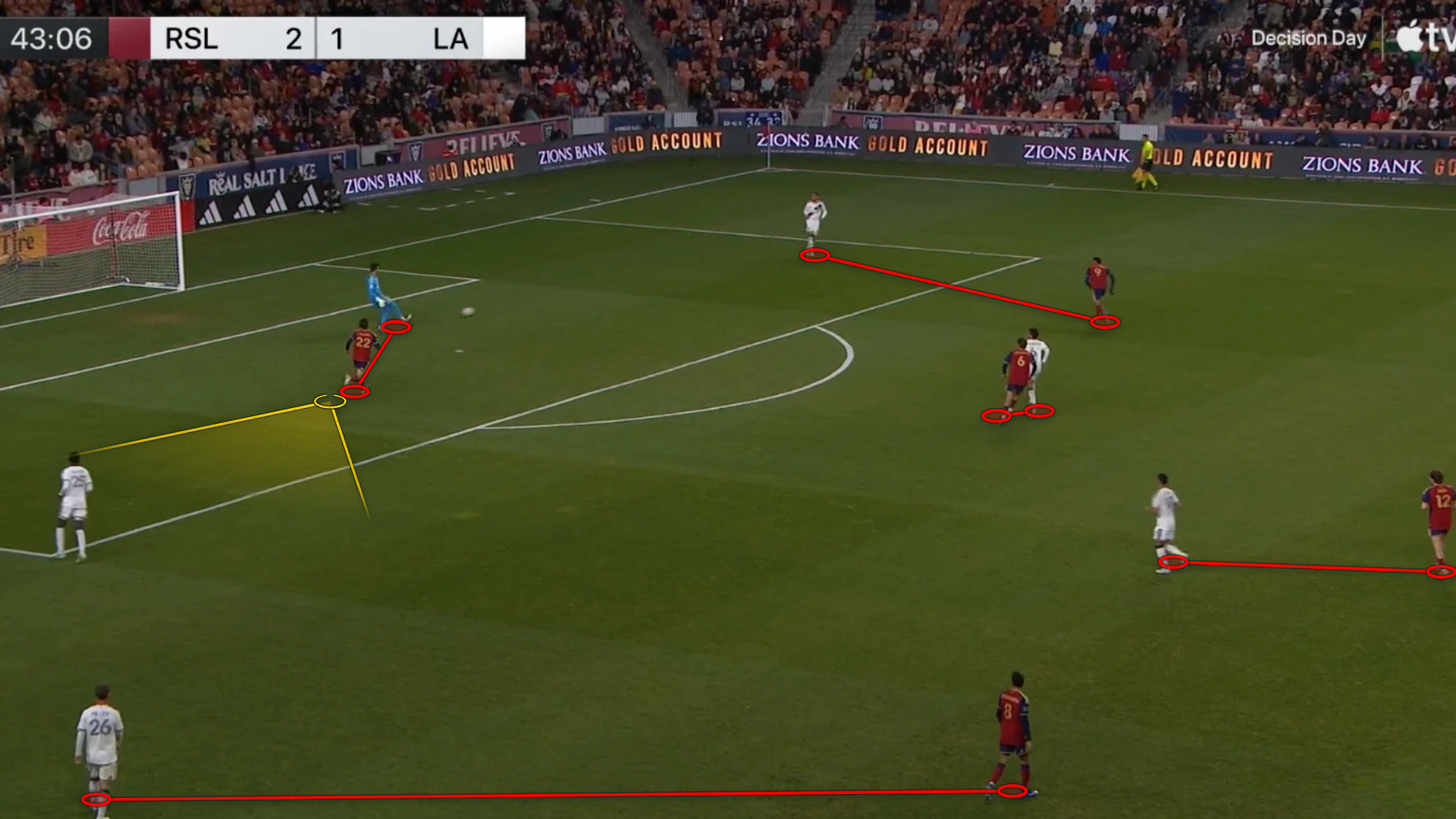
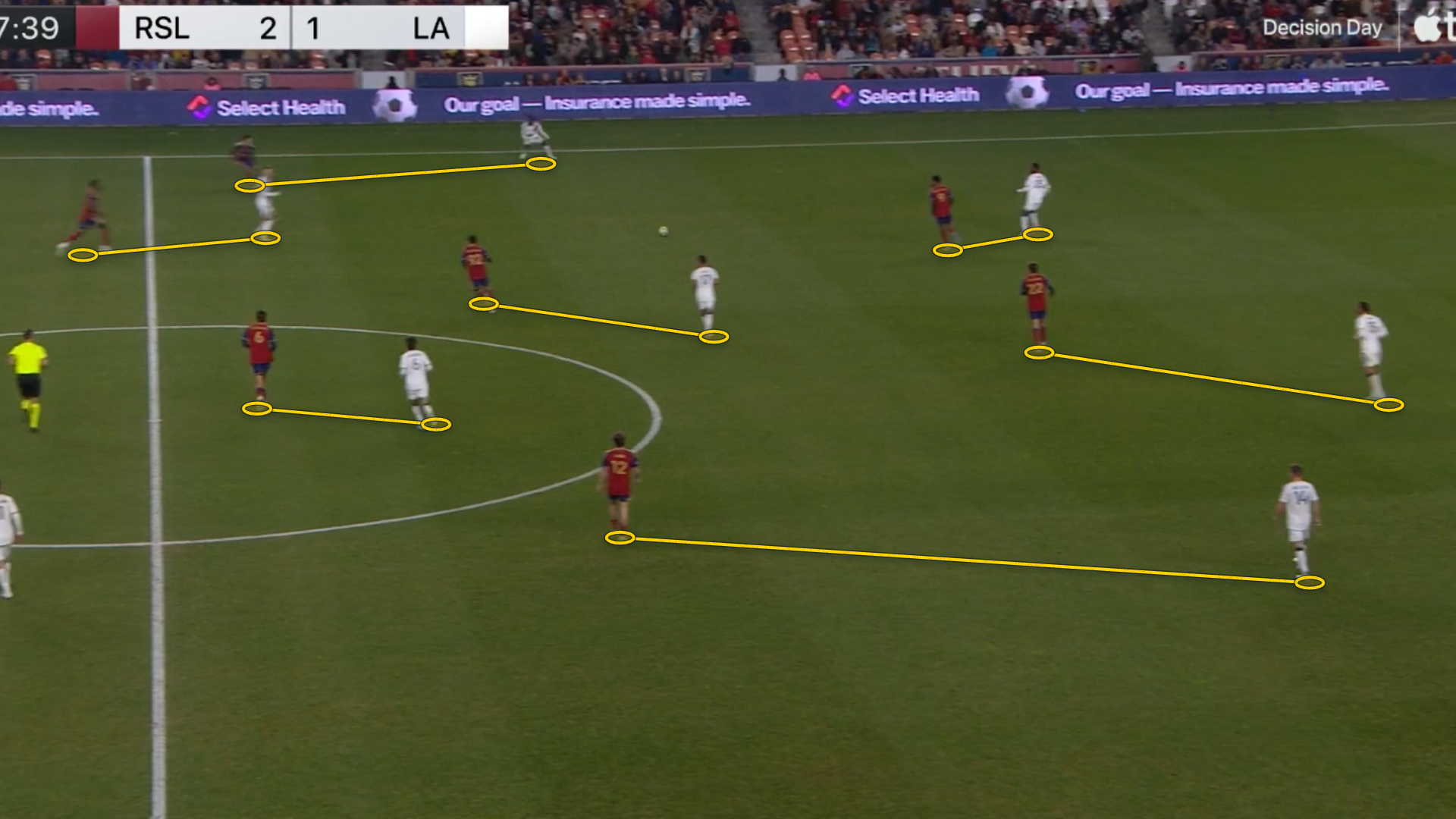
When defending deeper, RSL will retreat into a compact 5-4-1 mid block, where their priority is to close central spaces, cut off passing routes, stay compact, and limit access into problematic areas. While maintaining clear man references, they're ready to launch into action whenever pressing cues arise, aggressively harrying opponents who receive with poor body shape, under pressure, or with limited options.
Another key weapon in their arsenal is their excellent counter-press, as upon losing possession, they immediately spring into life collectively and look to regain the ball high, both to create chances against disorganized defenses attempting to transition and to extinguish counters before they can develop. This approach is aided by the close spacing and strong rest-defense within their setup, ensuring they have plenty of players around the ball and solid coverage behind it should their initial press be beaten.
The numbers show where their strengths lie across MLS, particularly in direct progression and chance creation, where they rank fourth for long passes (37.77 p90), sixth for both shots (12.44 p90) and key passes (4.03 p90), ninth for progressive passes (62.52 p90) and entries into the final third (46.63 p90), and 10th for progressive runs (11.94 p90). Out of possession, their tenacity is highlighted just as clearly, placing third in MLS for defensive duels (56.53 p90) and eighth for interceptions (36.29 p90).
The confidence coursing through the group is reflected in Mastroeni's comments heading into the showdown with Seattle. "I think we're prepared mentally, tactically, technically to encounter whatever comes our way," he said.
"Our objective is to win a cup. That's why we've gotta prepare this week to confront our first opponent en route to what we really wanna achieve."
Those words encapsulate the mindset of an RSL that has overcome adversity, rediscovered its identity, and are looking ahead to the playoffs with considerable belief and momentum.
All told, Seattle will face a stern examination against a well-drilled and cohesive RSL team that is peaking at the right time. With their crisp rotations, wide combinations, clever use of overloads, and the constant threat of Solans in behind, Mastroeni's men possess plenty of weapons to hurt any opponent.
Being switched on and disciplined defensively will therefore be key for the Sounders in this clash, for any lapses in concentration could be ruthlessly punished by this fired-up and multifaceted RSL outfit.
All statistics sourced from Wyscout


