What went wrong in the Seattle Sounders’ sixth consecutive MLS loss?
It wasn’t the worst performance we’ve seen from the Sounders this season. Considering the inexperience of Seattle's starting lineup and a lengthy injury list, the Sounders did a respectable job of competing with a Portland Timbers side that is now unbeaten in four matches. That said, few would argue Seattle deserved anything from this game. While the Sounders looked competitive for the first 30 minutes, Portland gradually took control and looked increasingly likely to find a winner as the match wore on. By the 70th minute of the game, the Sounders were pinned back to their defensive third trying to survive the match with a point.
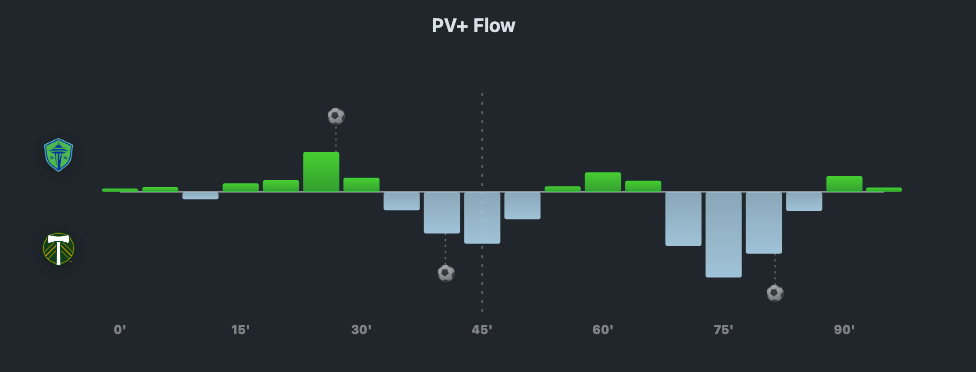
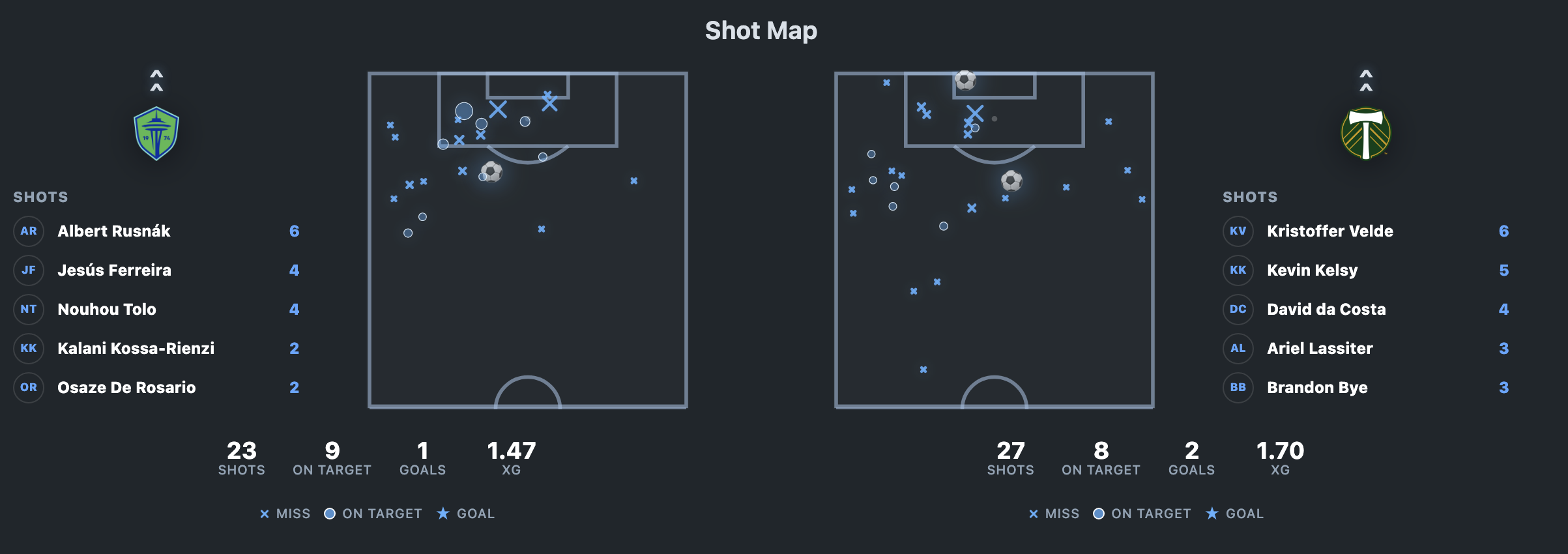
The expected goals numbers were relatively competitive. FotMob credited Seattle with a 1.43 xG compared to Portland's 1.77. Possession value, however, paints a clearer picture of who consistently generated dangerous attacking sequences.
On a historical MLS match performance scale based on possession value differential, Portland graded out at a score of 55 while Seattle finished the match with a 45. The distribution is centered at a 50, meaning Portland produced a slightly above-average attacking performance while Seattle fell below that mark.
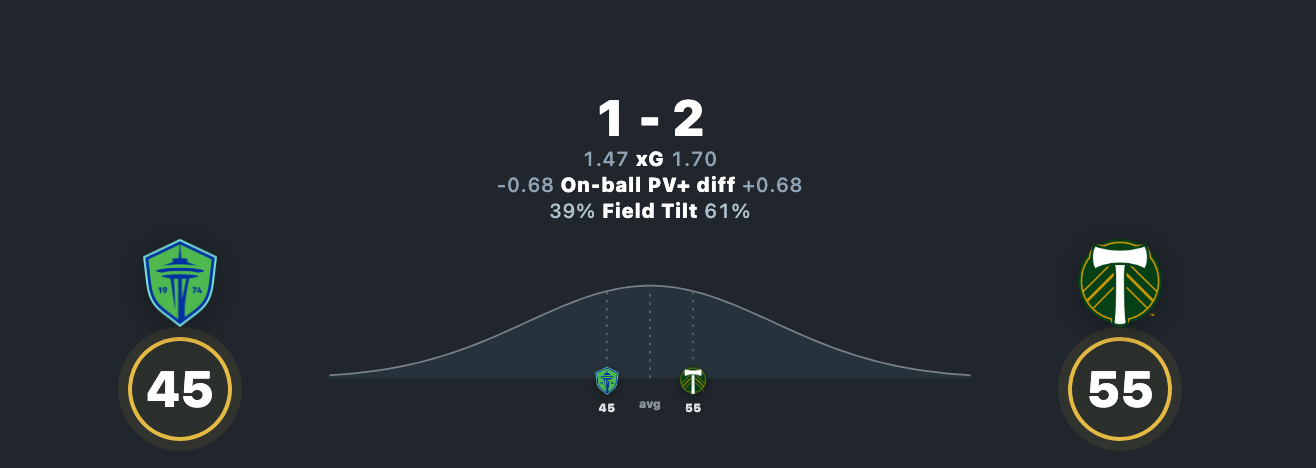
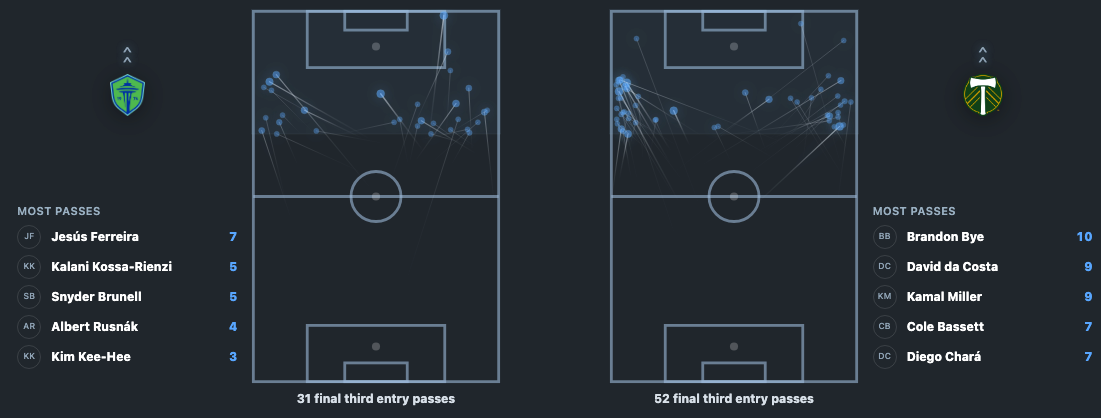
The field tilt numbers support these overall match performance scores. Portland attempted 61% of all final-third passes compared to Seattle's 39%, showing how much more frequently the Timbers were able to sustain their possessions deep inside Seattle's half.
Overall passing numbers were fairly even. Portland attempted 489 passes at an 87% completion rate compared to Seattle's 434 passes at an 82% success rate. Where concerns lie is the area on the pitch these passes took place.
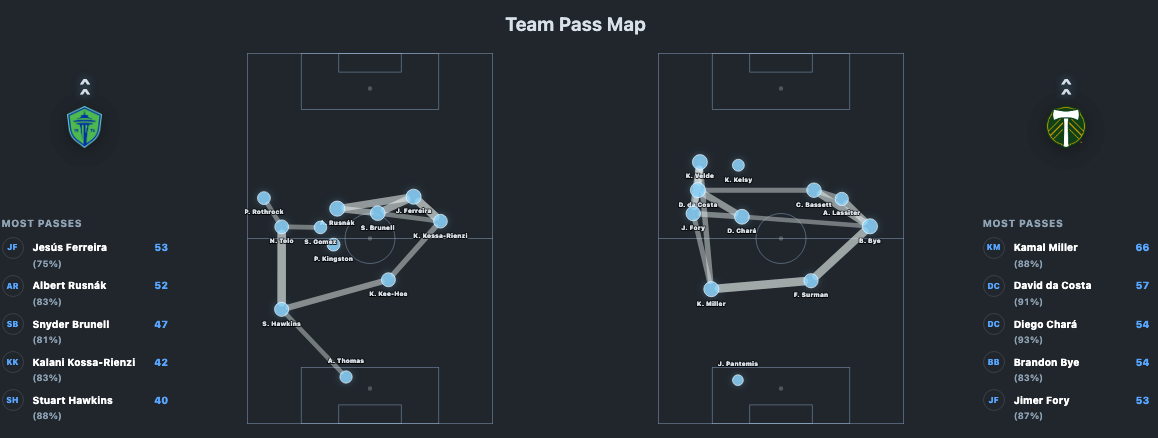
Seattle built out of the back quite effectively. Nineteen-year-old Stuart Hawkins led the Sounders with 10 middle-third entry passes and had an 88% completion rate, the highest among Seattle's five most involved passers in this game. The problem was not progressing into midfield.
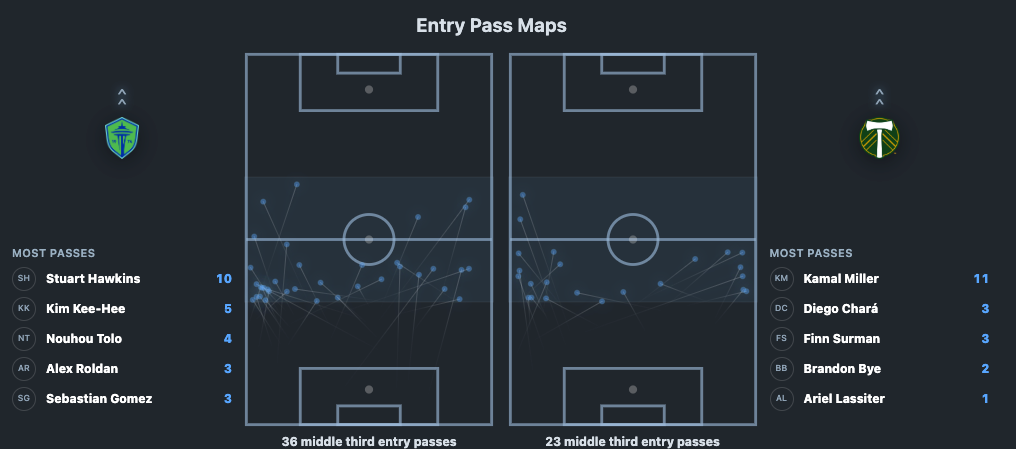
Portland completed 52 final-third entry passes compared to Seattle's 31, a gap that largely reflected the experience of each midfield. Seattle started academy products Snyder Brunell and Peter Kingston, both in their first full seasons in which they are playing regular MLS minutes. Portland, meanwhile, anchored their midfield with Diego Chará, the league's all-time leader in appearances and starts for a single club. Brunell and Kingston remain exciting long-term Sounders players, but the Timbers’ experience showed. Chará completed 93% of his passes compared to Brunell's 81%, and Portland consistently retained possession in the middle and final third of the pitch.
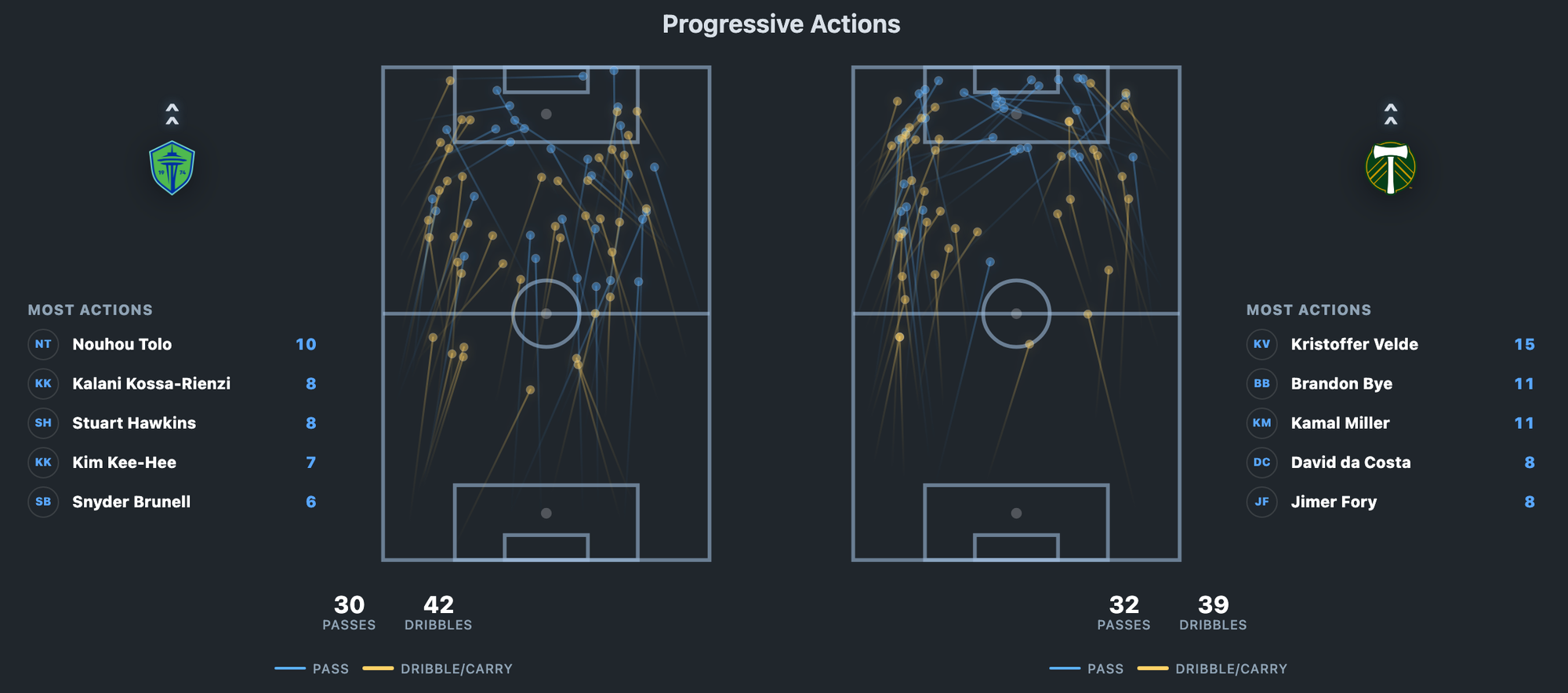
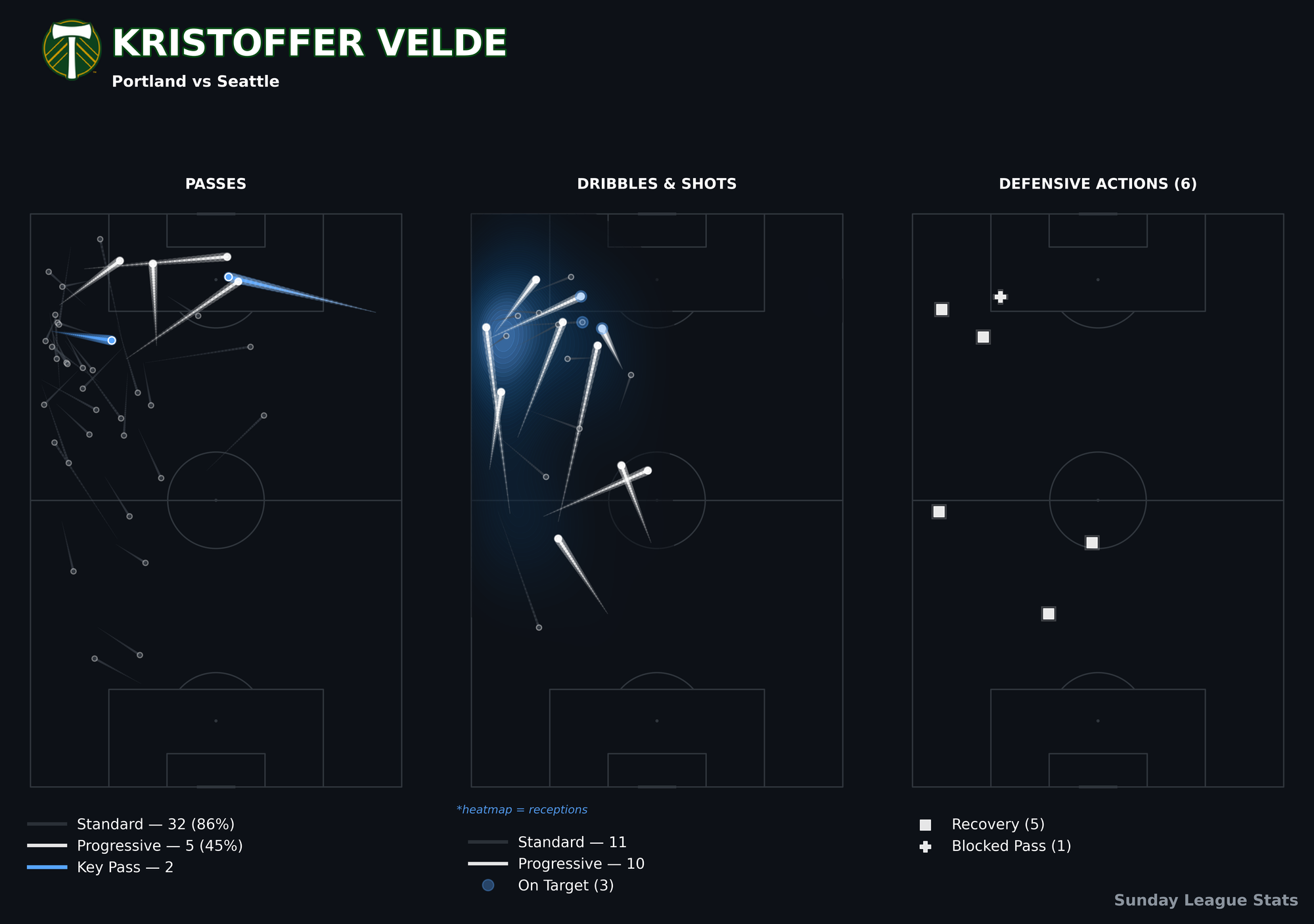
Seattle accumulated plenty of progressive actions in its defensive and middle thirds, but Portland more consistently advanced play into dangerous attacking areas. Kristoffer Velde epitomized that difference, leading all players with 15 progressive actions.
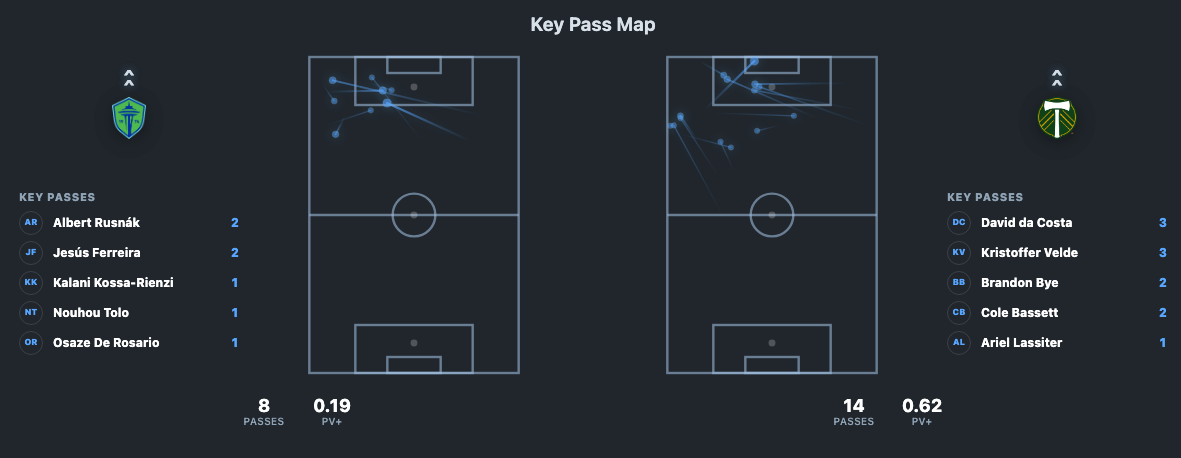
Portland also created seven more key passes than Seattle. David da Costa and Velde each produced three and were two of the most dangerous players on the field.
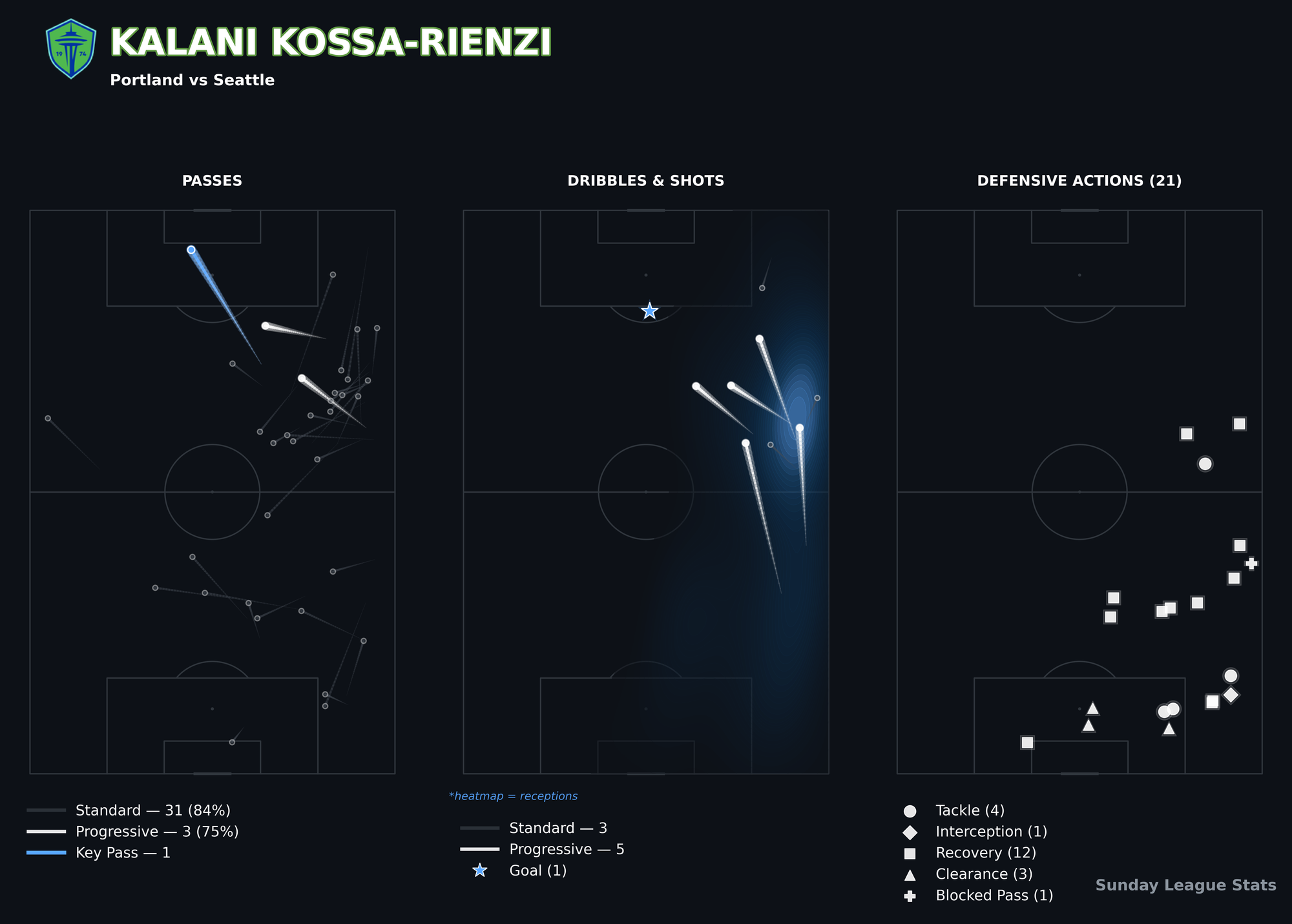
Much of Portland's attacking value originated through Velde on the left wing. This should not come as much of a surprise. Kalani Kossa-Rienzi is an outside back who naturally wants to push high and contribute in the attack, and Portland exploited the space left behind him. Given Velde's recent form, limiting his influence had to have been one of Seattle's primary tactical priorities, yet Portland repeatedly succeeded in getting him into space on the left wing.
Kristoffer Velde's heatmap (@futi.live) for Portland Timbers vs Real Salt Lake last night. Concentrated.
— James Nalton (@jdnalton.bsky.social) July 26, 2026 at 9:07 AM
[image or embed]
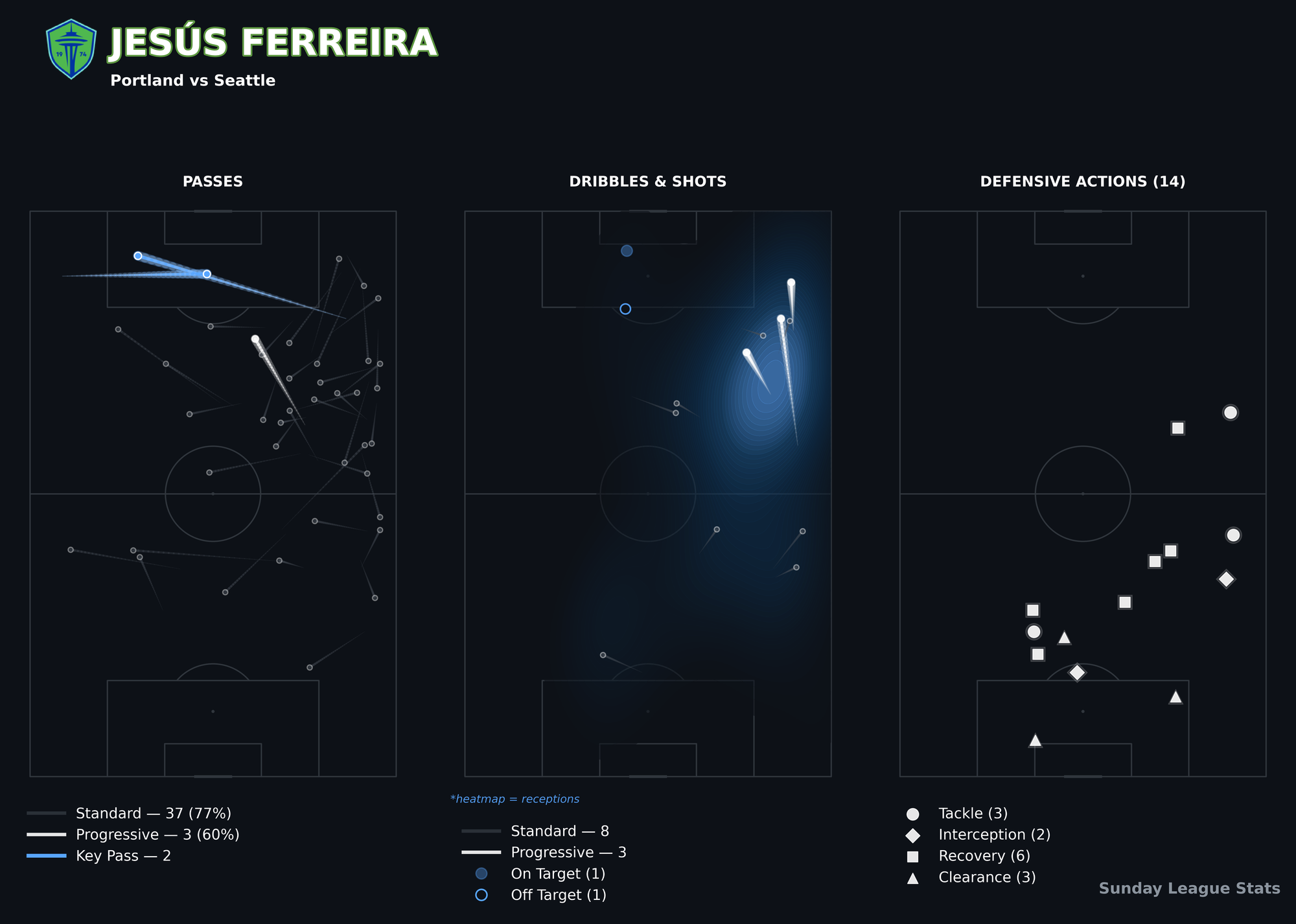
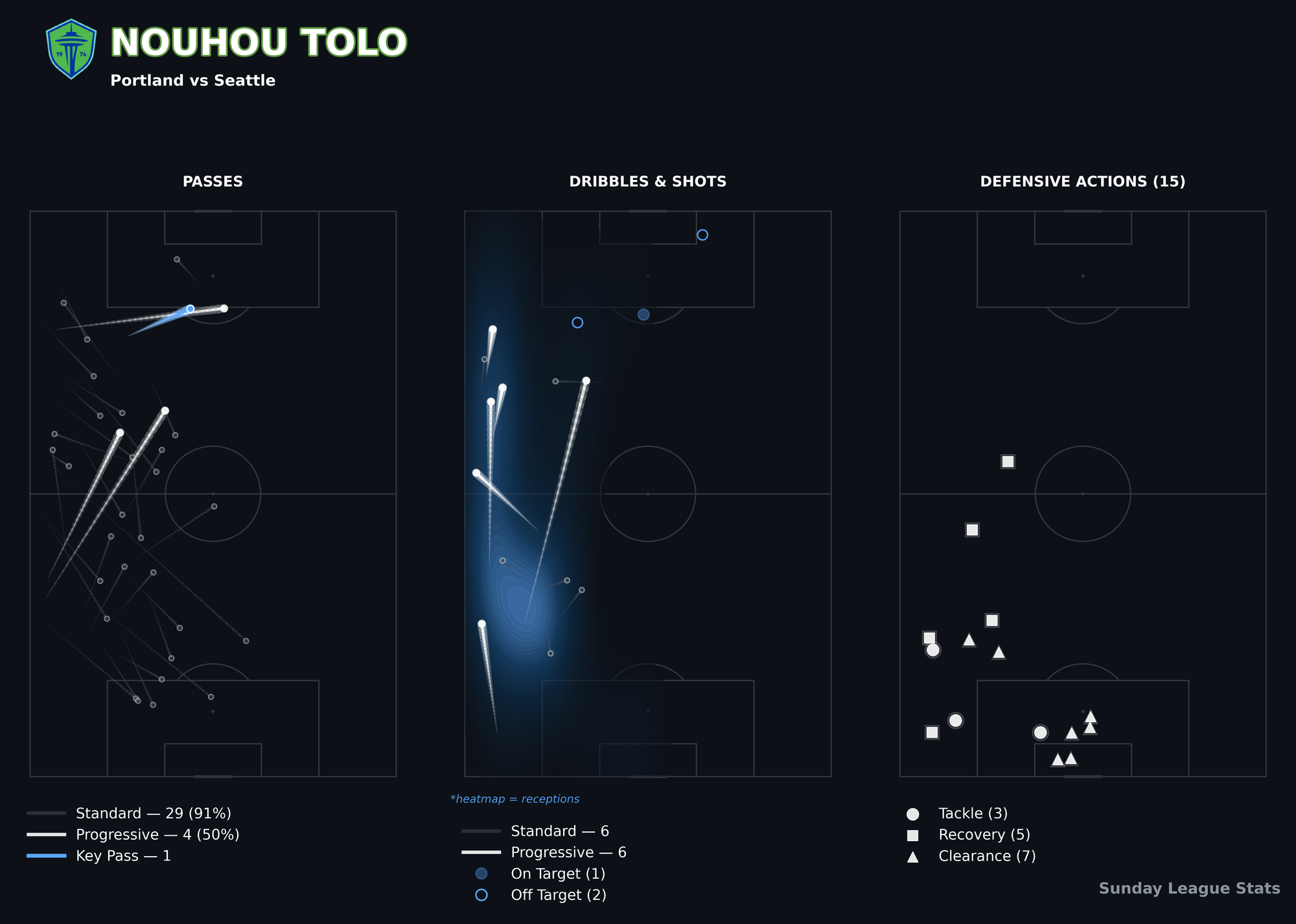
Seattle's greatest attacking value came from Kalani Kossa-Rienzi and Jesús Ferreira on the right side of the field. It also shouldn't go unnoticed that a significant portion of Seattle's overall possession value came from defensive interventions by Nouhou, who was excellent one vs one.
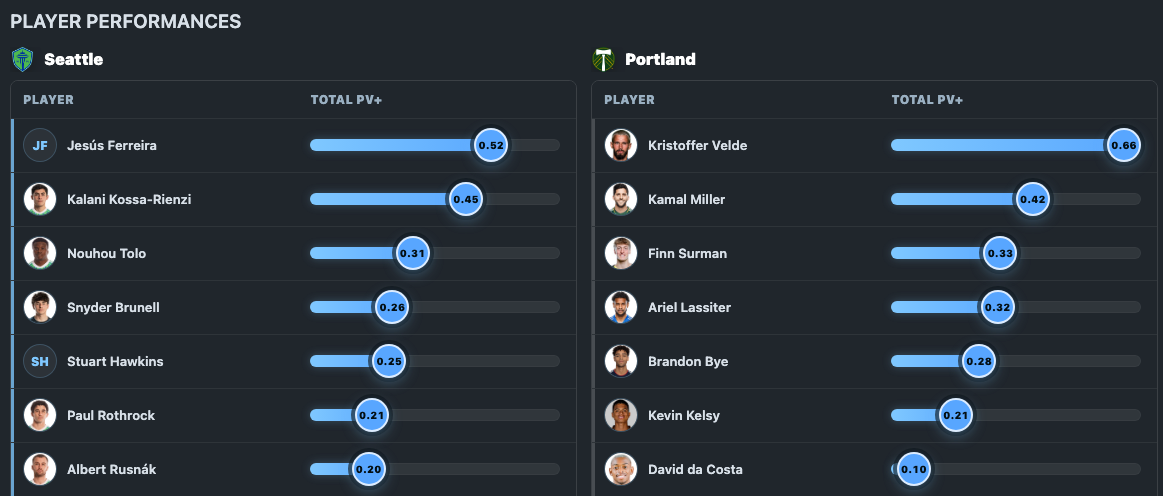
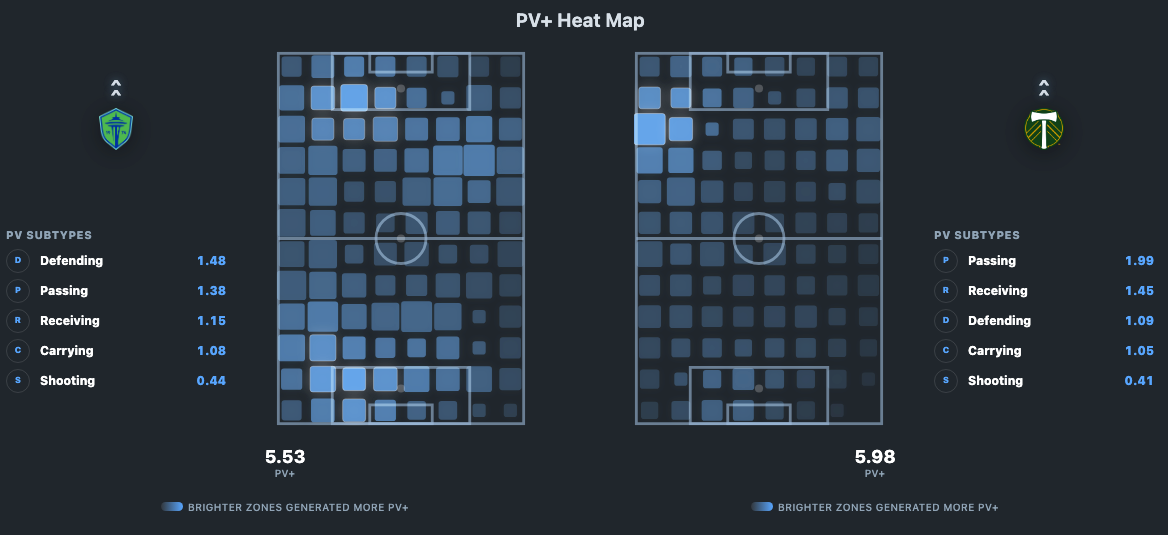
Across Seattle's three highest-possession value performers, the team generated just four key passes and three shots on target. Those are not numbers that typically earn three points.
Sounders key player performances
Who is Seattle's game changer?
My biggest takeaway from the game isn't that Portland dominated every aspect of the game. As I've discussed Seattle actually recorded more middle-third entry passes and more overall progressive actions. The difference was what happened after those actions in areas of the pitch that matter most. Portland consistently turned possession into meaningful attacks in and around Seattle's box, while the Sounders struggled to convert possession into genuine scoring opportunities.
In a salary cap league like MLS, where the gap between a team's best players and its role players is significant, matches are so often decided by which stars are delivering. FC Cincinnati provides a good example. Despite conceding the third-most goals in the league, they remain comfortable in the Eastern Conference because Evander and Kevin Denkey continue to produce match-winning performances. Whether due to injuries, form, or roster construction, Seattle's difference-makers simply are either injured or not providing enough attacking output at the moment.