In retrospect, perhaps it should’ve been more obvious that it would be a rousing success. Especially if you’re from Seattle.
The signs were there for decades. Beyond its embrace of the Sounders dating back to the old North American Soccer League, the Emerald City responded well to its few opportunities to welcome the national team over the years.
A 2-0 win over Canada at the Kingdome in 1976 lives in history as the first-ever FIFA World Cup qualifier played on artificial turf. The same venue hosted a 1-1 friendly draw with Russia in 1994 that drew 43,651to watch Alexi Lalas net a late equalizer via a towering back-post header.
In a hint of the playing-surface discourse awaiting in future decades, the old dome’s infamous AstroTurf was so hard that Lalas got permission from coach Bora Milutinovic to wear racquetball shoes, insisting that “they were the only shoes I felt comfortable in.”

This article originally appeared in IV: The Sounder at Heart magazine. Issue 2 focuses on Seattle's role in the 2026 World Cup. You’ll find profiles of all seven teams who play here, a full schedule and all sorts of interesting features.
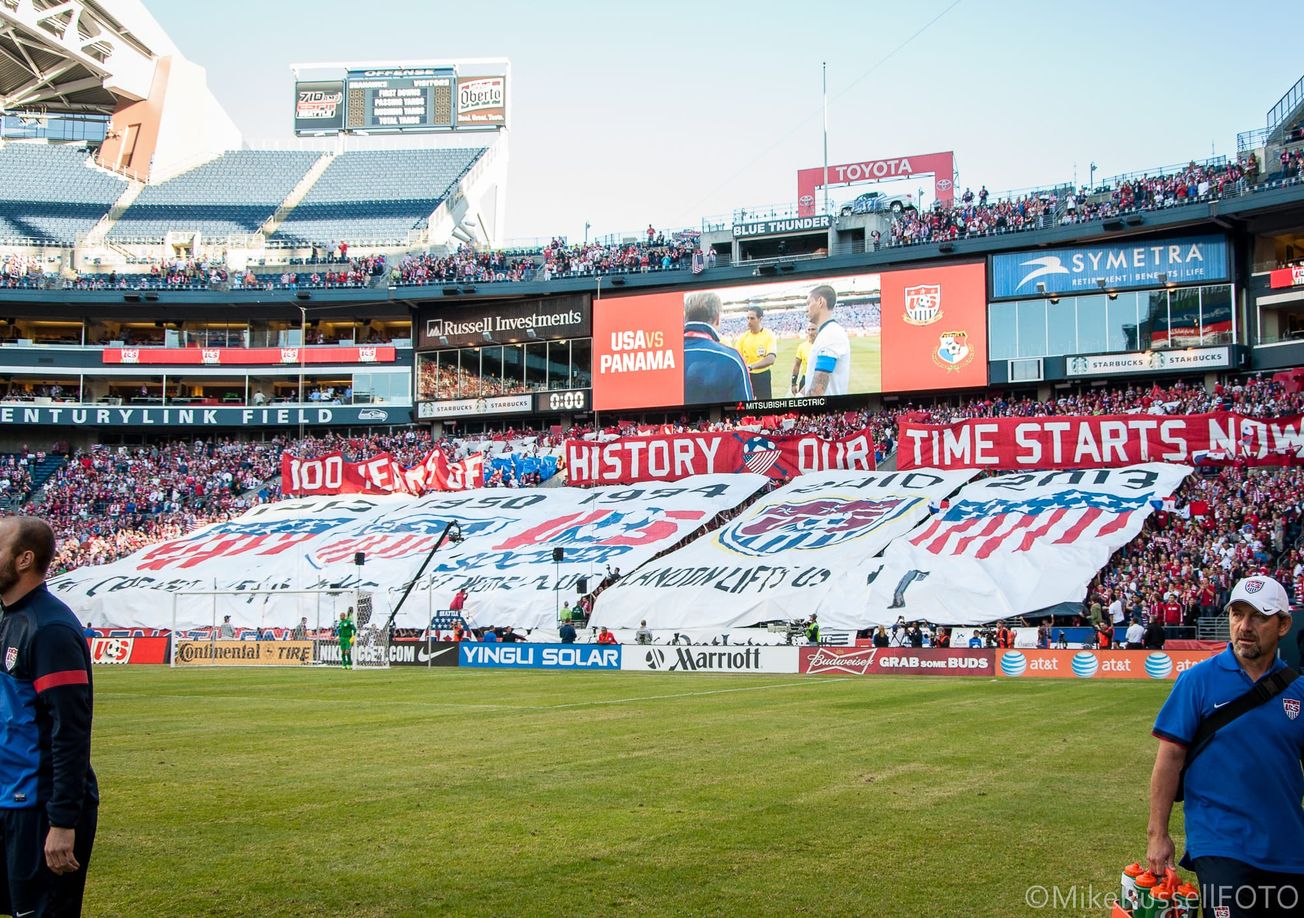
At the time, however, there was a great deal of debate around U.S. Soccer’s decision to hold the men’s national team’s weighty World Cup qualifier vs. Panama at CenturyLink Field (now Lumen Field) in June 2013.
‘Criticism, negativity may leave Seattle with few rewards for their hosting efforts,’ blared one headline in the leadup to the match, reflecting the degree of angst around a match in a city whose wholehearted embrace of the Sounders’ 2009 arrival in MLS had inspired both admiration and annoyance elsewhere in the country.
A temporary grass pitch of dubious quality had to be laid down over the much-critiqued FieldTurf at ‘the CLink’ in order to gain the privilege of this fixture, and a Mariners game at the ballpark across the street on the same day led officials to cap the qualifier’s capacity at 42,000 for crowd management purposes. Then there were the elevated ticket prices, which eclipsed the Sounders’ norm enough to prompt some grumbling among locals.
All this was over and above the inescapable realities of geography and calendar that had made Puget Sound a rare stop for the USMNT, whose top players tend to be based on a distant continent halfway around the world, while most of their regional opponents are located thousands of miles south and east.
“It’s not very often we can come to the Northwest with all of the European guys,” then-head coach Jurgen Klinsmann noted before the Concacaf Hexagonal showdown. “It’s always challenging during a normal season for the Europeans to go all the way to the West Coast, because of the nine-hour time difference.”
In this particular window, held after the conclusion of the European club seasons, the timing made Cascadia an easier destination. Yet the Yanks’ schedule was still quite congested. They started their summer with friendlies in Cleveland and Washington, D.C., jetted down to Jamaica for a qualifier just four days prior to the Seattle game, then transitioned to Sandy, Utah for a Hex clash with Honduras a week later.
Any lingering doubts about the location among the US squad were vanquished within an hour or two of touchdown at Seattle–Tacoma International Airport, though.
“There were a lot of German-Americans on the squad at that time, and they really had no idea about Major League Soccer, or what the stadium looked like, or fan attendance, things like that,” recalled Sounders icon and USMNT alum Brad Evans to IV this spring. “So they asked all of us that were there at the time representing Seattle. [We said,] ‘we get 30-35,000 at every single game. The stadium is packed. It's the loudest fan base in Major League Soccer. I just think you're going to be really impressed.’
“I remember getting on the bus from the plane, and then driving into Seattle and just watching everyone's reaction, looking at the city -- and it was a beautiful day. I think that kind of hit a little switch in their head, saying, ‘OK, this is a proper venue. This is going to be a proper atmosphere.’”
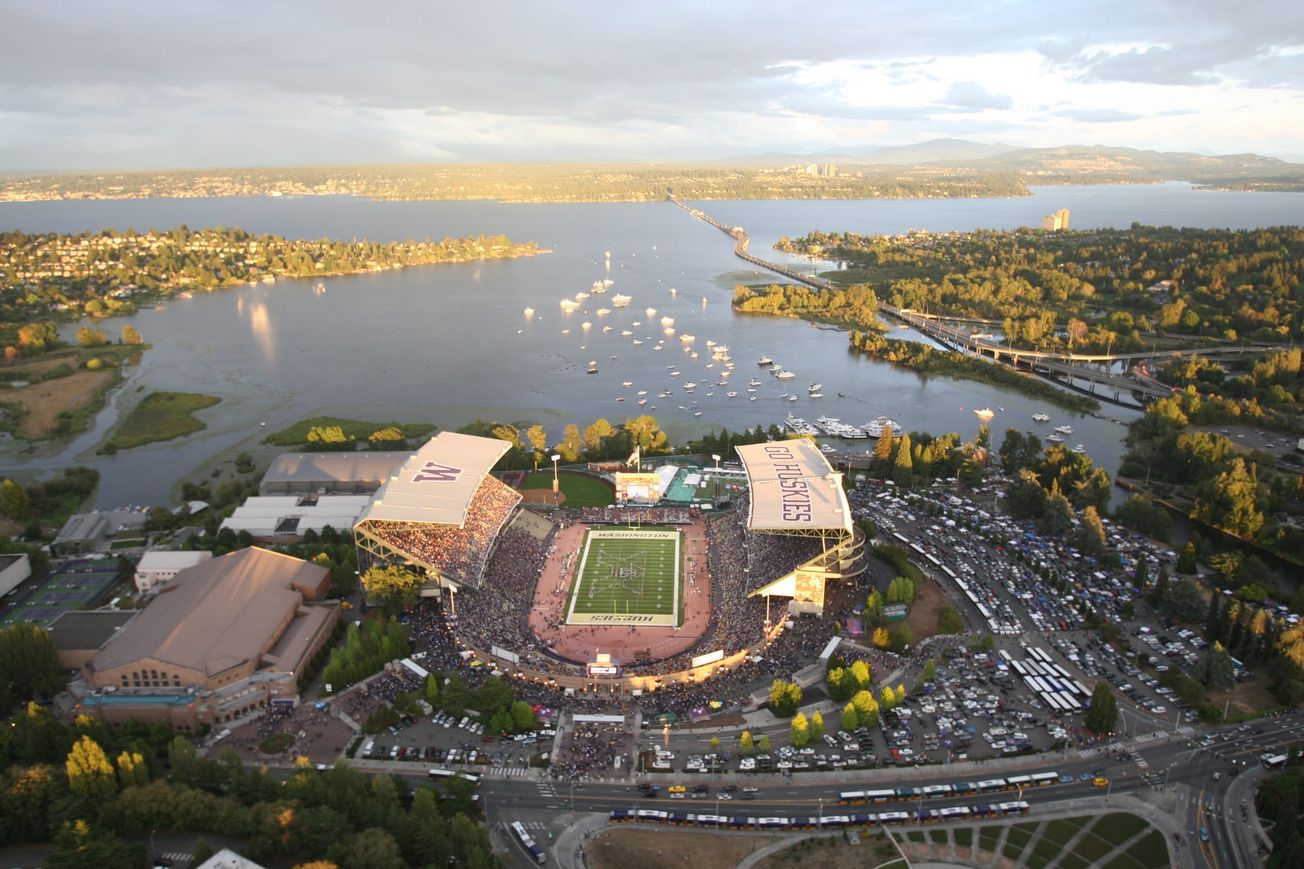
Indeed, it turned out to be a watershed moment, not just for soccer in Seattle but the USMNT program at large. Thirteen years on, it looks like a key milestone on the path towards becoming a host city for the 2026 World Cup this summer, where that same venue will again welcome the home national team for a massive occasion: The USMNT’s group-stage duel with Australia on June 19, the showpiece of the tournament’s six games at Lumen Field.
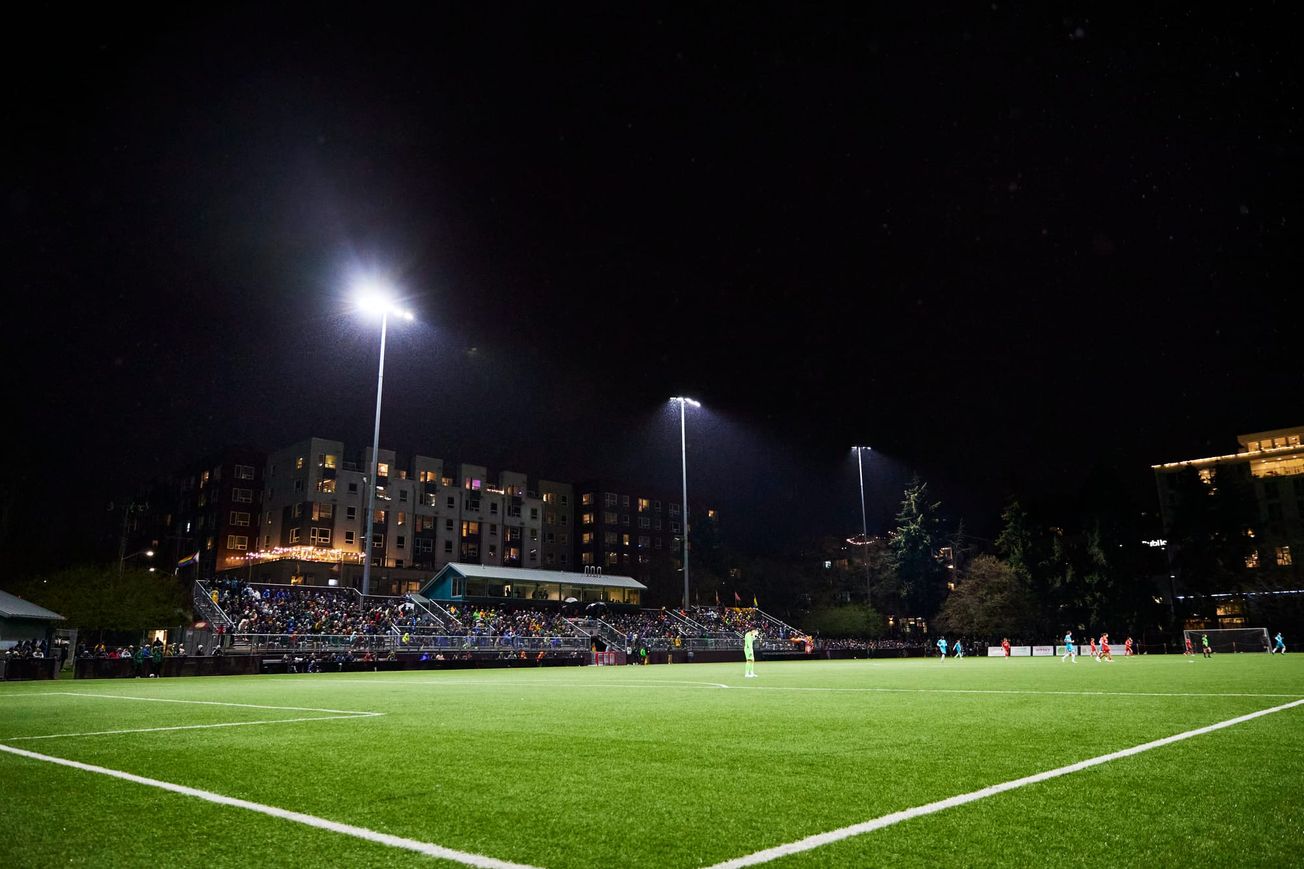
All that fretting about turnout back in ‘13 turned out to be overblown: 40,847 spectators turned up for an early-evening kickoff on a Tuesday, the biggest US home attendance of the 2014 qualification cycle, and the biggest of the entire Hexagonal outside of a few Mexico matches at the hulking Estadio Azteca.
The home faithful produced noise beyond that number, too, with palpable energy and relentless waves of sound cascading down onto the pitch as they introduced their ‘boom-boom clap’ – three years before it gained global fame as Iceland’s ‘Viking clap’ – and other rituals to the USMNT community.
“You can’t talk about the game tonight without talking about the crowd,” said US captain Michael Bradley afterwards. “Unbelievable. The best crowd I’ve played in in the United States without a doubt. So from all the players, a big thank you to everybody who was here, to everybody in this city who makes this a special night for us, because people don’t know what a difference it makes when you play in an atmosphere like this.”
The crowd got what it came for: A dominant 2-0 victory with goals from Jozy Altidore and local favorite Eddie Johnson. Even the press box wasn’t immune -- one veteran observer of the national team called it “probably the most entertaining soccer I’ve ever seen a U.S. men’s national team play,” and it pushed the U.S. into first place in the group at the Hex’s halfway point, a position they would imperiously maintain en route to Brazil ‘14.
“I’ve been telling the guys all week, ‘Wait ‘til game day, watch how the fans are.’” Johnson said. “That’s all the boys are talking about after the game, the crowd.”
Added goalkeeper Tim Howard: “It was really, really cool. It was inspiring for us.”
What made it all work was something few would have predicted: Sounders and Timbers fans actually cooperating and working together.
Today Shawn Wheeler is president of the Emerald City Supporters, the Sounders’ largest supporters’ group; back then he was leading the Seattle chapter of the American Outlaws. After assisting his Portland counterparts around a USWNT match in the Rose City the previous November, he and his colleagues were grateful to have the favor returned to them for the Panama qualifier.
“Obviously we have a rivalry of Sounders supporters with the Timbers supporters, but we were really working together on all those projects,” Wheeler told IV. “I helped to do a tifo deployment at Portland’s stadium for that U.S. women's game, and members of the Timbers Army who were up in Seattle for the World Cup qualifier helped with tifo deployment in the Brougham End.
“So it was a really cool coming-together of supporters throughout the region who share a passion for supporter culture, and also for different teams. Being able to set one aside and find the thing that we can work together on for a day was pretty cool.”
The positive results were evident to all parties. The volume and organization of support at CLink set “a benchmark for WCQ matches going forward,” in Wheeler’s words at the time, and showed fans from elsewhere that the Seattle phenomenon was real.
“We heard a lot from AO afterwards,” he said this year, “both the national organization as well as different people around the country, that they really enjoyed the different style of support that happened when they were in Seattle.”
Wheeler proudly notes that the legacy from that match fatefully extended in another, completely unexpected direction, too.
“We firmly believe that game had an impact on Clint Dempsey coming to the Sounders,” he said. “Pretty cool to think about, that we were able to have that level of impact for the club team that we support so much.”
It’s true: Without USMNT-Panama, there might well have been no #DempseyWatch just a few weeks later, no paradigm-shifting recruitment of the country’s most accomplished player to return home on a massive Designated Player contract after six-plus years in the English Premier League.
A few days of international duty on the Sound turned out to be an infomercial for the Rave Green experience. Even before the match, Deuce had been struck by the depth and breadth of the soccer culture as he and his teammates explored the city. As Evans notes, the Sounders’ average attendance is usually higher than Fulham FC’s, his home for most of his stint in London.
“I remember when I first started out in the MLS, things weren’t like that. It’s great to see that the game is building and there are markets like this that people have so much passion for the game,” said Dempsey. “I almost feel like I was in another country the other day, when the Seattle Sounders game was on while I was walking to get dinner. Just as you walk past the bar, you see that the TV’s on, and everybody’s watching soccer.
“For me, that was awesome.”
Though Dempsey’s time with SSFC was disrupted by a heart condition that eventually played a role in his retirement in 2018, the future Hall of Famer would go down as one of the club's greatest ever, a three-time All-Star who helped the Rave Green win their first MLS Cup, first Supporters' Shield and one U.S. Open Cup trophy, while his strike partnership with Obafemi Martins produced arguably the most entertaining soccer in the organization’s history.
“If I’m being honest with you, I kind of wanted to go to Texas, I’m not going to lie about that,” Dempsey says in ‘You Don’t Know Where I’m From, Dawg,’ the five-part documentary series about his life released by Paramount in April. “But Seattle really just ended up being a perfect place.”
The kid from Nacogdoches had his own life-changing first contact with the World Cup as a child, attending USA ‘94 games in Dallas at age 11 despite his family’s tight finances. Part of the thrill of hosting the event is the prospect of a new generation of youngsters finding inspiration in similar fashion.
But FIFA’s extractive economics have cast a shadow over the whole affair, with ticket prices that put the tournament out of reach for many of the very fans who made 2013 so special.
“I think the market's going to drop at some point, but I don't know. At this point I don’t plan on going to any of the matches in Seattle, which is kind of shocking to me, as a huge fan of the sport,” said Wheeler. “Hosting the World Cup in your city should be such an exciting time, and a lot of it has been undermined by FIFA’s approach to this as really just trying to get every dollar they can out of us as fans and supporters of the sport.
“I had hoped, when this was first announced to be coming to Seattle however many years ago, that this would be an event that could help build the sport in Seattle. And I'm less and less sure of that as we get closer to it.”
Evans is slightly more optimistic.
“Yes, ticket prices are crazy. I don't have tickets. I'm not buying tickets,” he said. ““But I think everyone's going to show up. I really do. I think at the end of the day, much like maybe the [2013] game, that you're going to see an influx of fans coming into the stadium, and I think it's going to be a fantastic atmosphere, whether that's inside the stadium or outside. It's going to be a day to remember.”
He’s less bullish on the current state of the USMNT, which leads him to believe full-throated home support will be that much more critical against Australia. The USMNT are perfect all-time at Lumen Field, with five wins, zero losses and zero draws, and 7-2-1 overall in the state of Washington.
“It's going to be a tough task for them, and we have to have fans show up, because I know that here in Seattle, if the fans show up, it will be the 12th man on the pitch, and I think it's going to be a great atmosphere,” said Evans. “I'm a little bit nervous for the group, the group of guys playing, in terms of getting results and the expectations of being on home turf. But I think a lot of them will be surprised here in Seattle when they come and play, about what the fans are going to show.
“How many times has the US played here? Nine or 10 total in the history of U.S. Soccer? Why not show up and show out and be a part of that experience?” he mused. “And there's a reason why the team has been so successful here. It's because at the end of the day, people want to watch good soccer and they want to represent their country, too..”
Factor in the Pacific Northwest’s generally gorgeous season conditions, the city’s myriad other attractions and the prospect of catching even more games just up the road in Vancouver, and Evans believes Seattle will offer the best possible experience for World Cup wanderers, be they Yanks or otherwise.
“It's a great spot to be on the map, and I think you'll see a lot of people travel,” he said. “Who knows? Ticket prices may come down at the last minute. I'm going to wait until the last second to see if it's accessible for me. Summertime in Seattle, you really can't beat it as a tourist.”
It’s something of a Rorschach test for soccer-loving Seattleites. Can the region’s passion for the sport transcend the increasingly unsavory elements of this World Cup? Even if the type of educated, passionate fans who made the 2013 qualifier so memorable can get in the door, it’s unclear whether they will be allowed to express themselves in full.
The extent of FIFA’s corporatization may make the quibbles around that occasion look quaint in retrospect.
“It's a completely different environment when FIFA is running a show than when the U.S. federation is able to provide the privileges of supporter exemptions,” said Wheeler. “What we saw last year with the Club World Cup was that FIFA wasn't interested in allowing us to have a lot of the flags and the things that help us make the matchday environment.
“So it'll be interesting to see how that supporter culture is able to show up in that controlled environment.”