The term “political football” originated in the United States. The concept dates back to the 1800s, and refers to this country’s variant of the game, the gridiron sort.
Yet it’s hard to imagine any team on earth, in any sport, epitomizing the phrase more than Iran’s national soccer teams, particularly as the senior men’s squad prepares to compete in Group G at the World Cup in the United States, where they’ll face Egypt in Seattle on June 26.
As much as international soccer has always been intertwined with nationalism, few teams are loaded with layers of additional significance like “Team Melli” (which means ‘national team’ in Persian) while the country’s Islamic fundamentalist government holds power. It’s perhaps now more than ever, in the wake of the military assault the United States and Israel launched on the Islamic Republic in late February, causing thousands of deaths in Iran and other countries across the Middle East and innumerable reverberations beyond.
The regime considers the team both an extension of its global profile and a fervently adored phenomenon within the country, and thus a key platform to control, or least attempt to. Yet it’s every bit as meaningful to the millions of Iranians living abroad and their descendants, many of them exiles unable or unwilling to endure the heavy restrictions imposed by the clerics in charge.
“It’s huge. It’s a massive sport for the entire country – 90 million people, and the No. 1 sport is football, soccer. There are no real other sports that they’re competing with,” explained Steven Beitashour, a longtime MLS standout and one of the only Iranian Americans in history to play for Team Melli, to IV. “Any player on the national team is a hero in the country. So it’s a little different than the U.S.
“There’s a little bit of nostalgia – when you think back to when everyone was a kid – and they probably went to a lot of these games at Azadi Stadium [Iran’s home ground]. You think of like, Azteca, just that old-school stadium feel, but massive: 100,000 people packed, cheering, just crying for their country, whether it's wins or losses. It just means so much to them. So now you're here, whether you're first generation, second generation, third generation, within the generations you feel that love and passion and support.”

This article originally appeared in IV: The Sounder at Heart magazine. Issue 2 focuses on Seattle’s role in the 2026 Men’s World Cup. It features columns by Garth Lagerwey and Leander Schaerlaeckens; a look back at Seattle’s failed attempt to get into the 1994 World Cup bid; an accounting of the USMNT’s future-altering trip to Seattle in 2013; a profile of Ballard’s two grassroot teams; an inside accounting of the RAVE Foundation’s populate the state with mini-pitches; and so much more. Issues remain available.
The U.S. is home to the largest segment of the Iranian diaspora, including many who fled following the 1979 Islamic revolution that deposed the Pahlavi monarchy that had ruled the country for decades. Over a million of them, by some estimates, live in Southern California, particularly the west side of Los Angeles, prompting the tag “Tehrangeles.”
Team Melli will play their other two group-stage games at SoFi Stadium in suburban Inglewood, a scheduling twist so serendipitous Arash Noamouz still sounds incredulous, even six months after the World Cup draw.
“I think we have enough Iranians in LA that they will fill up the whole stadium,” the former LA Galaxy defender told IV. “Already, from last year, they were all hoping.
“Iran’s playing in LA, like, what a coincidence,” he added with a laugh. “It will be so interesting to see what the streets are going to look like, how crazy it's going to get.”
Born in Tehran, Noamouz developed into a professional player in Iran’s domestic leagues and earned a few national team caps, then emigrated to the U.S. after Team Melli failed to qualify for USA 1994 following an upset loss to Saudi Arabia. He scored the game-winning goal in the Galaxy’s inaugural match in 1996 after arriving from indoor side Houston Hotshots, but his career was cut short by a knee injury in the 1996 MLS season.
He’ll be there at SoFi to support Iran, with a host of friends and family.
“I grew up there, I played for Team Melli myself, and all the fans, it’s just something about football, soccer, in Iran,” he said. “Everyone loves soccer, and it can’t make it political.
“Hopefully, they get good results, play good, and everyone supports the players. So that's the most important thing for everyone, to just come together for the games, for World Cup.”
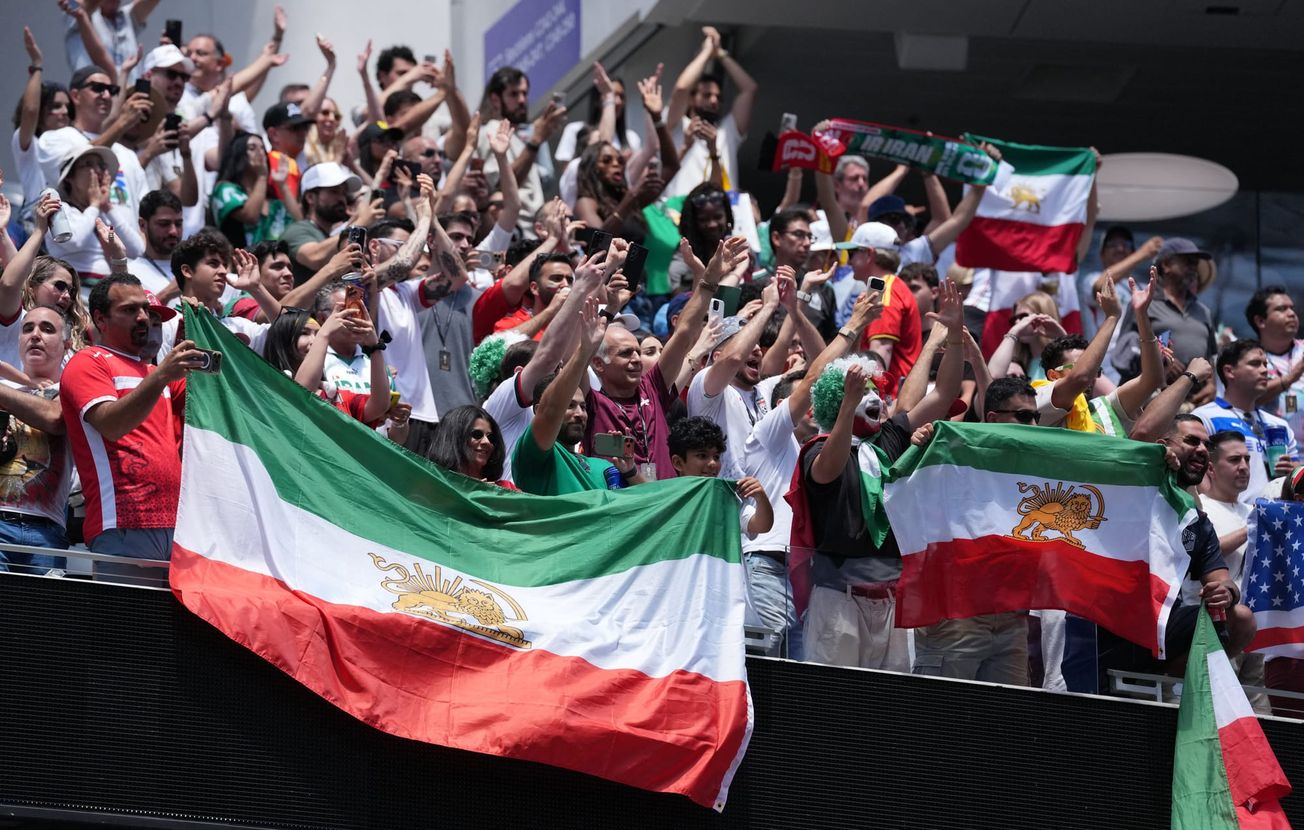
Whatever their objections to the theocratic government in Tehran – and many of them are bitter adversaries – expatriates will turn out to cheer on Team Melli. They’ve been doing so in increasing numbers as the program qualified for four straight World Cups and counting.
“It is a source of national pride, even amongst Iranians who are anti-regime, and pretty much everybody wants a secular, democratic society,” said Negin Sobhani, an Iranian American who lives in the Washington, D.C. area.
“When they're successful, everybody's happy. And maybe the comment is they are successful despite the government, and the restrictions, and the difficulty that they place on them. But when they're not successful… then there’s a bulls-eye on them: ‘Oh, it's because of the regime.’ … Obviously, the politics exacerbates everything on either side.”
Even the team’s nicknames can be a battleground. The side was long ago dubbed Shiran e Iran, or “Lions of Iran,” though the federation has more recently elevated the moniker of Yuzpalangan, a reference to the Asiatic cheetah, which some see as an attempt to demote the lion as a mascot because of its association with the imagery of the old royal family.
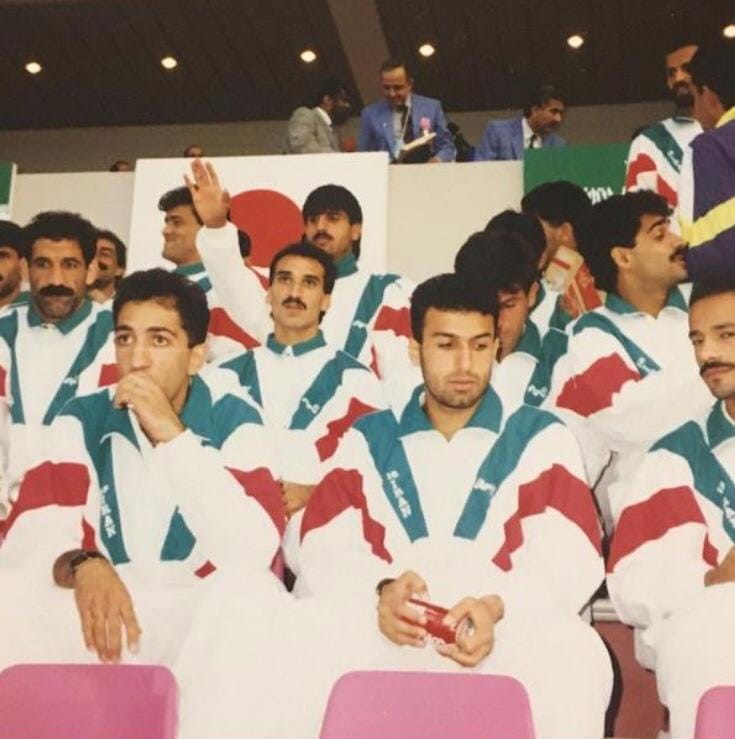
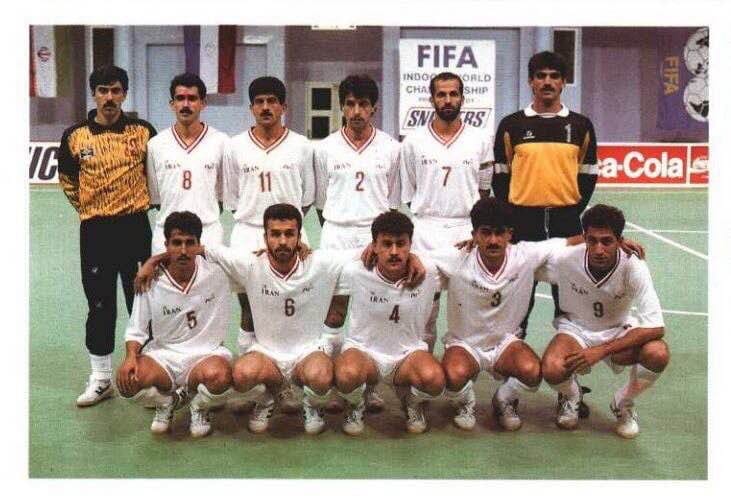
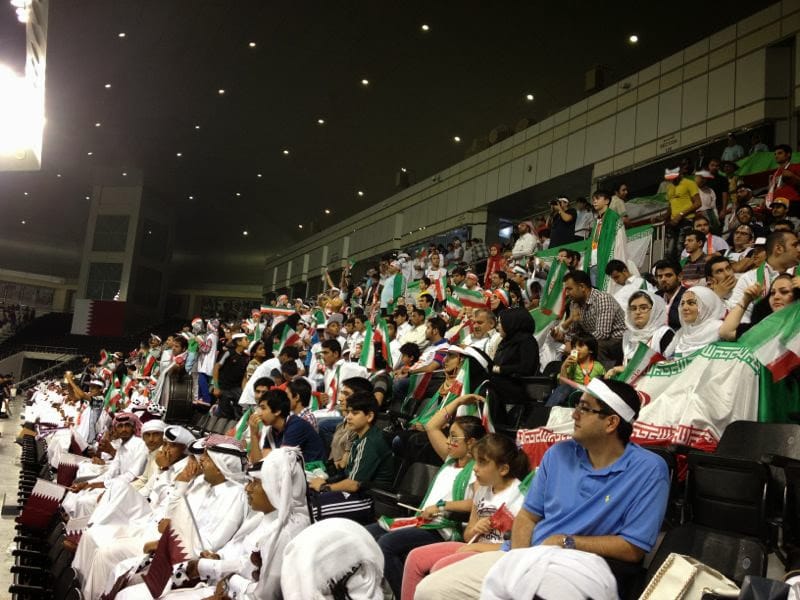
How many national teams on earth are told, as Nike and Adidas informed Team Melli in 2018, that they would no longer be provided their usual cleats and kits due to U.S. economic sanctions against their country’s government? Or have that same government threaten to harass or torture their family members back home if they don’t sing their national anthem with sufficient fervor before their next World Cup match, as happened at Qatar 2022, while widespread, woman-led street protests against the regime were being met with viciously violent crackdowns?
How many soccer federations tag their World Cup delegation with the name and casualty number (“Minab 168”) of an elementary school bombed by the enemy, killing 168 people, most of them children? Or have to sweat over whether a key striker, Mehdi Taremi, will be denied a visa to enter the tournament’s host country due to his having completed his compulsory military service in a unit of the Islamic Revolutionary Guard Corps (IRGC), which also holds vast political and economic power in Iran and is designated as a terrorist organization by the United States and 20 other nations?
“It is often said that war is too serious to be left to the generals, but in the Islamic Republic, sports are too serious to be left to the athletes,” wrote former Bloomberg News journalist Kambiz Foroohar in 2021. “Sports were not high on the agenda for the revolutionaries who overthrew Shah Mohammad Reza Pahlavi in 1979, but as sports have grown in popularity and in profitability, it has become increasingly politicized. Over the past two decades, most sports clubs and related bodies have been taken over by political or security-military organizations, with former Revolutionary Guards holding the top positions.”
The players who don Team Melli’s colors carry extra stress few of their footballing colleagues can fully comprehend. Their public statements, social-media posts, even their facial expressions on gameday receive constant, keen scrutiny, leaving them squeezed between the expectations of dissidents abroad and the leverage of a harsh government back home.
“It's massive pressure. They are the representatives of their country, of their fellow Iranians,” Washington Post journalist Jason Rezaian told CNN four years ago. “At the same time, their paymasters are a regime that's brutal and ruthless, and exerts a lot of pressure on them.”
Rezaian himself epitomizes the complexity of the diaspora and Team Melli’s relationship with it. The Iranian American and avowed soccer fan was arrested by the Islamist regime while serving as the Post's bureau chief in 2014 and imprisoned for more than a year on what were widely considered trumped-up espionage charges. Yet he later wrote that he was rooting for the country’s national team, even if it meant advancing to the 2022 knockout stages at the USMNT’s expense.
“Every match Iran competed in presented an opportunity to talk about the difficult conditions facing the people of that country, from their devastated economy to the regime’s denial of basic rights,” wrote Rezaian. “The best thing Iranians – and the free world – can do is wish this team success.”
The passion persists. Tickets for Iran’s opening match vs. New Zealand in LA are reportedly selling better than those for the host nation’s opening match vs. Paraguay at the same venue a few days before.
Even with FIFA setting absurdly inflated prices for tickets, with an ongoing war which has exposed profound divisions among the diaspora, Beitashour is unsurprised.
“Tehrangeles is a real thing. Obviously, I lived there for a few years when I played for LAFC; there’s such a big, big, big Middle Eastern, and just Persian community over there,” said Beitashour, who’s now an assistant coach at Toronto FC. “I have a few friends who have reached out like, ‘Hey, you don’t have any connections still, do you?’
“They had to just give in and pay the prices. They purchased them a long time ago, and they were talking about somewhere in the range of $1,000-2,000 per ticket. It is what it is. How many opportunities are you going to have to watch the country that you support in your own backyard? So they're definitely going to go, they're going to support, they're going to be proud.”
Growing up in the States, Sobhani played soccer and considers the U.S. women’s national team her first love. Her first visit to Iran, however, happened to take place just before Team Melli faced off with the U.S. men at France 1998 – a match FourFourTwo magazine once called “the most politically charged game in World Cup history” despite it featuring two teams who had already been assured of being eliminated – and the euphoric celebrations following Iran’s 2-1 win drove home just how deeply the sport was woven into her heritage.
Though it was a more conservative era, everyday citizens were so jubilant that they teased the Muslim clerics who tend to hold outsized clout in Iranian society.
“When the Iranian team won, we were in Tehran, at my grandpa's house in an older neighborhood, and just hearing the fireworks and having the entire city erupt in celebrations – streets were blocked, people were getting out of the cars, dancing,” Sobhani recalled.
“My parents hadn't been there since before the revolution, but people would stop the cars, make everybody get out and dance, including the mullahs – and taking off their turbans and forcing them to dance before they gave it back. And that really drove home to me, maybe this was more important for them to win than for us. And it was a blast.”
Sobhanit would grow into a loyal Team Melli supporter, which turned out to mean not only backing the national team but its individual players, whenever and wherever possible. She remembers attending a Colorado Rapids game alongside family and friends while living in Denver in 2000, because Iranian star Khodadad Azizi was playing for the visiting San Jose Earthquakes at the time.
“They would come everywhere he would go,” she laughed. “Everybody would show up and cheer him on, even though he was playing for the San Jose team.”
She wisecracks that having a group of attractive, athletic men representing the wider nation might play a part in the team’s popularity as well.
“The handsomeness of Team Melli also goes a long way to garner diaspora fans and in sports diplomacy!” said Sohbani. “But it shows Iran in a different light than the stereotypical angry bearded mullah the western media likes to show.”
You’ve probably read the headlines; there’s been a whirlwind of them lately, even before the war broke out. Would the conflict lead to Iran’s removal from the tournament, either by their choice or the primary host nation’s? Might FIFA actually move their matches to Mexican soil to bypass at least some of the diplomatic complications involving two nations at war?
Any of those outcomes would have been essentially unprecedented. Prominent figures on both sides, all the way up to U.S. President Donald Trump himself, have chimed in on the topic with a mixture of news, bluster and agitprop.
FIFA president Gianni Infantino seemed to make a definitive confirmation that the show would go on as scheduled when he addressed his organization’s pre-tournament congress in Vancouver in early May, even as Iran’s delegation was the only one of the 211 member nations not present, with some of its officials denied entry to Canada, apparently based on Iranian soccer federation president Mehdi Taj’s ties to the IRGC.
“Of course, Iran will be participating at the FIFA World Cup 2026 and of course, Iran will play in the United States of America. And the reason for that is very simple. Because, dear friends, we have to unite,” Infantino said. “It is my responsibility – it is our responsibility. Football unites the world. FIFA unites the world.”
Infantino’s chummy relationship with Trump is unlikely to open up the U.S. government’s travel ban on Iranians to allow soccer fans in the country to attend their matches, though at least most of the players themselves seem likely to be admitted. It will fall to Tehrangeles to turn out for Team Melli, as well as the smaller but still spirited Iranian community in Seattle, and perhaps members of the diaspora who live in Europe and elsewhere.
Sobhani doesn’t plan to attend, though, and she’s heard from many others who won’t, either.
“There's just so many bad things that have happened with FIFA,” she said, “People who had really planned on coming, and were even saving money and were looking forward to coming, have completely scrapped their plans. People we know in the region are just not going to come, partly because of politics, partly because they don't want to invest and support American tourism, and partly because they don't want to be discriminated against, either upon arrival or during their visit here. So it's unfortunate.”
With billions of global eyeballs turned in to the tournament, she does expect the expat community to register their objections to the Iranian regime in and around the stadiums. That may be a less fraught proposition than it was in Qatar, where the IRGC and other government-affiliated bodies were widely reported to be patrolling the crowds at Team Melli matches and suppressing displays of support for the protests back home.
“I do have some cousins in Canada who I think in the end will cheer on the Iranian team,” she said. “But I'm not surprised that the Southern Californians will show up. I'm curious to see what kind of political bands there are, because they'll be supporting the [team], but still want to make their statements for sure.”
Noamouz finds the prices outrageous, too. Still, he’s looking forward to it, and believes that even with a war disrupting their preparations, this could be the World Cup in which Iran finally navigates passage to the knockout rounds for the first time ever, citing the experience of a veteran-heavy squad and the more forgiving nature of the 48-team field.
He’s old enough to remember that Team Melli qualified just twice in the 20th century; they’ve now reached five of the seven in the 21st.
“They know all the fans, that they’re coming, and seeing all the fans there, it can give them a little bit of a boost to get a good result,” he predicted. “The first 30 minutes, it's very important – we always say that when they start the game. After that, they are going to get together and find their feet.
“If they come here and get used to the atmosphere and the weather and everything, I'm sure they should be fine.”