Editor's note: This story originally ran in IV: The Sounder at Heart magazine. With Salmon Bay winning the USL W Championship on Saturday, they and Ballard FC are now the only organization to win men's and women's USL titles and now felt like a good time to share their story.
The eyes of the soccer world will turn toward Seattle this summer, as World Cup matches and the U.S. men's national team descend on "Seattle Stadium." International supporters will flood Pioneer Square, and locals will pack bars across the city to watch the world's biggest sporting event. Television broadcasts will rightly frame Seattle as one of North America's great soccer cities.
The Sounders will be on an extended break for the tournament, but a few miles away from downtown Seattle — tucked between warehouses, train tracks, and the ship canal — Ballard FC and Salmon Bay FC will still be playing soccer. For a city that leaned heavily into its grassroots credentials to set itself apart during the bid process, it's hard to imagine two clubs that better represent that ideal.
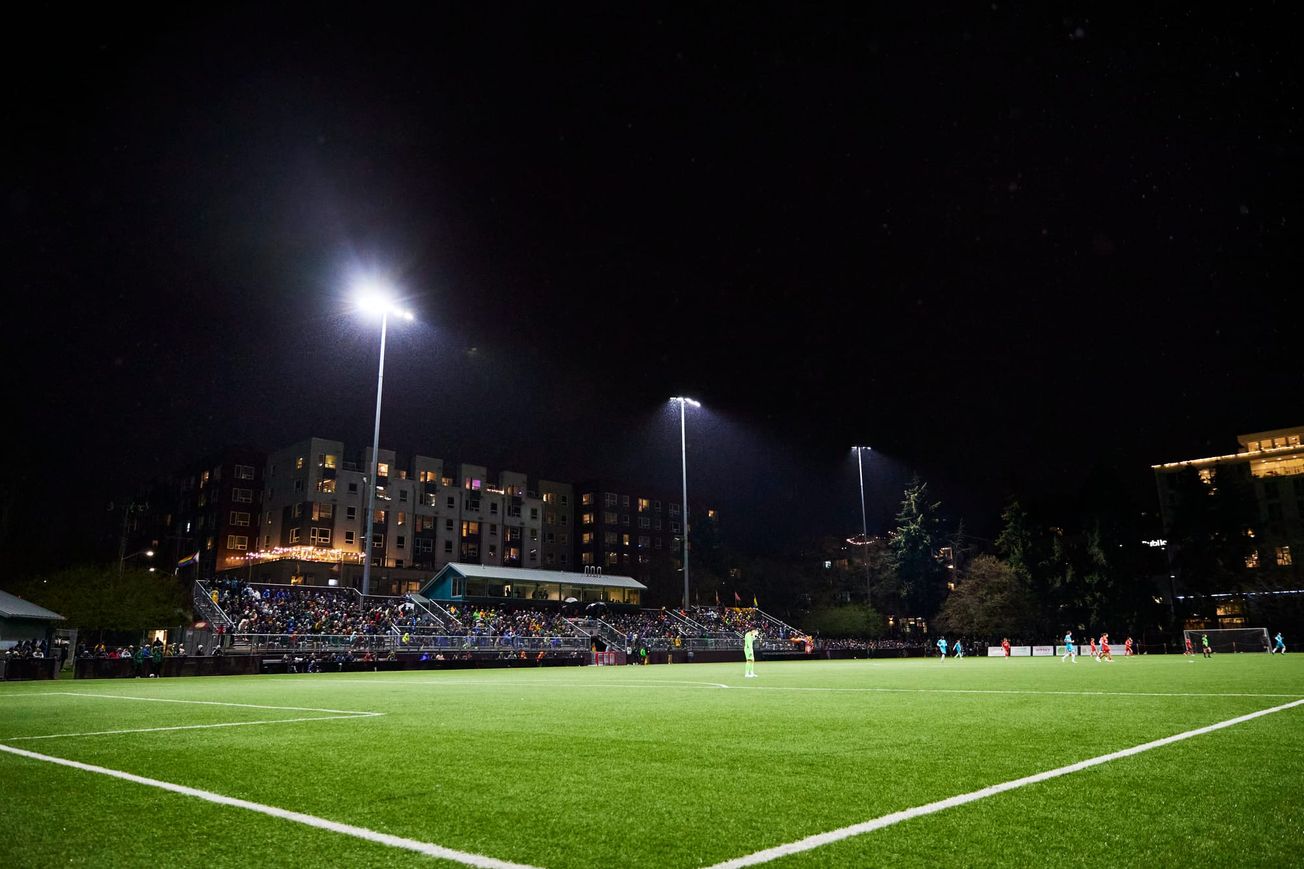
The World Cup arrives in Seattle as a global event, but some of the most important soccer in the city will be played at tiny Interbay Stadium. Ballard FC represents something local, permanent, and increasingly rare in modern American sports: a club built from neighborhood identity, community ambition, and a belief that lower-division soccer matters. In fewer than five years, Ballard FC has grown from an ambitious amateur startup into one of the defining clubs in the Northwest soccer ecosystem — connective tissue linking the lowest levels of the game to the highest, and a home for supporters who wanted a club that felt distinctly Seattle.
The story begins, fittingly, during one of the wettest Seattle springs in decades.

Issue 2 of IV focuses on Seattle’s role in the 2026 Men’s World Cup. It features columns by Garth Lagerwey and Leander Schaerlaeckens; a look back at Seattle’s failed attempt to get into the 1994 World Cup bid; an accounting of the USMNT’s future-altering trip to Seattle in 2013; an inside accounting of the RAVE Foundation’s populate the state with mini-pitches; and so much more. Issues remain available.
"What if Ballard Had a Soccer Team?"
May 2022 was pure Seattle. It was as if the city had decided to live up to every national stereotype all at once. The month dragged on with one cold, gray day after another, the long days of spring dimmed by the wettest stretch of weather in nearly 75 years. Farmers market vendors huddled under tents, selling early-crop fruits and vegetables to Gore-Tex-clad shoppers. Joggers looped around Green Lake through puddle after puddle. Wet dogs tucked themselves under sidewalk cafe tables while their owners sipped coffee, weather be damned. No one carried an umbrella.
And if you paid attention, you noticed something new: a lot of people were wearing the crest and colors of Seattle's newest soccer club, Ballard FC.
When Ballard FC was formed in December 2021, it was the first time many soccer fans had heard of USL2, the amateur league the team was set to join. Few knew what to expect from the club, the team, or the league. Fewer still had ever been to Interbay Stadium, the thousand-seat home to Seattle Pacific University's soccer programs.
But Seattle was sold on the club long before a ball was kicked. When co-founder Sam Zisette woke up on the day of the club's launch in December 2021, there were already 45 season ticket deposits. "I thought we'd been hacked," he said. A week later, 400 people packed a Ballard brewery for the official launch party. It was really happening.
He shouldn't have been surprised. The branding was sharp. Word of mouth spread quickly. The new team was being discussed on the sidelines of youth tournaments and at Wednesday night pickup games. Ballard was getting a soccer club, and the fans were ready. Before a single player had been signed — before anyone really knew what Ballard FC would become — the club's iconic crest was already everywhere.
The question that remained for new fans was what to expect on the field. What few had yet realized was that the quality of play would match the ambition. Most soccer fans were unfamiliar with the USL2 and USL W leagues.
USL2 and USL W sit below the fully professional levels on the American soccer pyramid, but they are not casual amateur leagues in the way many non-soccer fans might assume. They function as a bridge between youth academies, college soccer, and the professional game.
The experience and ambition within these leagues can vary dramatically from club to club. Some organizations operate as simple summer teams focused primarily on player development, while others have built full club identities — robust supporter cultures, sophisticated branding, packed stadiums, and professional-level expectations on and off the field. When Ballard FC was announced, fans didn't yet know which version they were going to get.
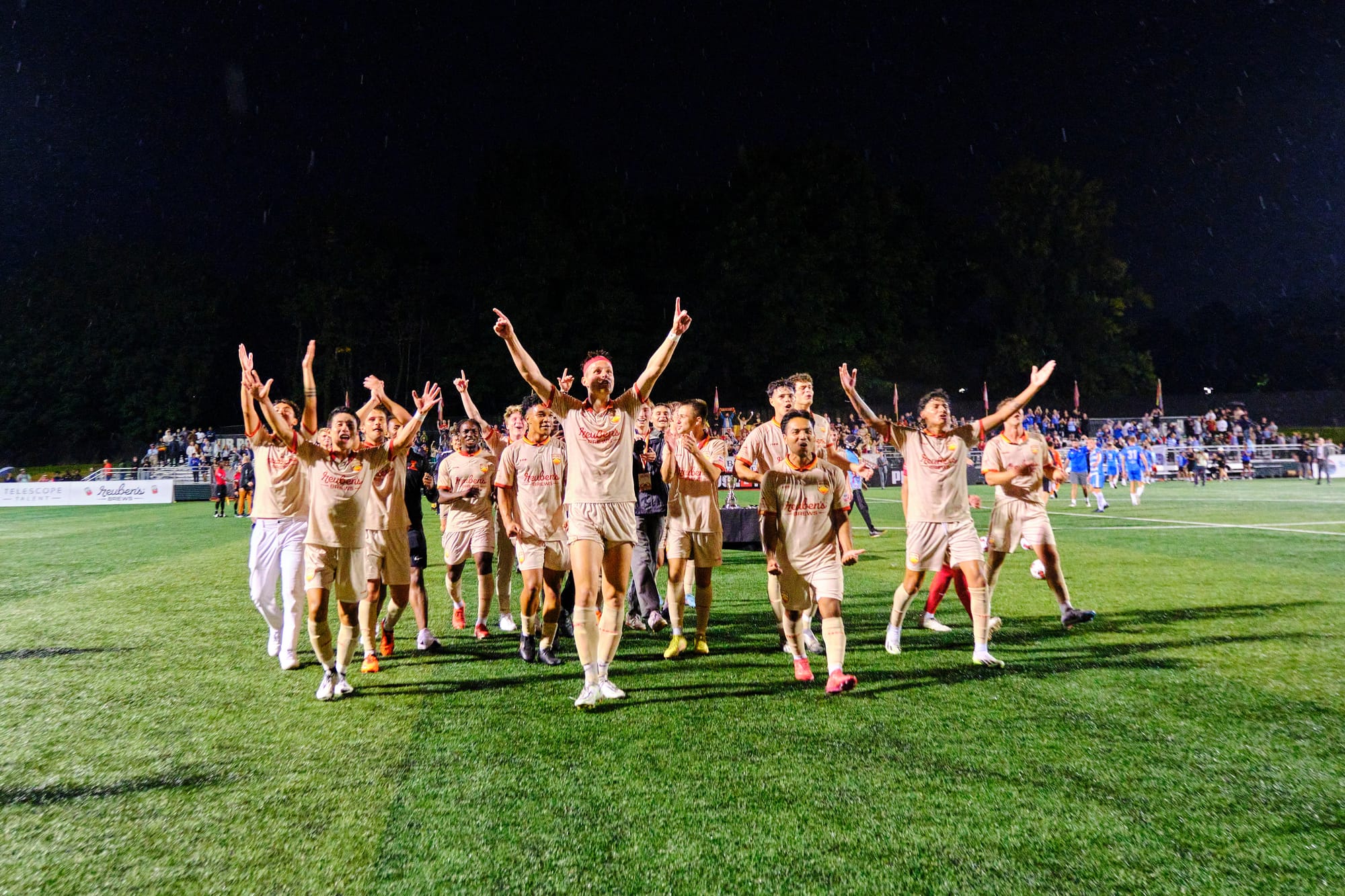
Near the end of that dark, wet spring in 2022, they found out. Ballard FC took the field for the first time in front of a standing-room-only crowd at Interbay, dispatching Oregon's Lane United FC 6-1, and kicking off a soccer story already woven into the lore of Seattle sports — with many chapters still to be written.
And from the beginning, the vision extended beyond one team. Salmon Bay FC, the club's women's side, would soon follow, built on the same principles of community, access, and high-level competition. Together, the two clubs form a shared identity: one organization, two sides of the same idea.
Of course, none of this just happened.
In 2018, Sam Zisette was piecing together an early playing career after four standout years at the University of Puget Sound. Following a stint at USL2 side AFC Ann Arbor, he began imagining a club in his own community. What if Ballard had a team?
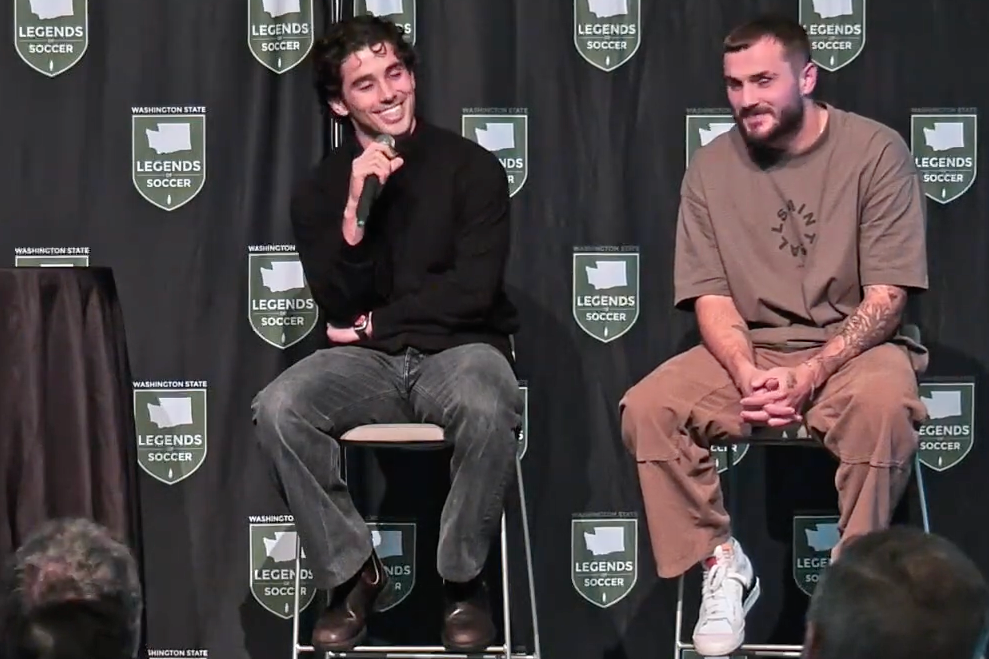
A year later, while playing for indoor, semi-pro team the Tacoma Stars alongside former Sounder Lamar Neagle, the idea started to take shape. The two were frequent travel companions and spent hours on road trips talking about their college careers and early days as players. Asked about those first conversations, Neagle remembered them clearly.
"My first conversations with Sam were about creating a space that we would have loved to experience growing up playing soccer in this area."
When Zisette pitched the idea, Neagle's response was immediate: "Let's go. How do we start?"
Both founders sensed they were onto something larger than a fun summer league.
"I think we sensed that there was a growing gap in the soccer landscape in Seattle, and that there was a need for grassroots, community-based soccer," Zisette said.
They knew they could build the club Zisette had wished existed when he was coming up as a player — and they knew exactly where it had to be. Ballard was the only place that made sense.
"We started off thinking about Interbay Stadium as the place," Zisette said. "The stadium, and my upbringing in Ballard, were a big part of the idea from the beginning. Which league we would play in and the rest of the details came later."
The two original founders focused on early versions of the business plan, player recruitment, and assembling a roster — but they needed someone with business experience to help get the concept off the ground.
On the advice of Mike Geddes — co-founder of Oakland Roots SC, itself a community-focused club that has since grown into a fully professional side in the USL Championship — Neagle and Zisette brought in a third founding partner: Chris Kaimmer.
Like Zisette, Kaimmer is a Ballard High School graduate. He came to the team from a career in tech, bringing business acumen to the project in multiple ways. Zisette also credits him as a key creative force behind the match day experience.
"Chris was a creative force behind a lot of what we ended up doing on match days," Zisette said.
The concept was in place. The founding team was set. It was time to bring soccer to Ballard.
The Ballard of It All
Seattleites are fiercely neighborhood loyal, and Ballard is one of the city's most iconic and distinctive areas. It is technically part of Seattle, but its history, geography, and culture make it feel like a self-contained urban world — separated from the rest of the city by the Lake Washington Ship Canal, pressed up against Puget Sound, and shielded from the noise of I-5.
Until 1907, Ballard was actually an independent town — something locals are only too happy to remind you — built on industry and fishing. Today it's an evolved version of what it has always been: an industrial, immigrant-rooted neighborhood that also functions as a bedroom community for the rest of the city. It serves families in its grids of single-family homes while drawing younger residents to its core, with some of the best restaurants, bars, and small music venues in Seattle.
The location suited the club perfectly. Ballard FC could thrive there without drawing too broadly on the rest of the city. It could lean into the hyper-local identity of the neighborhood and build a community at Interbay.
It's the balance between belonging to greater Seattle and remaining rooted in the neighborhood that makes Ballard FC work. The club can tap into the larger Seattle soccer world while staying small and focused on its mission.
The Bridges
The seven bridges spanning Seattle's Ship Canal between Puget Sound and Lake Union are iconic reminders of the city's industrial maritime history — and of Ballard in particular. Bridges form the centerpiece of both Salmon Bay and Ballard FC's crests. The supporters call themselves The Bridgekeepers, and among the chants you'll hear at home matches is "Up the Bridges!"
Beyond the iconography, there is a very real sense that Ballard FC and Salmon Bay FC function as bridges within the Seattle soccer ecosystem. The two clubs occupy a space in the community that provides a vital link for fans, players, coaches, and staff — from one level of the game to the next.
Seattle has been a soccer town for as long as professional soccer has existed in the United States. But the founders of Ballard FC recognized that something was missing: a gap in the opportunity pipeline for local players.
With the Seattle Sounders occupying the rarefied air of top-level domestic and international club soccer, and numerous academies and youth clubs offering development opportunities for young players, the distance between those two worlds had been growing for years.
Seattle's college soccer programs are consistently among the best in the nation. The University of Washington won its first-ever NCAA men's soccer national championship in 2025. Seattle University consistently competes for Western Athletic Conference titles and an NCAA Tournament berth. Seattle Pacific University, which shares Interbay Stadium with Ballard, was a national powerhouse in the 1970s and '80s under legendary coach Cliff McCrath.
For players, coaches, and staff, Ballard FC offers something those programs can't: a stage to keep competing after college.
"We are a stage for our best college athletes to continue to shine and get much-needed playing experience in competitive environments, surrounded by fans and their community," Neagle said. "Our environment brings back the joy for these young men and women to compete in front of their families and experience what a professional setting feels like."
As Ballard FC continues to compete at the highest levels available to the club, more players want to join the program — and returning players want to stay, building the kind of roster continuity that produces results year over year.
"There is a reason many of the men playing in the Sounders organization are Ballard FC alumni," Neagle said. "We have tremendous talent in the Northwest, and when they can stay here and play for one of the best teams in USL2, they get highlighted."
Former Ballard FC player and current Tacoma Defiance midfielder Charlie Gaffney echoed those sentiments.
"The more you get these hyper-local clubs like Ballard, the more entry points you have for young players to get involved with the game," the Seattle native said. "It's a more attainable goal than only being able to play for the Sounders one day. I think it has the effect of keeping some guys in the game longer than they would have otherwise, because there is real opportunity there."
From the beginning, the founders envisioned Salmon Bay FC with the same goals and ambitions as the men's side.
Tiffany Mallick, who served as Ballard FC's athletic trainer before becoming Salmon Bay FC's vice president, shares that vision — with an added emphasis on promoting access to the women's game in Seattle and building the same bridge between college and professional soccer.
"We've had players transfer from other USL W teams because they recognize that we have an unmatched atmosphere and unmatched resources," she said. "We really focus on the player experience. What we are doing is how I think women's soccer should be represented at every level, no matter the resources or what level you're playing at."
Salmon Bay has already begun translating that investment into professional opportunities, with players like Keeley Dockter making the jump to Seattle Reign and three others earning professional contracts overseas. The bridges are working.
The Game
On the field, the results speak for themselves. Entering their fifth season, Ballard FC has won three Northwest Division titles, two Western Conference Championships, and one national championship in 2023. They have appeared in the U.S. Open Cup twice and narrowly missed qualifying for a third.
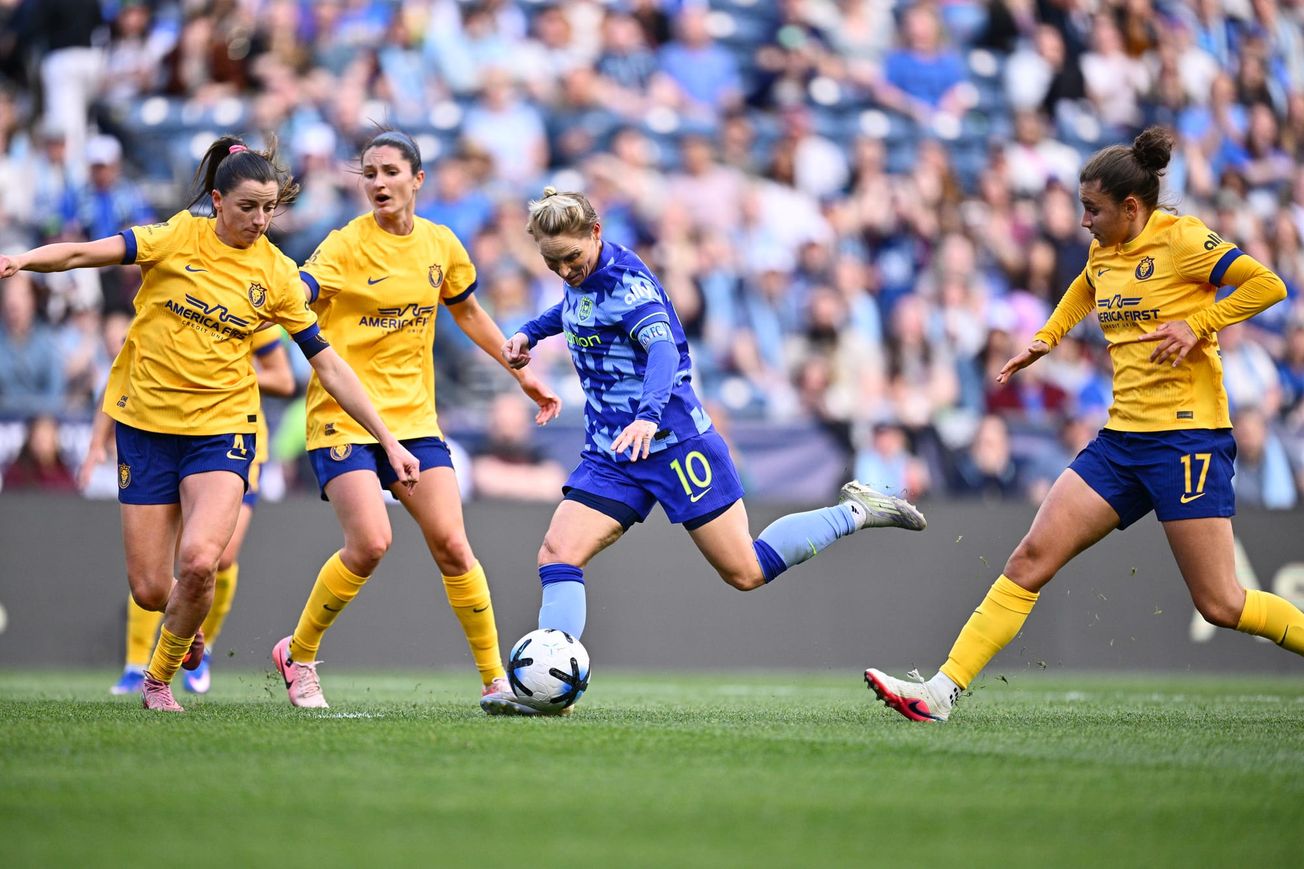
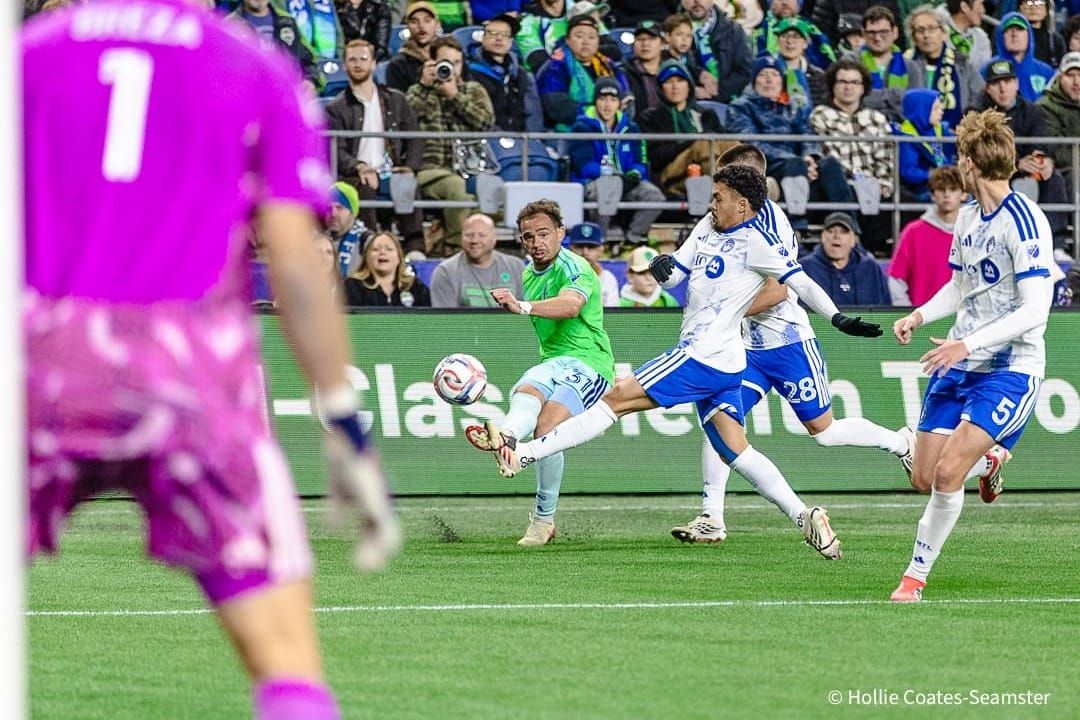
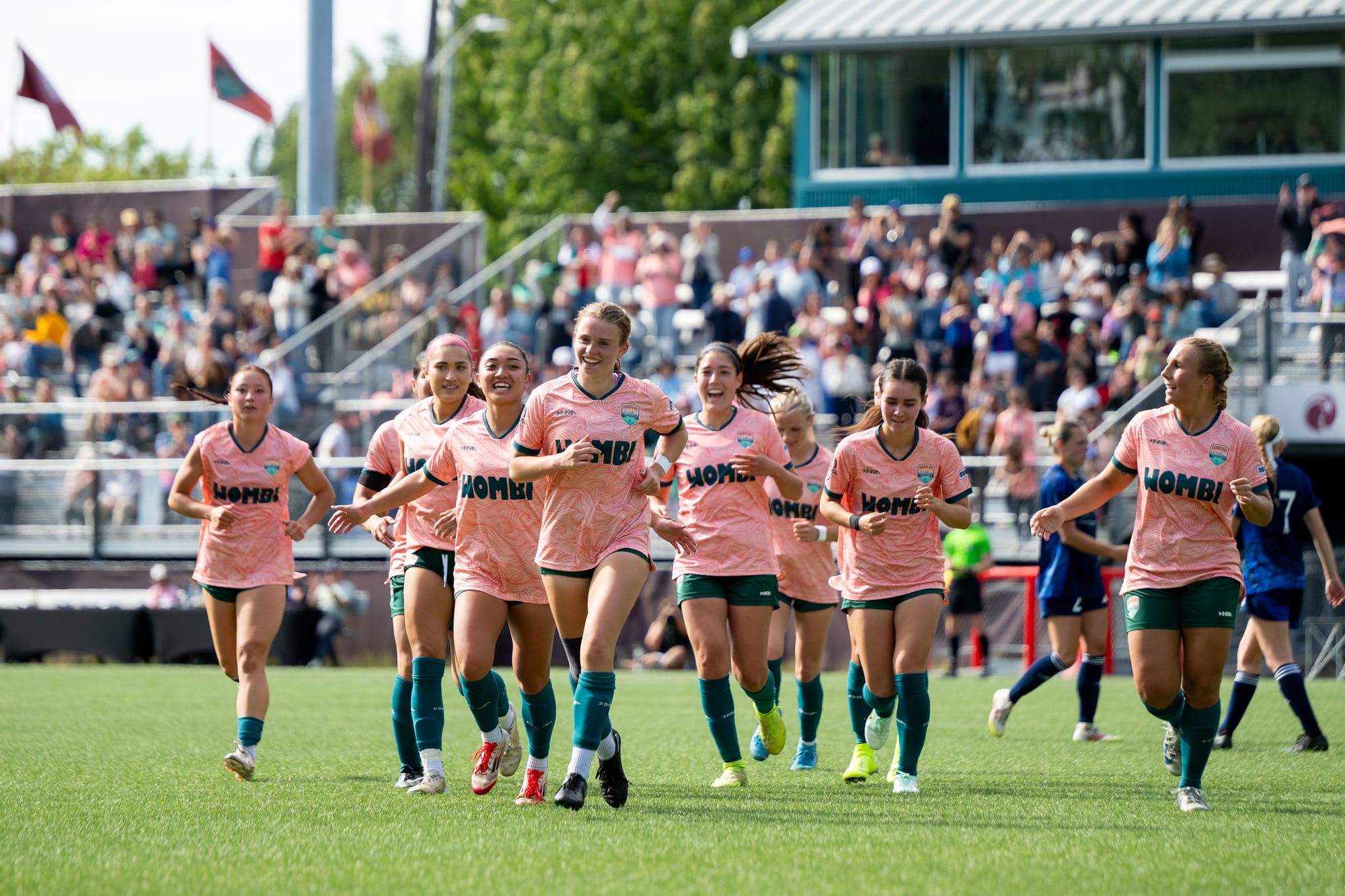
What strikes many fans on their first visit to Interbay is the level of play. The game is fast, physical, and tactically sharp. The men and women who take the field for 12 weeks each summer are among the best college and amateur players in the Northwest, and fans are treated to exciting, competitive soccer. Increasingly, they're also aware that they're watching the next generation of professionals in an intimate setting. No regular Ballard fan was surprised when Stas Korzeniowski, Richie Aman, Peter Kingston, and others made the leap to the professional ranks soon after leaving the club.
Salmon Bay FC is coming off its first season in USL W, finishing third in the Northwest division and missing the playoffs by a single point. While the end of the season stung, six wins and a +20 goal differential established a clear baseline for what promises to be a future of highly competitive, entertaining soccer.
Off the field, the match day experience at Interbay sets both clubs apart from much of the competition.
Match day at Interbay is bold but intimate. Warm summer evenings give way to cool marine air as the lights come up and fans stream through the gates. Pregame, kids in youth team jerseys gather behind the east goal to shag balls during warmup, their parents keeping watch nearby.
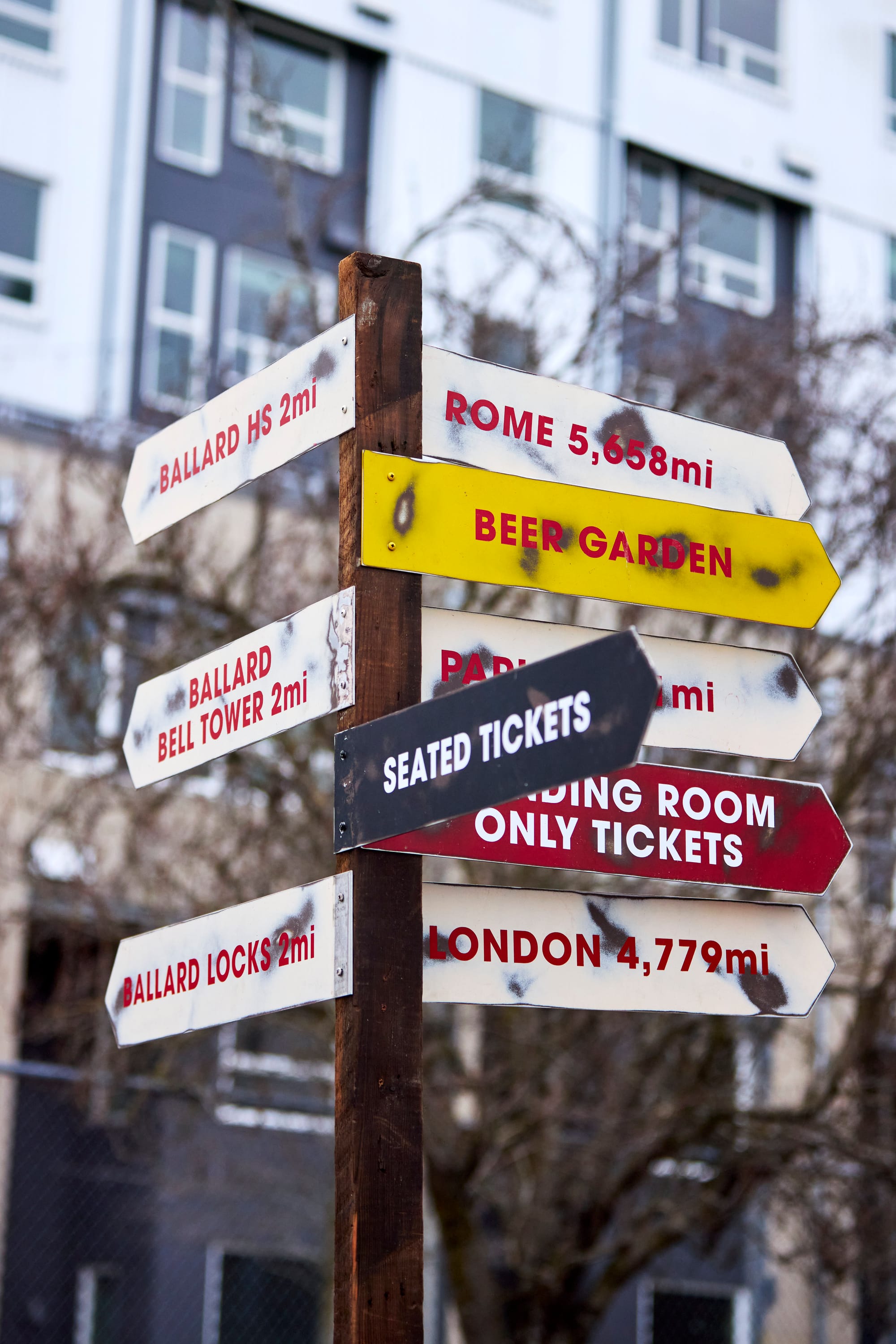
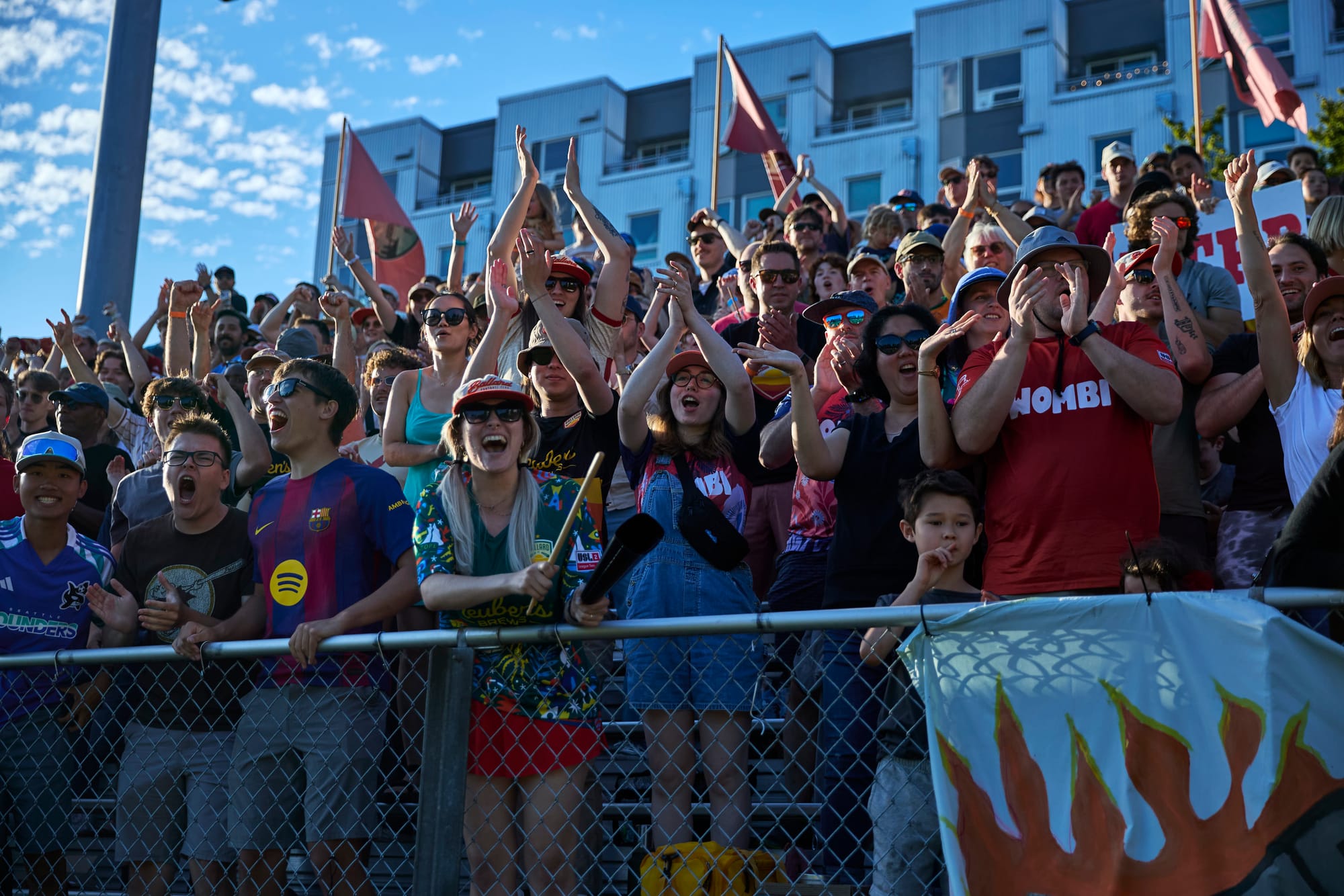
On the countdown to kickoff, the stands fill and the supporters' section comes to life. Both teams receive a proper walkout and player introduction. Fans crowd the fence of the beer garden — which occupies the entire northeast corner of the stadium, mere feet from the touchline.
Dick's cheeseburgers are launched into the crowd to celebrate every home goal.
At halftime, young fans dribble buoys or shoot from midfield for prizes from club sponsors.
When it's all over, fans spill out en masse into the neighborhood streets, dispersing slowly into the Ballard night.
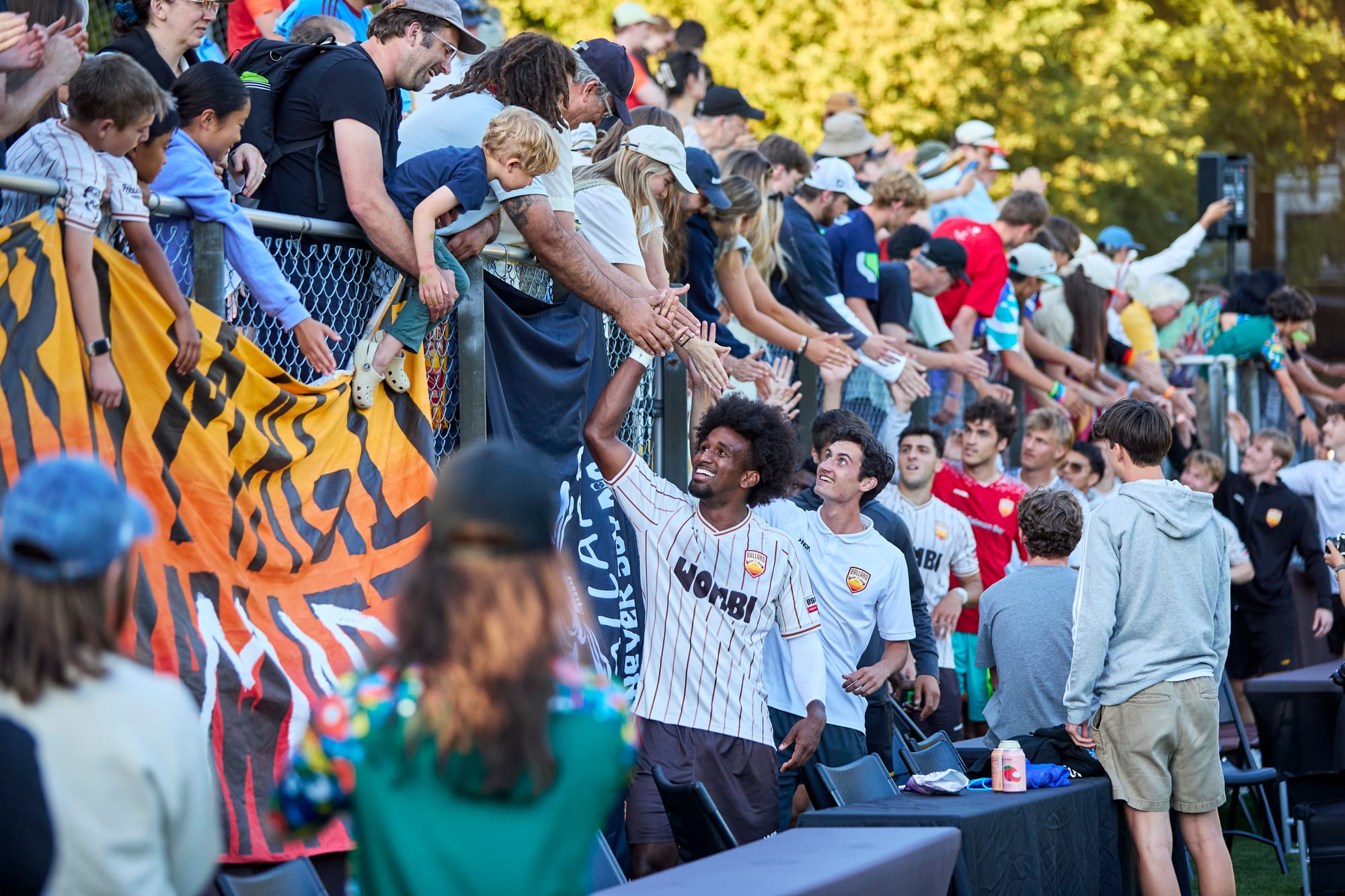
Unlike most USL2 sides, Interbay is a genuine club atmosphere, complete with a robust supporters group. Fans tailgate, linger to interact with the players, watch at home on livestreams, and travel to support both clubs on the road.
The Future
We know where Ballard FC came from. We know where it stands as it enters its fifth season. But what does the future look like — 10, 20, or 50 years from now?
Lamar Neagle sees staying power: "I see Ballard FC and Salmon Bay FC still being around in 50 years. What that iteration looks like, I cannot say. The soccer landscape — college and professional — is changing drastically in the US. What I can say is that we will continue to build community, adapt as needed to the soccer structures, and strive to be a leader."
Mallick is more direct about her aspirations for Salmon Bay: "I want to see the league grow. We want to connect to the Super Leagues and the NWSL, and be able to vouch for our players as they make that next move. On the fan front, I want to see every game sold out. We want to max out our capacity. Beyond that, we just want to continue to evolve every year — both in terms of the fan experience and our success in the league."
When asked why he's returning for his fifth season with Ballard, Christian Engmann kept it simple: "To win more trophies."